
Cultural institutions and nonprofits are sitting on more data than ever before: visitor numbers, grant outcomes, program impact, decades of archives. All of it has to be sorted, translated, and communicated to audiences who are busier, more skeptical, and more distracted than ever.
But how do you tell a story centered on data without your audience’s eyes glazing over? In an era of information overload, where people are more distracted and more time poor than ever, how do you get them to actually stop, look, and care about the statistics you want to communicate?
Experience design is answering that call. It’s become a way to bridge the gap between hard metrics and nuanced human realities, a crucial vehicle for human storytelling and public engagement.
For Data to Be Understood, It Needs to Be Experienced
There’s a reason a well-told story is usually more memorable than a well-argued fact. When we read or watch a story, our brains stop merely evaluating information and start experiencing it. Researchers call this narrative transportation: the more “transported” someone is into a story, the more their attitudes and beliefs shift toward it.
The effect is visible at the level of the brain itself. Princeton neuroscientist Uri Hasson found that when someone tells a story, the listener’s brain waves begin to mirror the storyteller’s. Other neuroscientists have found that the brain remembers ideas more readily when they’re experienced as part of a coherent narrative and that the brain is physically wired for storytelling. Stories have even been proven to change our neurochemistry, releasing oxytocin and enhancing our sense of empathy for others.
This is precisely why the cultural and creative industries have spent decades perfecting the art of transporting an audience. By combining an expertly told story with cutting-edge audiovisual elements, curators, filmmakers and playwrights have long been able to captivate viewers. Now, other sectors are seeking out these same skills to communicate their data more impactfully.
Turning Data Into a Firsthand Experience
The Moonwalkers: A Journey with Tom Hanks is a case study in storytelling magic. Designed by Journey and produced by Lightroom, the show combines archival NASA footage with fresh interviews and an original cinematic score to make audiences feel like they’re experiencing the voyage to the moon themselves.
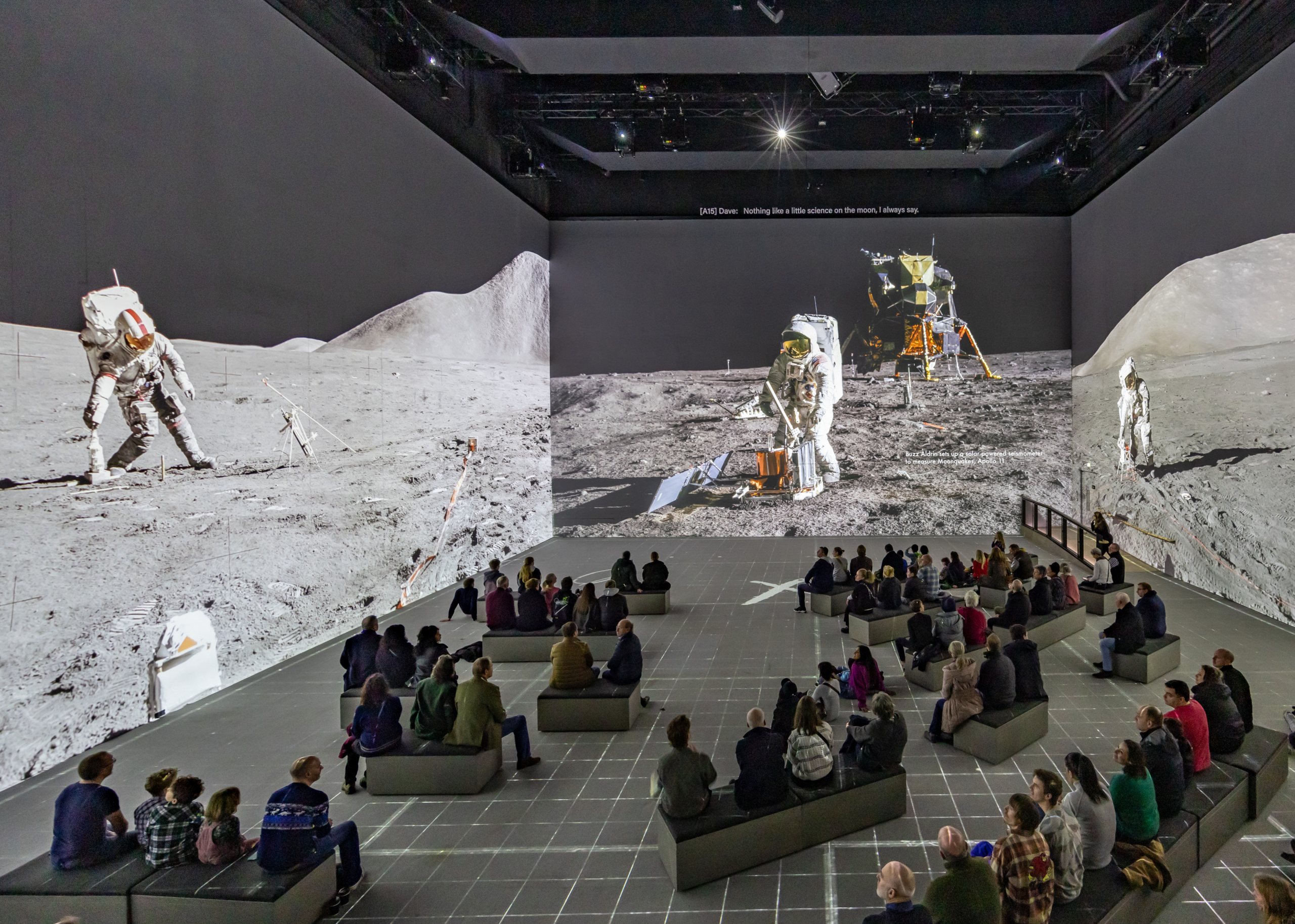
A central challenge for Moonwalkers was to convey the details of the Apollo lunar missions in a way that made visitors feel like they were participating in a moon landing rather than learning about it. With spatial audio and restored NASA footage projected at a massive scale, the show brings viewers directly into the experience, transporting them from the Saturn V rocket launchpad at NASA’s Kennedy Space Center in Florida to the cratered surface of the moon.
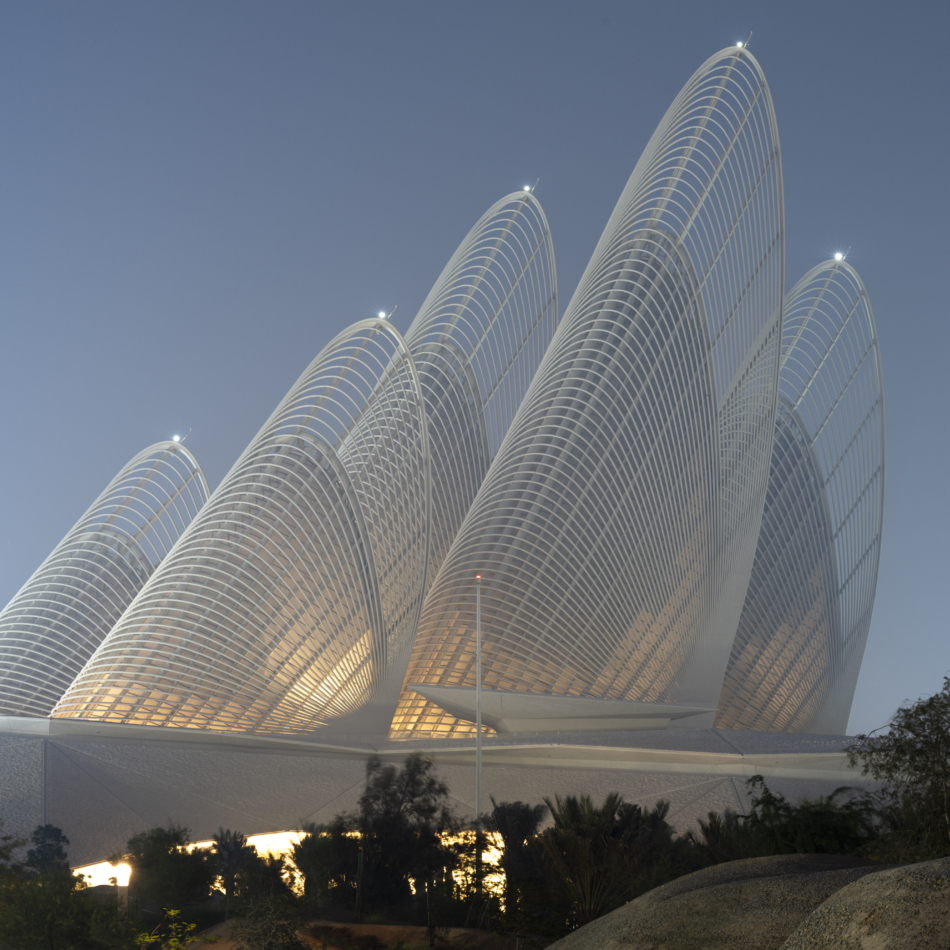
A continent away, Zayed National Museum in Abu Dhabi takes a similar approach to storytelling with data. Here, the task was to share information about the United Arab Emirates (including its history, culture, and founding figure) in a way that felt accessible, and relevant to contemporary audiences.
Journey’s solution blended narrative with sound design, animation, interactive elements, and archival footage to create dynamic viewer experiences. The museum was ranked as one of TIME’s World’s Greatest Places 2026.
The lesson from both projects is the same: audiences may not remember facts and statistics, but they will remember the experience of encountering it and the story around it.
How Experience Design Is Reshaping Global Philanthropy
The same is true for storytelling in nonprofit foundations. When it comes to communicating data, whether that’s fundraising statistics, volunteer hours, or grantee work, the message resonates more strongly when it’s presented as a narrative experience.
Journey’s recent project for the Stavros Niarchos Foundation (SNF), one of the world’s leading philanthropic organizations, shows this kind of storytelling in action. Headquartered in Greece, SNF has committed nearly $4 billion to more than 3,000 grantee partners across 130 countries and three decades. Working across health, education, arts and culture, and more, the foundation has had an enormous impact that’s difficult to convey even with the raw numbers.
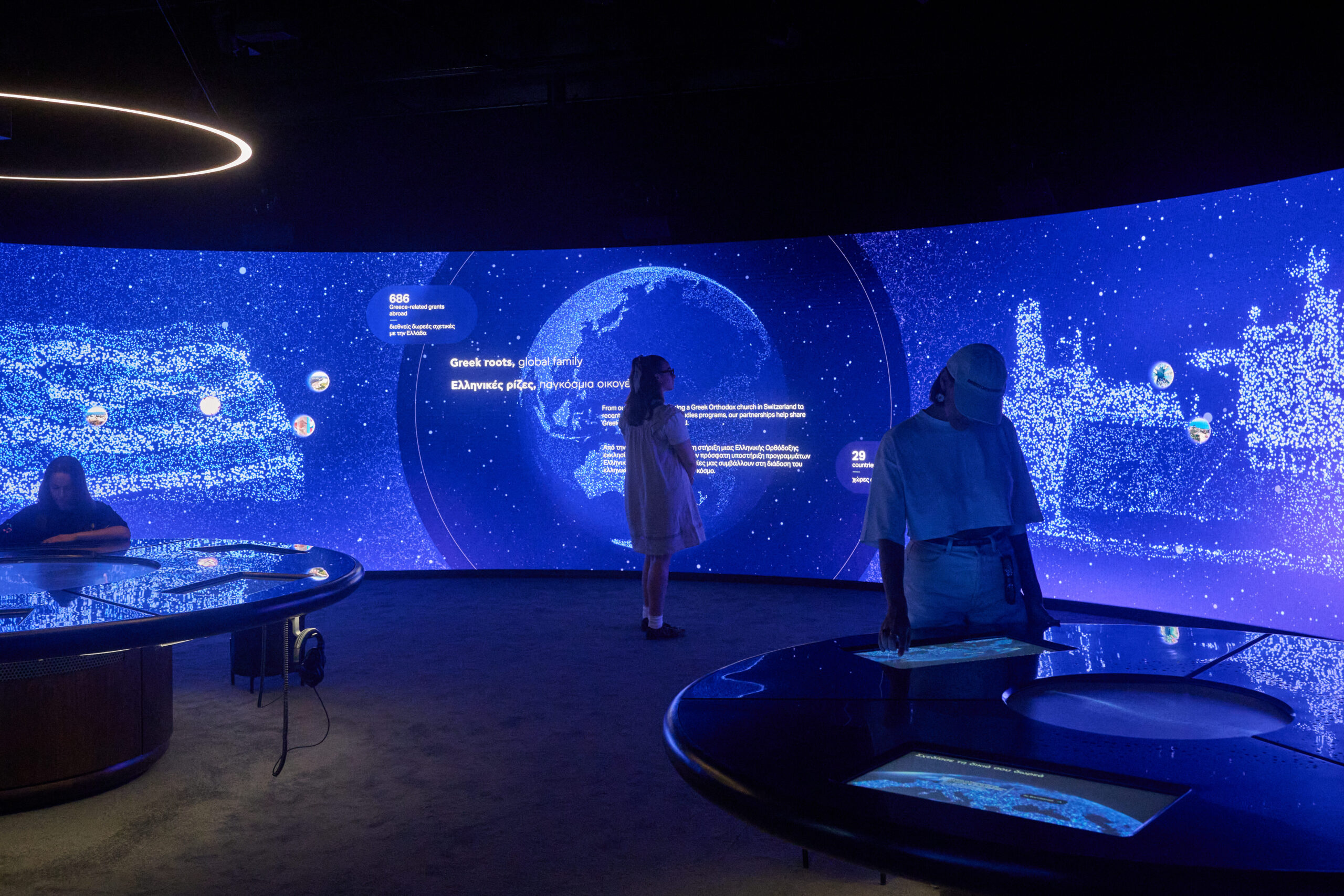
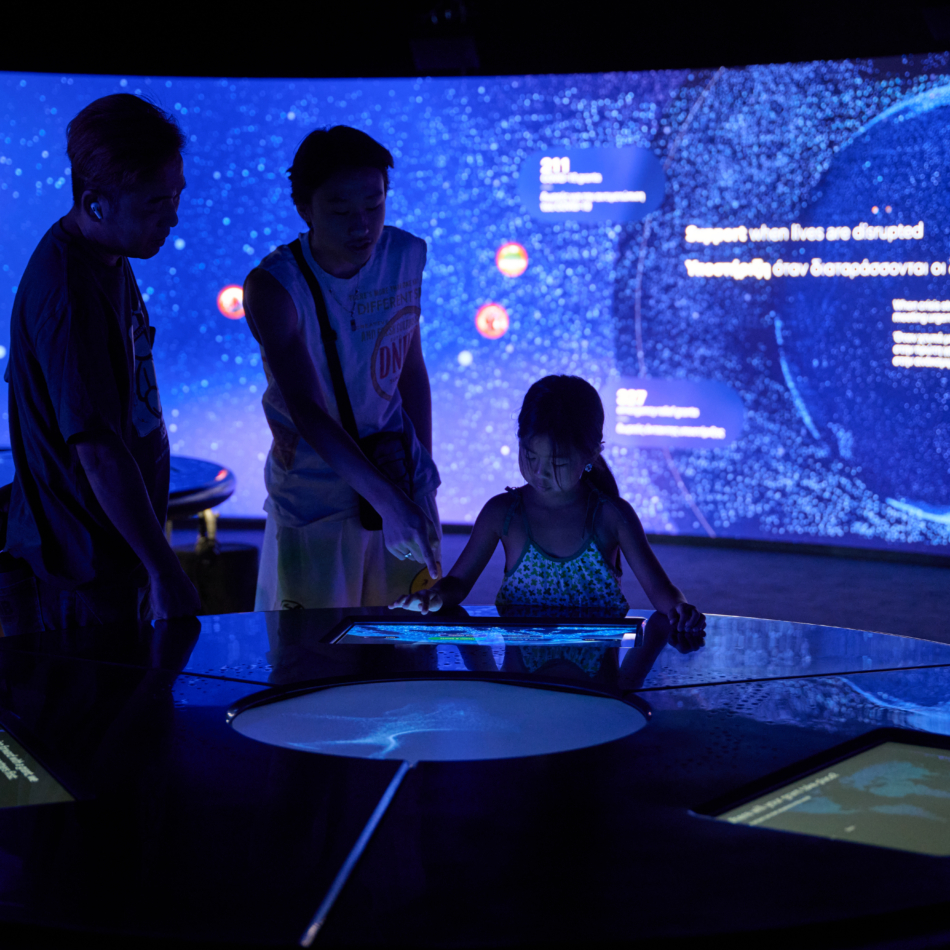
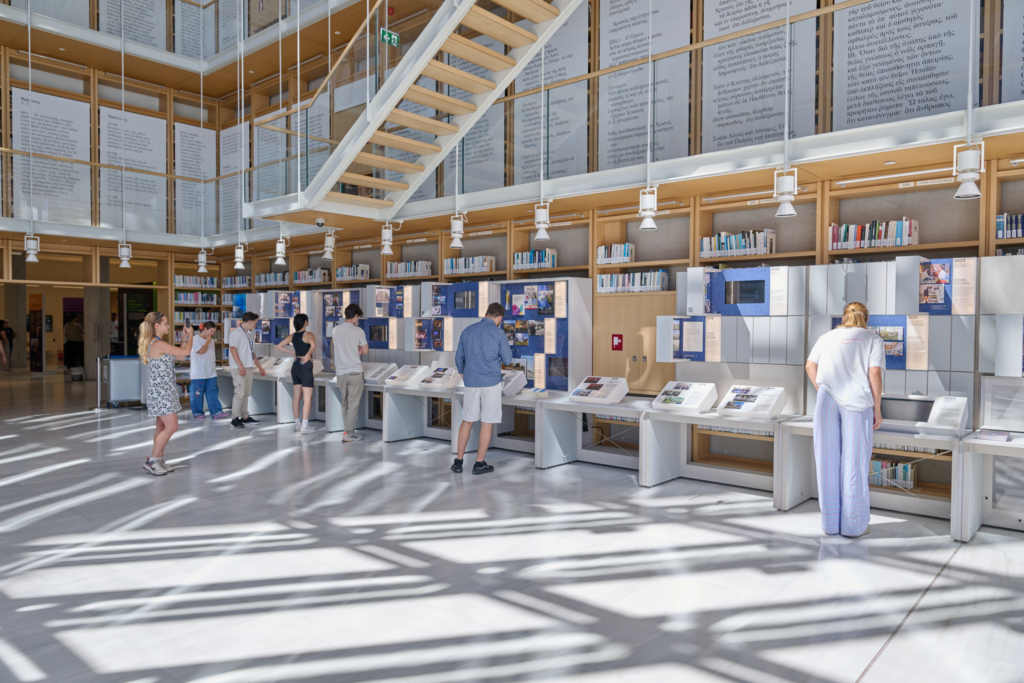
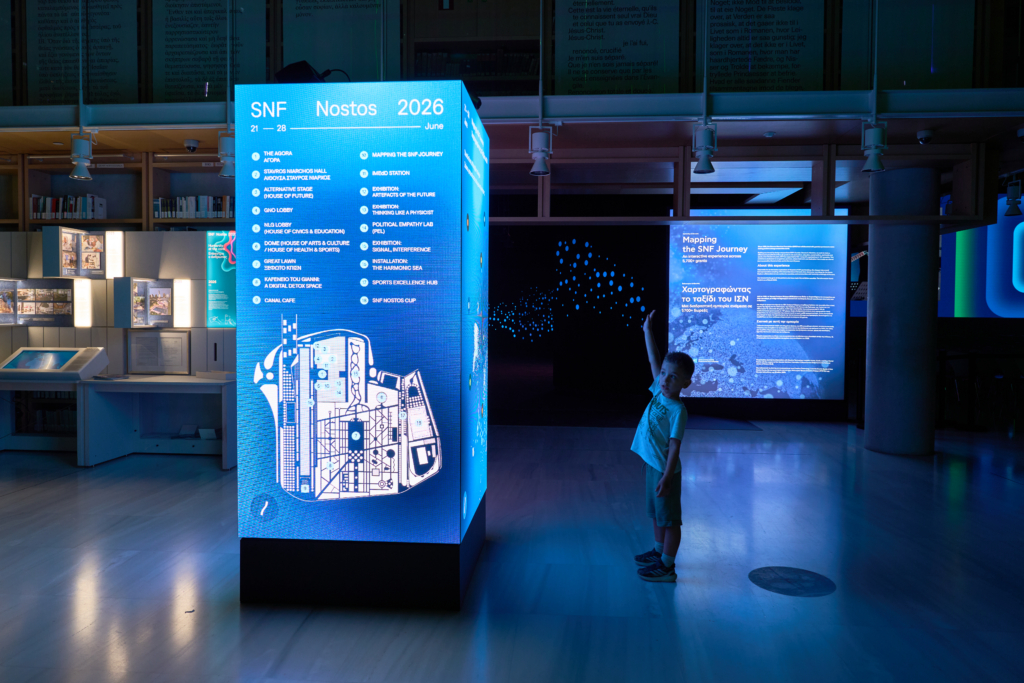
For the foundation’s 30th anniversary, Journey created an immersive experience that translated hard data into a series of interactive stories at the annual SNF Nostos festival at the SNF Cultural Center in Athens. Visitors began the experience in front of glowing totems that featured wayfinding information and short films about SNF grant recipients. From there, live visualizations on a digital canvas turned detailed data into a summary of worldwide impact before letting visitors zoom in to see individual grantee stories. A participatory feature, Leave Your Mark, invited guests to contribute grant ideas of their own and folded their responses back into the canvas’s live visualization, while a cinematic finale showcased the testimonies of SNF staff and partners.
The positive community engagement with the SNF Nostos project spoke to the appetite for this kind of storytelling. Just as importantly, the experience offered a blueprint for how foundations can move from reporting on what’s been funded to creating shared experiences that show why it matters.
Shifting from Statistics to Stories
Transforming data into experience deepens engagement in a way that static reports and dashboards can’t achieve. For impact-led organizations in particular, it opens new ways to drive public engagement across sectors, from climate and health to education and the arts.
Cultural and philanthropic organizations today have more data than ever, and better tools arrive each day to analyze and curate it. The opportunity now is to stop treating that data as material for quarterly reports and start treating it as the raw material for participatory experiences. As the Moonwalkers, Zayed National Museum, and SNF Nostos projects demonstrate, organizations that embrace these new forms of communication will open new ways to drive change and make authentic connections.