
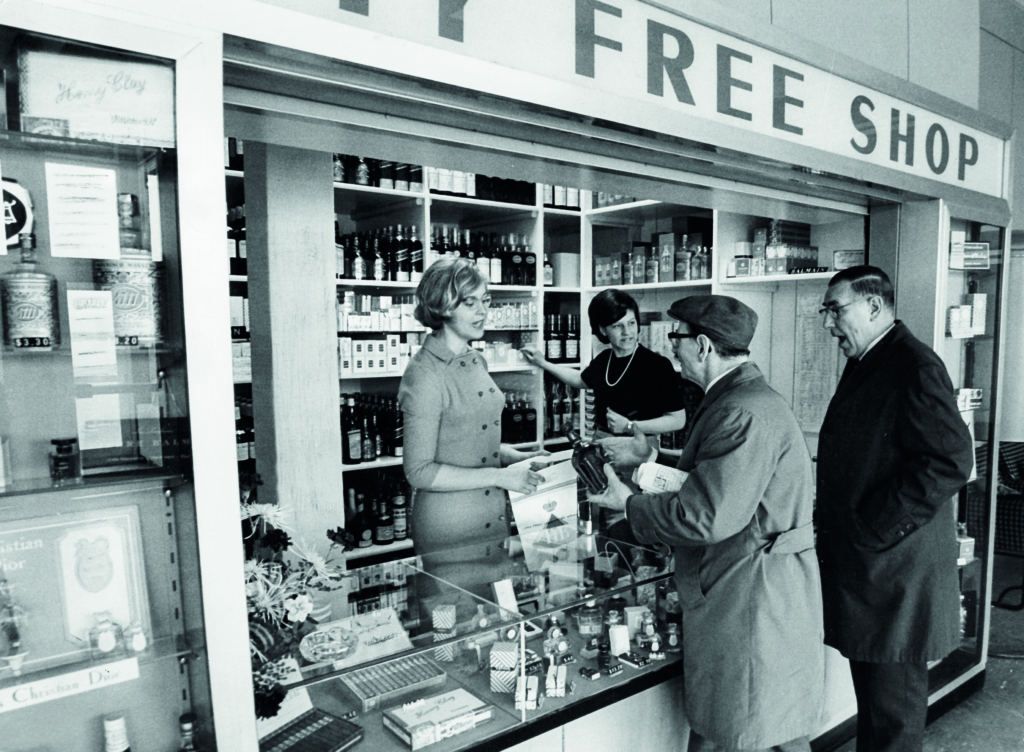
Duty-free shopping has come a long way since its humble beginnings. It was in 1947, at Shannon Airport, in Ireland, where airplanes often stopped to refuel on their way across the Atlantic, that local businessman Brendan O’Regan first realized the potential of tax-free shopping, selling liquor to passengers in transit.
The kiosk he launched–still in operation–set a blueprint for the luxury travel retail and dining malls one finds in modern airport terminals. Nowadays, international airports are vast metropolises for some of the world’s most important luxury brands—flagship stores advertising their latest wares to global travelers.
According to the Duty Free World Council, retail is now the largest contributor to non-aeronautical income in airports. In 2024, total worldwide travel retail and duty-free sales exceeded $74 billion. Airport hubs increasingly rely on commercial revenues to fund the development of their infrastructure and to minimize the landing fees payable by airlines.
Yet, despite growing passenger numbers, the longstanding notion that duty-free offers cheaper prices than downtown stores is fading. According to management consultancy firm Kearney, 40 percent of travelers question the value of duty-free goods. While global airline passengers numbered 9.5 billion in 2024, retail sales remained 13 percent less than in 2019, with spend per traveler down by 17 percent.
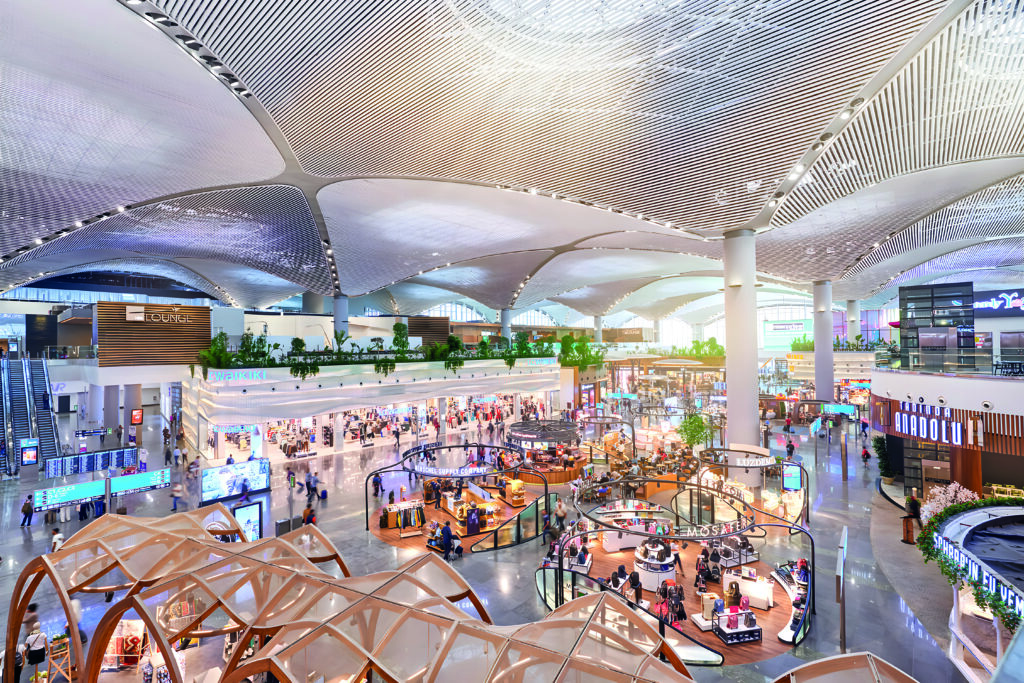
The former president of the Tax Free World Association, Philippe Margueritte, has called for a “retail revolution” that surpasses any cookie-cutter approach to duty-free stores and fixed product offerings. He says a greater sense of place, excitement and agility is needed, blending products with services and exploiting real-time data to customize what’s offered to travelers. “A strange feeling of ‘all airports look the same in duty-free’ has emerged with the consolation of our industry,” he explains. “However, a great deal of effort is being made to create a stronger sense of place and more excitement.”
Bargain-hunting passengers now have access to price-checking apps, with strong competition from e-commerce retailers putting them off airport purchases. Add to this a growing demographic of younger shoppers keen to enjoy more memorable retail experiences, such as product engraving, curated food and drink tastings, and beauty and wellbeing treatments. According to fashion house L’Oréal, by 2028, Generation Z customers will account for 30 per cent of all international travelers. As Emmanuel Goulin, president of L’Oréal Travel Retail, explains:
We are reinventing the airport experience and turning airports into entertainment destinations.
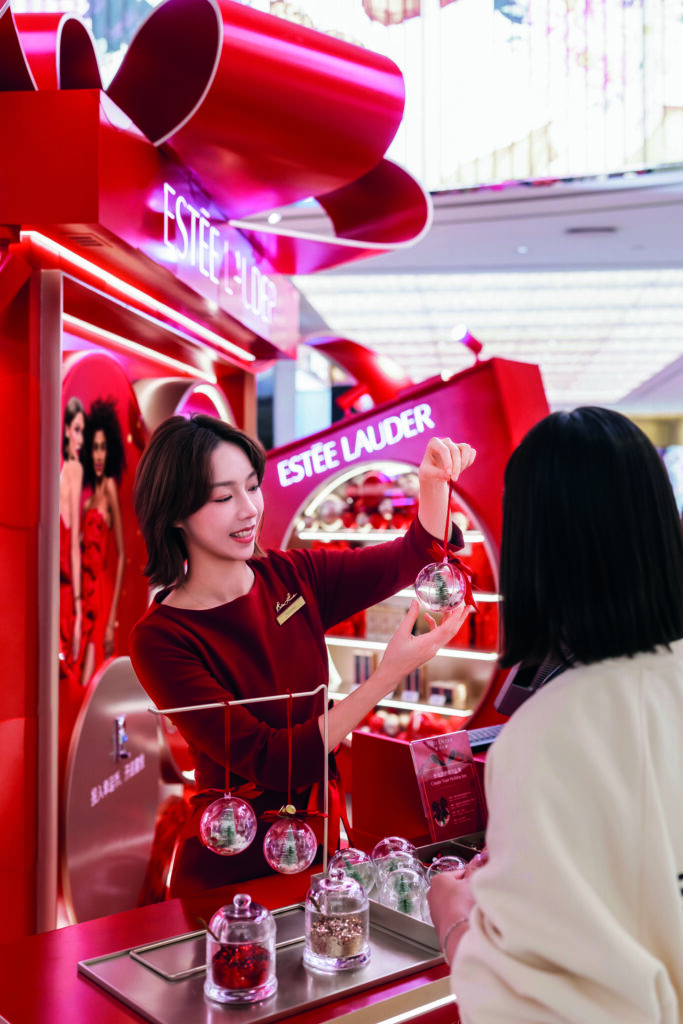
It’s a tactic being adopted globally, with airports in the Middle East among those at the forefront. At Hamad International in Doha, for example, Qatar Duty Free partnered with L’Oréal to open the Lancôme Café de la Rose this year, believed to be the first beauty-branded café in any airport worldwide. Other concepts driving sales include travel-retail exclusives, brand activations, walk-through stores, and retail offers sent directly to customers’ phones. Pop-up shops have also proved to be a popular way of launching products, acting as a testbed for new brands, and presenting seasonal offers.
At a duty-free complex in China’s Hainan province, for example, Yves Saint Laurent launched a pop-up promotion called YSL Beauty Light Club, which included a make-up service, a fragrance bar, and something called a “silent disco fragrance finder”, all within an old-school nightclub atmosphere featuring an avatar DJ.
Enhancing the passenger experience doesn’t stop at retail. Airports are also investing heavily in new terminal facilities with the experience of the traveling public front of mind.
Facilities include anything from playgrounds, parks, sleep pods and cinemas to spas, restaurants, sensory zones and art galleries. It’s all a strategy to devise ever more imaginative ways to encourage travelers to part with their money. Airports and the duty-free stores within them are no longer mere elements of the trip; they are part of the destination.
Journey in AIRPORTS
Journey has designed amazing spaces at several key airports across North America, including Toronto Pearson International, John F. Kennedy International, Ronald Reagan Washington National, Philadelphia International, and LaGuardia. Much of its work is in collaboration with OTG, a leading airport restaurant and retail management company.
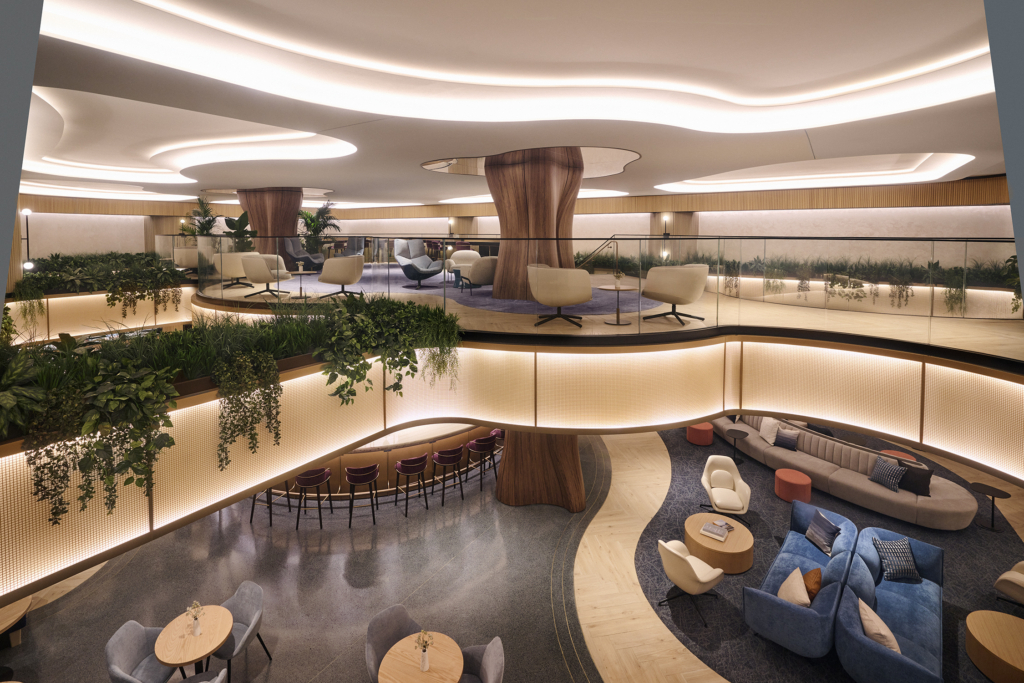
“We’re constantly innovating new ways to make the terminal experience spark delight and, if we’re being honest, provide comfort amid delays and cancellations,” says Journey Managing Director David Taglione. “Over the years we’ve crafted environments that not only look and feel special, but also generate some of the highest revenue figures per departing passenger in the industry.” The company’s approach starts with the understanding that airports, more often than not, stress people out. “Every feature we craft, whether it’s a lounge, a lighting array or a tapas bar, aims to quiet the anxiety that air travel singularly stirs,” Taglione explains.
One of Journey’s flagship projects is at LaGuardia Airport, in New York City. Here, it has worked on Chase Sapphire Lounge, an airport lounge offering travelers a respite from the hustle and bustle of the main airport. Features include two areas for working or relaxing, with private phone rooms; a wellness area with bookable treatments and private rest pods; as well as a private bathroom, a nursing room and a kids’ room. The food offering includes fresh and seasonal menus and locally inspired dishes, as well as craft cocktails, a curated wine list and local coffee.
This article was originally published in Journey World Magazine January 2026.