

It feels rather like rummaging through family heirlooms in the attic. At London’s new V&A East Storehouse museum, there are thousands of Britain’s antiques, artworks, treasures and trinkets on public display, stacked floor to ceiling in a vast, utilitarian hangar. Most still sit in their wooden crates, secured by straps, or are screwed onto metal shelves. Mischievous visitors, if they so desired, could run their grubby fingers over many of the artefacts. Indeed, curators occasionally find themselves ticking off the more errant. This is a museum, but a highly unusual one. The items appear to be stacked randomly. One minute you’ll be admiring a 13th century Indian sandstone carving, the next you’ll spot a mirrored electric guitar that once belonged to the rock band Kiss. A South African throwing spear from the 19th century sits between a bicycle from the 1950s, and a Victorian painting of Venus in the Titian style. An early 20th century African robe rubs shoulders with a 1970s Italian lamp. A Piaggio scooter painted by Polish-American artist Daniel Libeskind is parked in the shadow of a Japanese porcelain dish. The seemingly random juxtaposition of objects make the experience all the more intriguing. “We are trying to show the full breadth of the V&A’s collection,” says curator Georgia Haseldine. “This is a wild and fabulous collection. There is so much here, something for everyone; almost like choosing your own adventure as you go through, rather than us telling you a detailed, single narrative.”
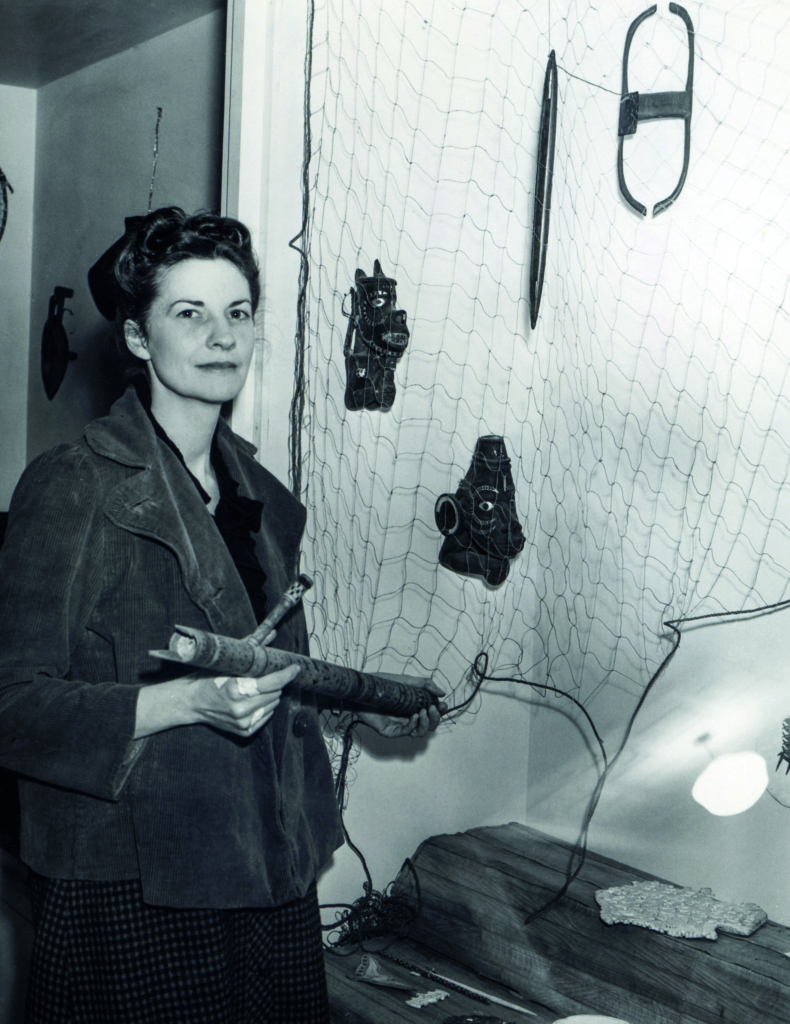
Among curators, it is a concept known as visible storage. With many of the world’s museums and galleries struggling for space, and the lion’s share of their collections hidden away in dusty storage, it’s an ingenious solution. But actually, not a novel one. Canadian anthropologist Audrey Hawthorn is often credited with inventing the idea of visible storage, back in the 1970s at the University of British Columbia’s Museum of Anthropology, in Vancouver, when she allowed visitors access to the museum’s entire collection in one vast room. “All objects should be out front, accessible to everyone,” she once said.
This revolutionary system eventually caught on at several other major museums across the world, including The Metropolitan Museum of Art and Brooklyn Museum, in New York City; The Strong, a vast collection of toys and games in Rochester, New York; The Smithsonian, in Washington D.C.; The Depot at Boijmans Van Beuningen, in Rotterdam, Netherlands; Museum Aan de Stroom, in Antwerp, Belgium; Rietberg Museum, in Zurich, Switzerland; and Museo Larco, in Lima, Peru. As well as displaying thousands of objects never before viewed by the public, these open-storage museums give visitors a rare glimpse behind the scenes, turning the museums inside out, in a way. In the early 2020s, at Amsterdam’s Rijksmuseum, for example, specialists spent months restoring Rembrandt’s famous painting The Night Watch, while visitors were allowed to watch them at work through a glass barrier—part art restoration and part performance art. A few years ago, The Depot, at Boijmans Van Beuningen, similarly drew back the curtains when it allowed visitors to wander around its storage area. The director of this Dutch museum at the time was Sjarel Ex who explained: “What’s the English expression—‘out of sight, out of mind’? So much of what museums do happens in the dark. We wanted to bring some of it into the light.” This is clearly what curators have done at London’s V&A East Storehouse. Here, as visitors wander in awe around the exhibits, they must be careful not to bump into storeroom employees in overalls wheeling items around the three exhibition levels.
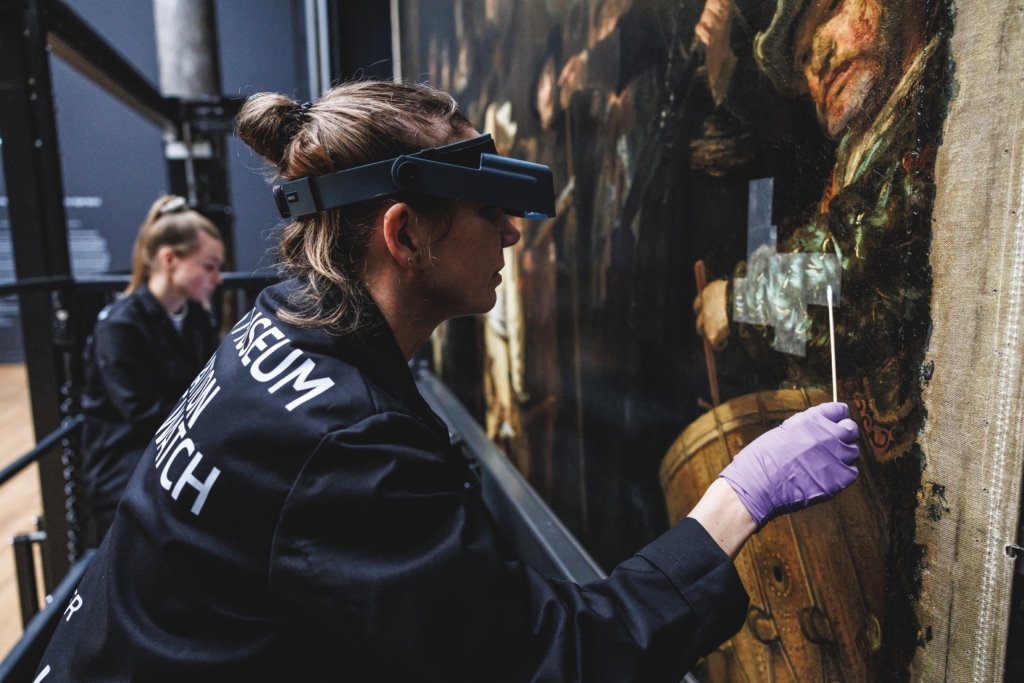
As well as displaying thousands of objects never before viewed by the public, these open-storage museums give visitors a rare glimpse behind the scenes, turning the museums inside out, in a way.
From one vantage point, guests can watch as specialists carry out conservation work on certain exhibits. Peering through the glass floor beneath their feet, they may even catch sight of a forklift truck or a cherry picker moving heavier items around. It’s rather like being in a vast Amazon warehouse, only with beautiful, and sometimes priceless artifacts on the shelves rather than cardboard parcels.
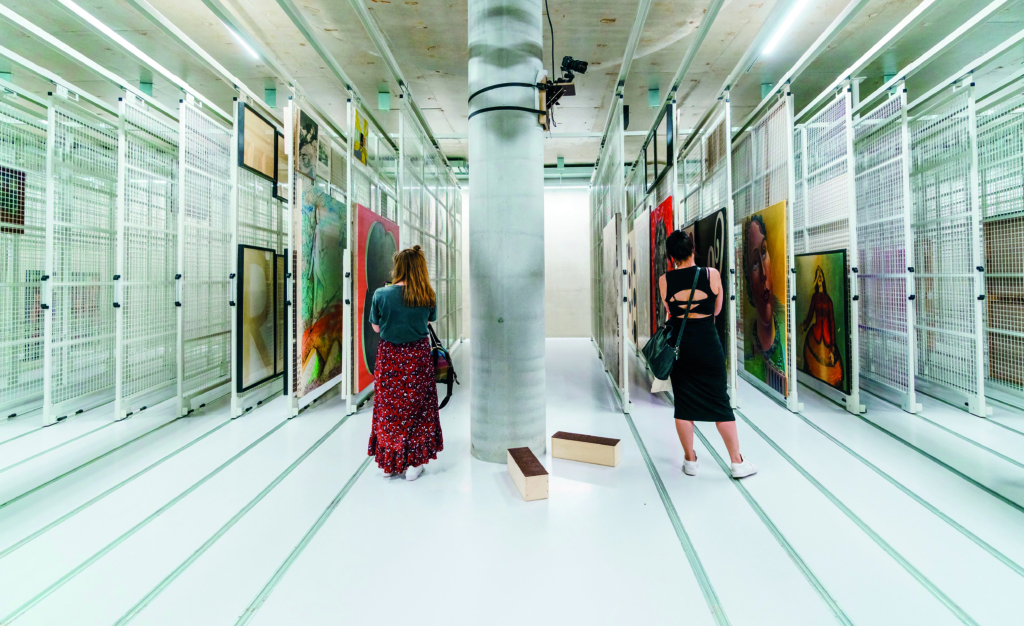
There are half a million works stored in the V&A East Storehouse in all, including 250,000 objects, 350,000 books and 1,000 archives. At any one time, around 1,300 of them will be displayed on the public shelves, with items regularly swapped out and rotated. Although there are no display labels, QR codes enable visitors to explore each item’s back story.
There are also several large-scale displays, including a 15th century palace ceiling, a 20th century brutalist council block façade, a Picasso stage cloth, a 1920s German kitchen, and a 1930s wood-panelled office designed by US architect Frank Lloyd Wright. The most unusual aspect of all is a service called “Order an Object” which allows visitors to browse the museum website, select up to five items they wish to examine and, after giving a fortnight’s notice, view them on site.
Given the V&A’s global reputation, this form of visible storage could well catch on at other major institutions around the world. It certainly has its advantages, saving space and offering more exhibits than would be possible in traditional displays—all the while giving visitors a glimpse behind the scenes of how museums function. But there are disadvantages, too. The ventilation system at V&A East Storehouse has to work hard to extract the potentially damaging moisture from visitors’ breath. And in an era when political protesters occasionally vandalize works of art, curators here are surprisingly trusting.
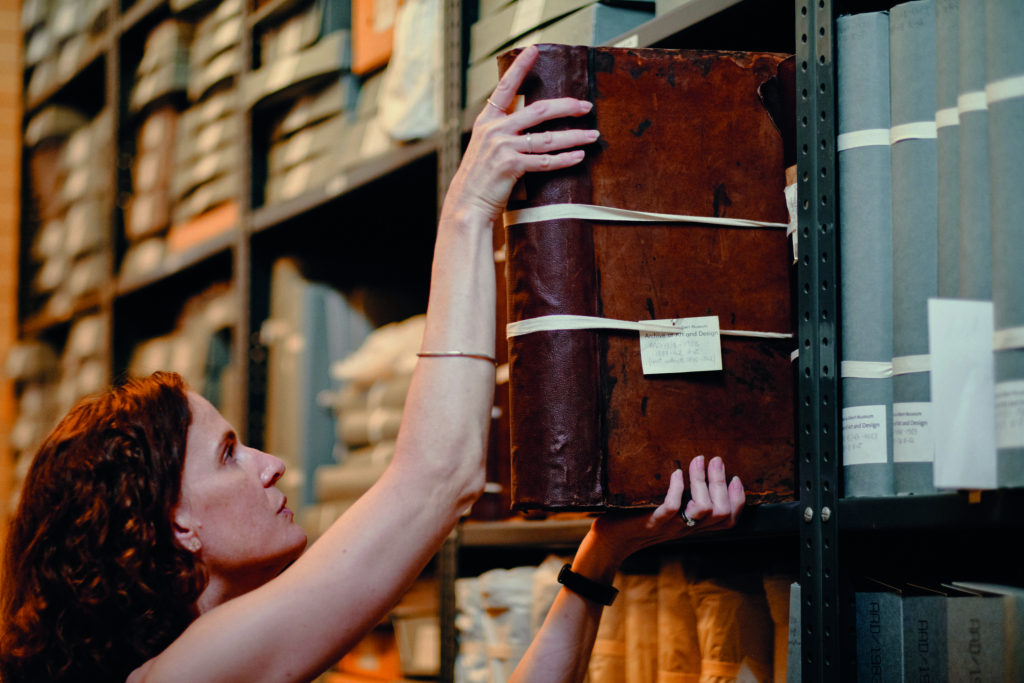
Above all, though, they are happy to display so many objects that might otherwise never be seen. “Most museums show one to five per cent of their collections, and that’s kind of mad, right?” Haseldine says. “Why do we not let the public in to see everything else? This is a call to action. Access can’t be for the privileged view. Access is for everyone. Democratizing access to our national collections is so important.”
Journey in Museums
Journey has worked with many museums and cultural institutions around the world, including The Victoria and Albert Museum and the Crown Jewels at the Tower of London (both in London, UK), Zayed National Museum and Abrahamic Family House (both in the United Arab Emirates), Delta Flight Museum (in Atlanta, Georgia, USA) and the Bob Dylan Center (in Tulsa, Oklahoma, USA). One of the latest projects was at London’s British Museum, the oldest public museum in the world. Along with exhibition designers Ralph Appelbaum Associates, the design agency was asked to breathe new life into two of the museum’s most precious artifacts: the Vindolanda tablets and the Assyrian lion hunt reliefs. Using sound, motion and narrative design, Journey transformed both displays into captivating immersive experiences.
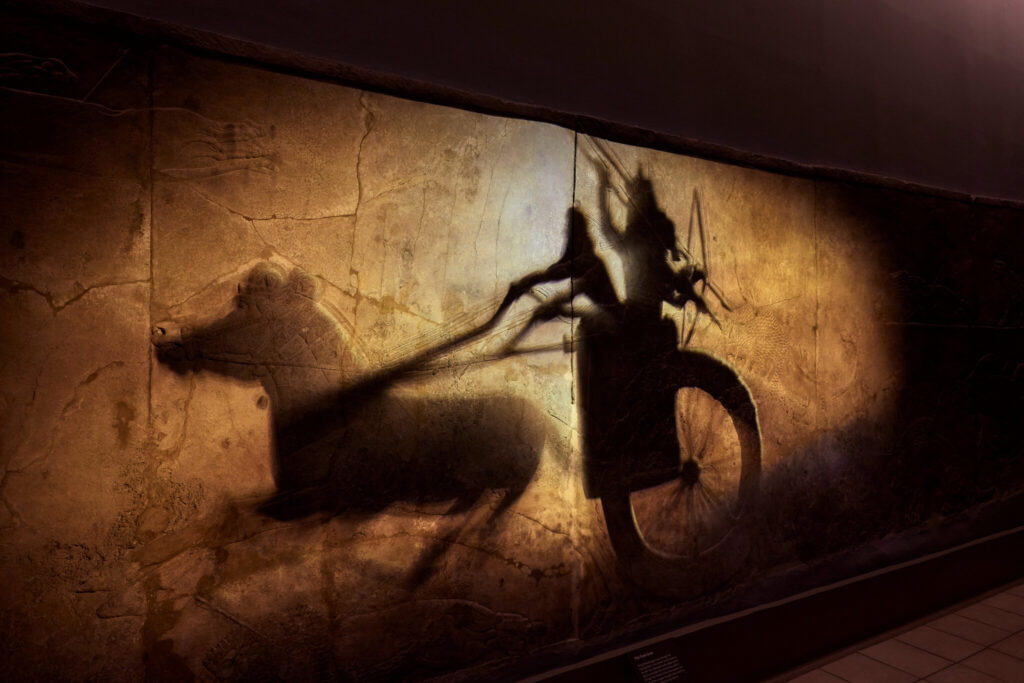
The lion hunt reliefs of Ashurbanipal date from around 640 BC, and comprise large stones carved over 2,500 years ago, depicting a dramatic ritual hunt on horseback. Journey used spotlights to progressively illuminate sections of the relief while sound effects portrayed the thunder of chariot wheels and horses’ hooves, and the roars of lions being pursued. “The projection has significantly increased the attracting and holding power of the displays,” said Stuart Frost, head of interpretation at the British Museum. “I’ve even observed everyone watching the animation spontaneously applaud at the end.”
This article was originally published in Journey World Magazine January 2026.
Download Journey World Magazine – Issue 01/2026
To access the full digital edition, please complete the form below.