

Apollo 50: Go for the Moon
A celebration of one of humankind’s greatest achievements
Client
Smithsonian National Air and Space Museum
Location
National Mall, Washington, D.C., USA
Collaborators
U.S. Department of the Interior
Jeff Beal
Sector
Government, Civic & Mega-Events
Services Provided:
Strategy
Vision, Positioning & Value Proposition
Experience Masterplanning & Placemaking
Business Case & Technical Feasibility
Story
Creative Concepting & Experience Mapping
Narrative Development
Scripting & Messaging
Voice, Tone, Accessibility & Localization
Filmmaking & Animation
Design
Experience Design
Immersive Media Design
Production Design & Set Design (live/theatrical)
Architectural & Theatrical Lighting Design
Technology
Immersive Media & Projection Mapping
Virtual Production & 3D Visualization
Delivery
Program & Project Management
Technical Direction & Production Management
Vendor/Fabrication Procurement & Oversight
Installation, Integration & Commissioning
Challenge
To mark the 50th anniversary of Apollo 11, the Smithsonian National Air and Space Museum commissioned Apollo 50: Go for the Moon, a civic-scale public event on the National Mall.
Solution
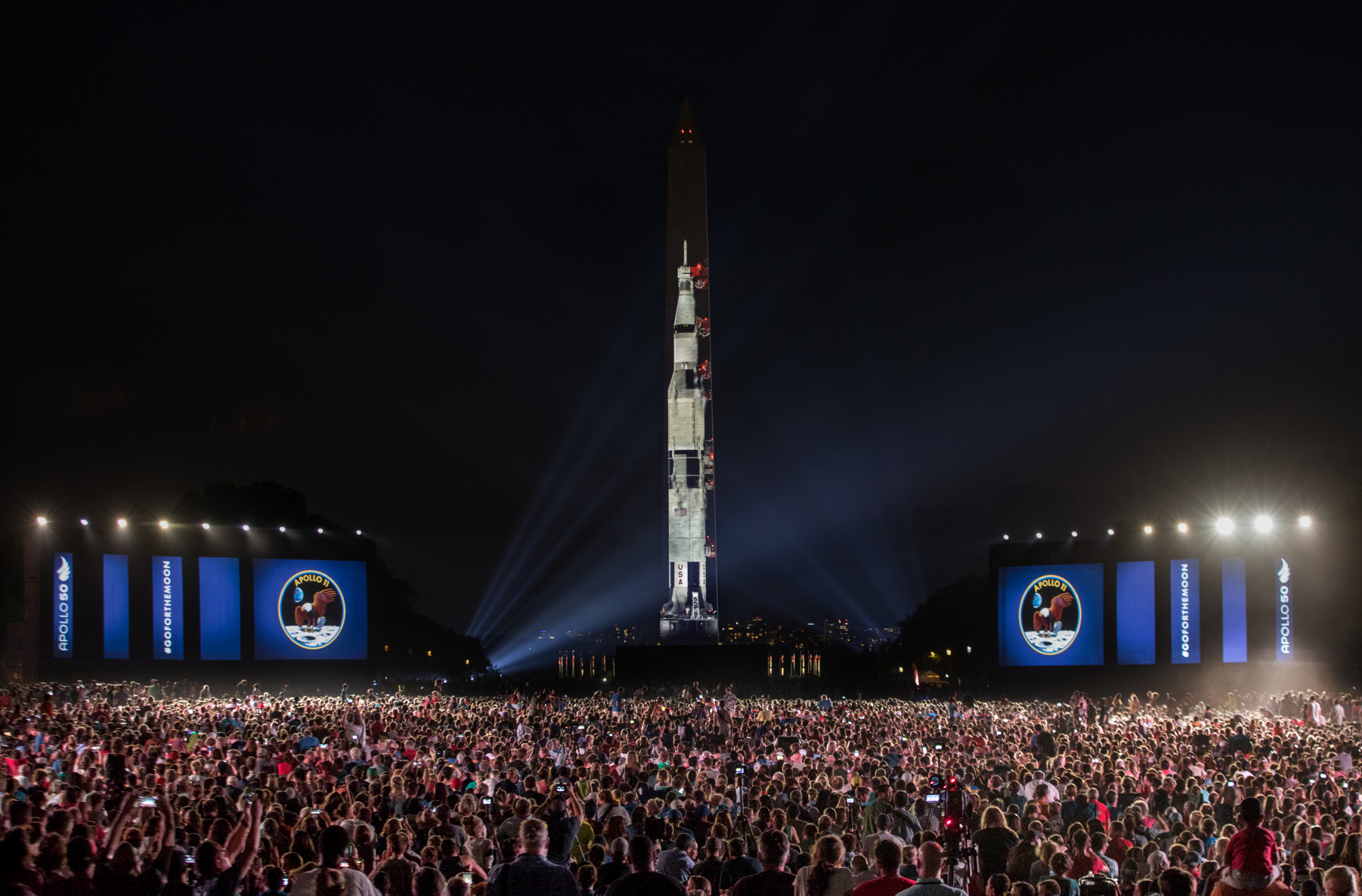
59, a Journey studio was invited to conceive and deliver a spectacle that would transform the Washington Monument into a storytelling canvas. The ambition was to recreate the launch of Apollo 11 and retell the story of the first Moon landing at an immense scale, combining archival footage, bespoke animation and original music into an immersive experience for the ages.
The result was a once-in-a-generation gathering that brought one of humanity’s defining achievements back to life.
“That first moment when I saw the rocket, I instantly started crying. Look what we’ve achieved. We’ve achieved something truly inspirational.”
— Ellen Stofan, Under Secretary for Science and Research, Smithsonian’s National Air and Space Museum.
A new frontier
The project was a first-of-its-kind collaboration between Journey, the Smithsonian National Air and Space Museum, and multi-award-winning composer Jeff Beal.
Journey was responsible for creative concepting through experience design, into technical design, production and delivery.
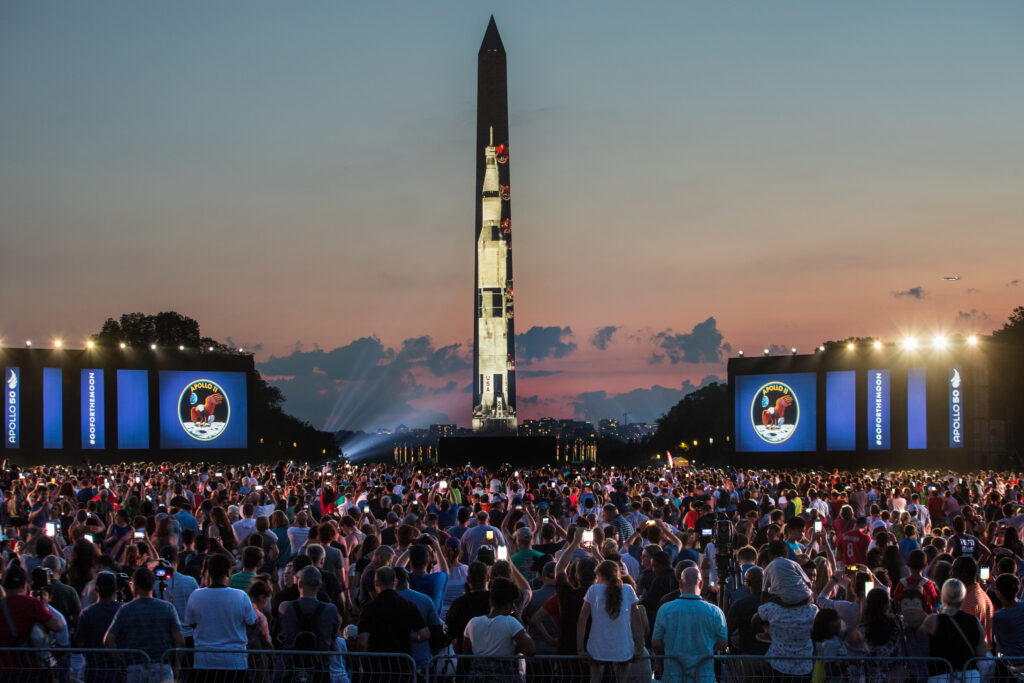
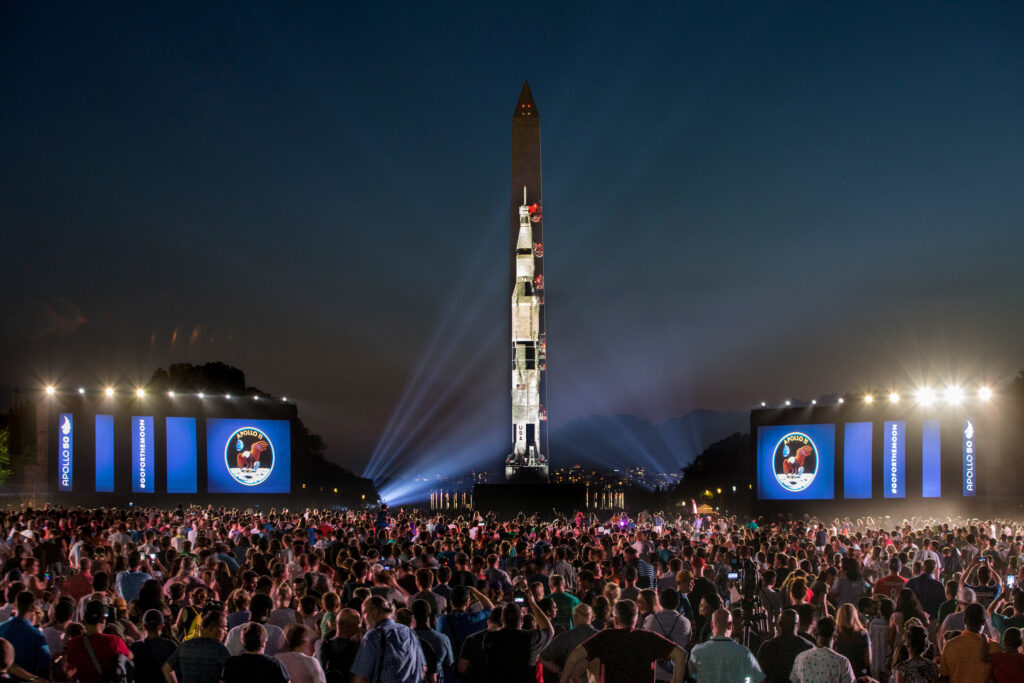
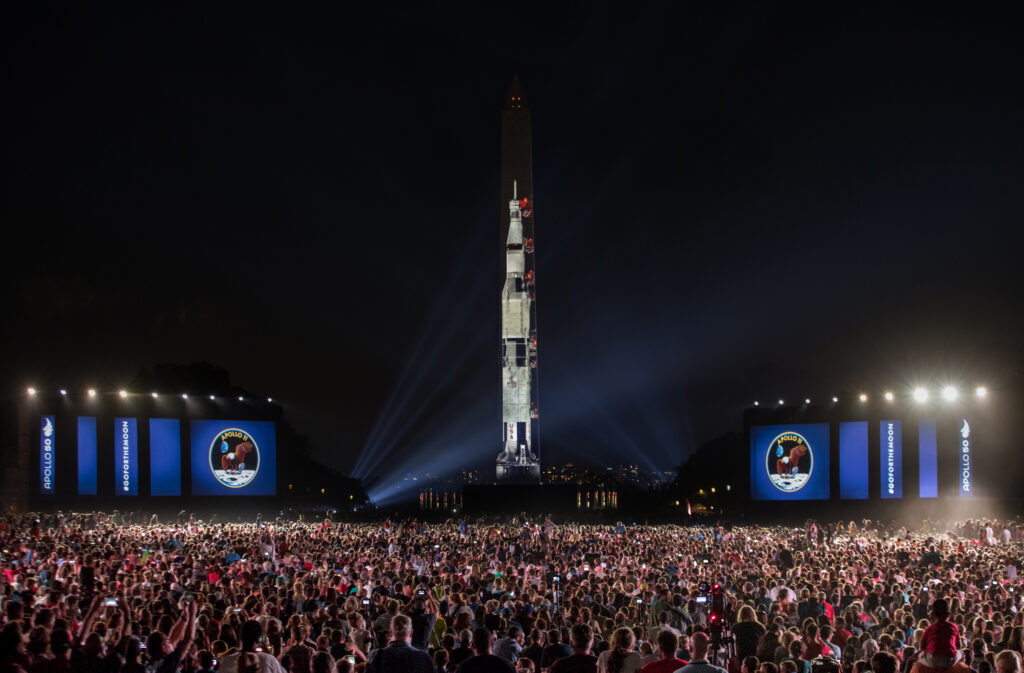
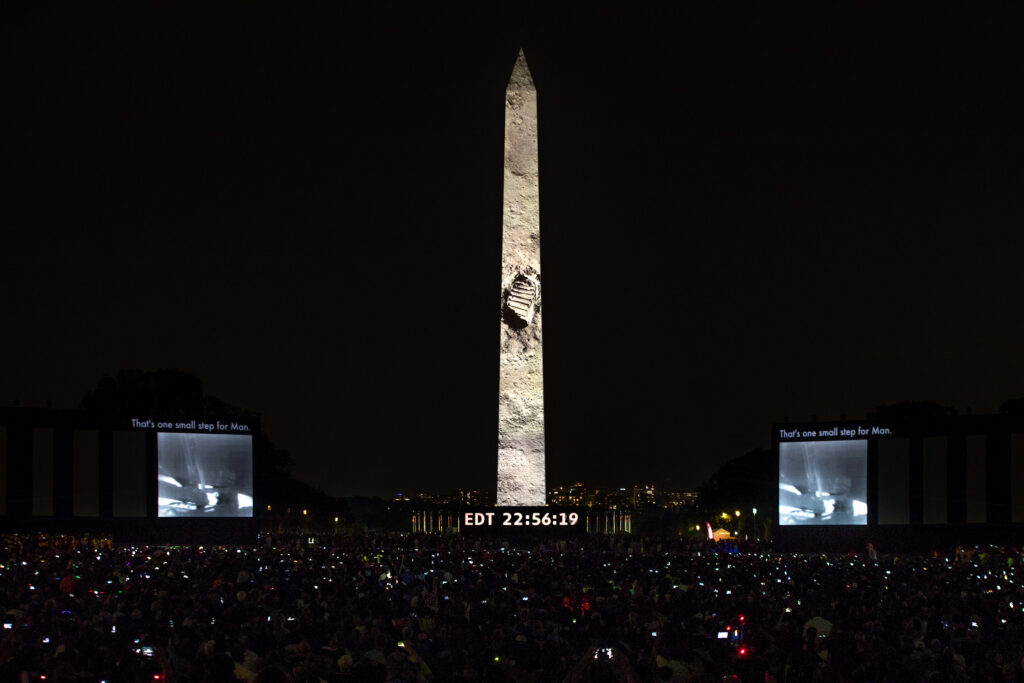
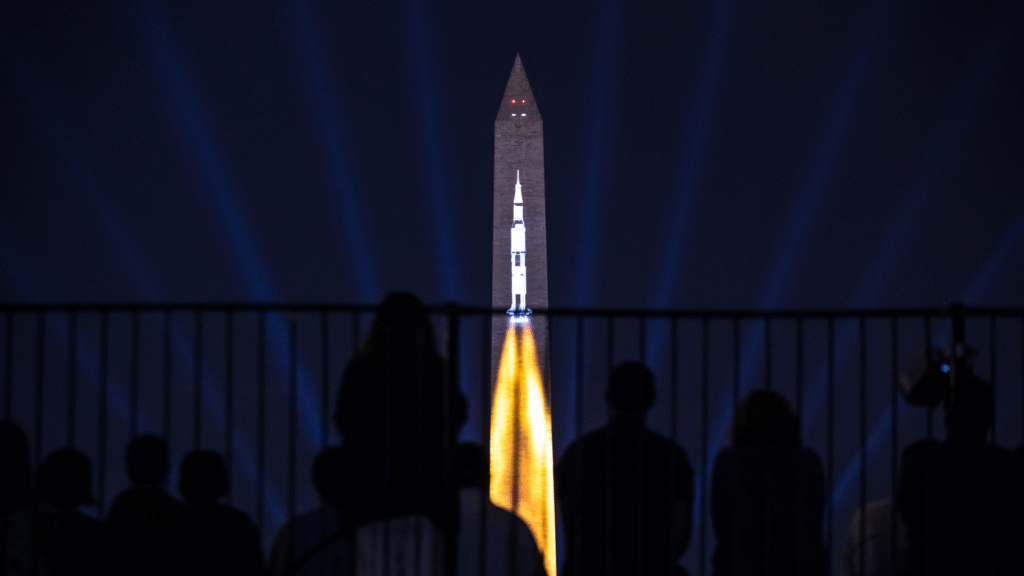
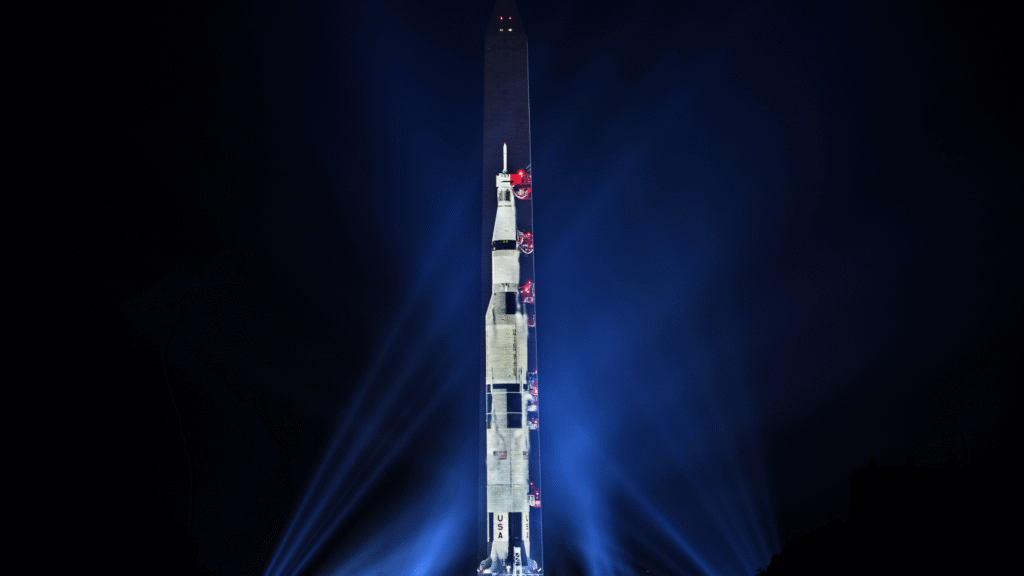
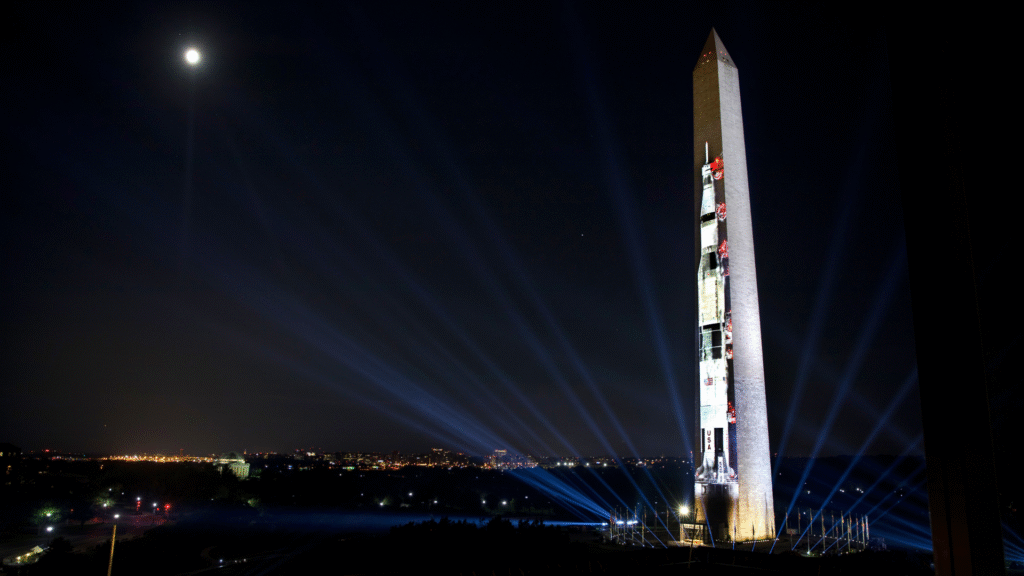
A 17-minute animated story was rendered in immense projection-mapped media across Washington’s iconic obelisk and supporting screens. The Washington Monument became rocket, sky and lunar surface, a 555-foot narrative canvas at the symbolic heart of the nation, celebrating the hundreds of thousands of people who worked tirelessly to make this extraordinary mission possible.
How far and how fast we have come
Condensing the magnitude of the Apollo programme into such a short timespan required careful editorial discipline and a creative approach.
We drew from NASA’s vast archive, more than 10,000 rolls of footage, alongside a digital recreation of the Moon generated from real NASA topographic data with accurately rendered craters. It was a rigorous process to ensure we accurately represented these eternal and iconic landscapes while crafting a narrative around them that remained easy to follow and emotionally poignant.
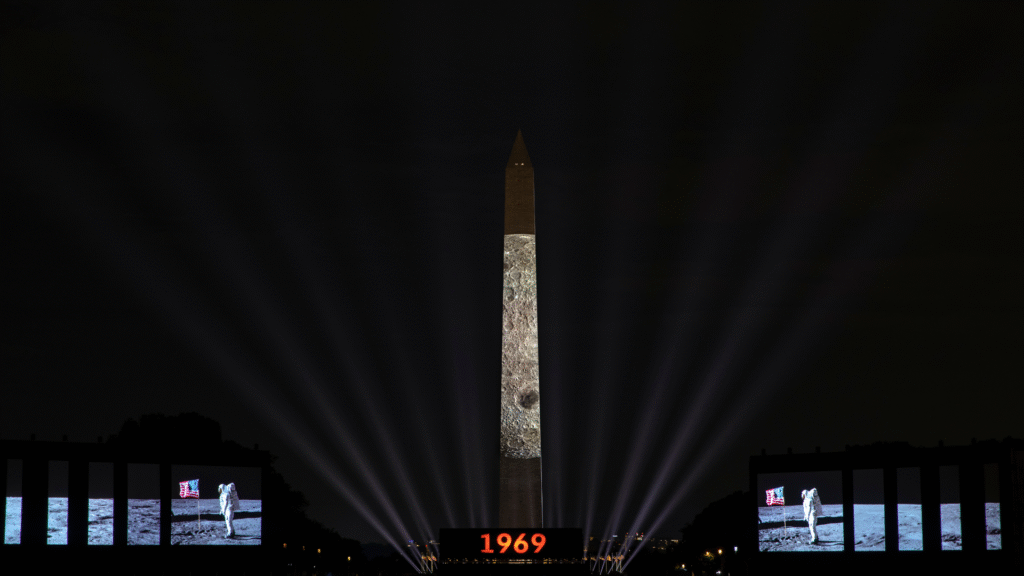
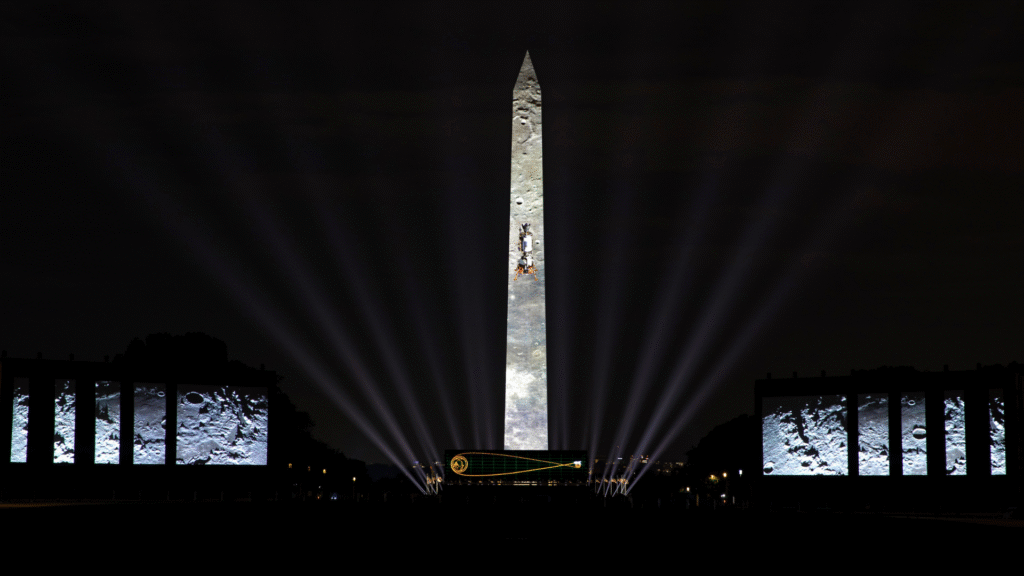
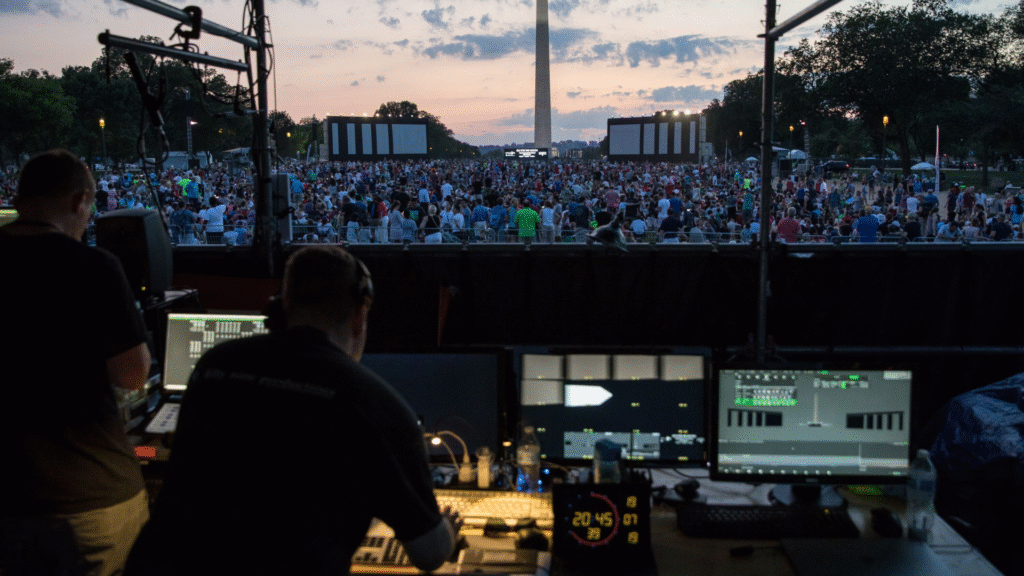
Moreover, designing for an audience of tens of thousands on the Mall required a unique approach. This was not a cinema. The team wanted the audience to feel as though they were witnessing the launch firsthand at the Kennedy Space Center launch site on Merritt Island, Florida, or standing among those listening to President John F. Kennedy deliver his “We Choose to Go to the Moon” speech at Rice University.
To achieve this effect, archival material was interwoven with bespoke animation and large-scale visual effects. The ignition sequence. flame, smoke and exhaust were carefully modelled to move convincingly across the full height of the monument, responding to its vertical form. As the Saturn V appeared to lift off, clouds of vapour rolled down the obelisk, and the stone surface transitioned into sky and then into the void of space, making you feel as if you were moving with the rocket.
The space between the notes
A crucial and interlocking element of the immersive experience was Jeff Beal’s musical composition, which we amplified through an immense spatial audio system.
His score carried the emotional arc of our storytelling. Dreamlike string chorales underscored Kennedy’s speech, building into powerful orchestral passages as the rocket ignited. In its final movements, the music evoked the grandeur of Stanley Kubrick’s space cinema to convey a profound idea: that one civilisation from one small rock had reached the stars.
Not because it is easy
From a production perspective, the project was unprecedented. Projecting onto the Washington Monument required an Act of Congress and extensive coordination across federal and local agencies.
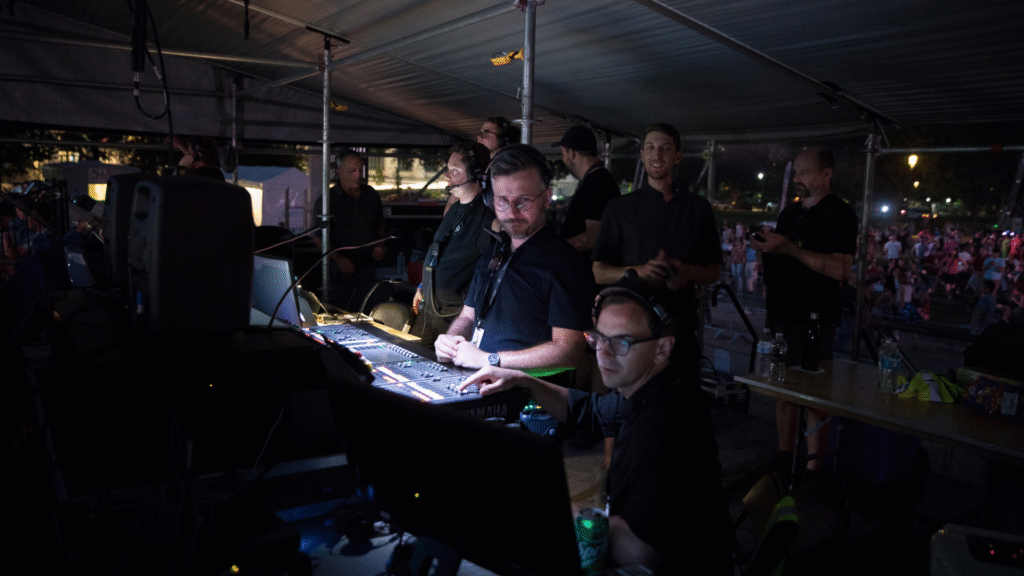
The site itself also presented a complex logistical challenge: an active public park requiring more than 15,000 feet of fibre and miles of cable ramping to support projection, spatial audio, and front-of-house infrastructure stretching the length of the Mall. Testing took place in the middle of the night to preserve secrecy and avoid spoilers ahead of the public reveal.
The best of all mankind
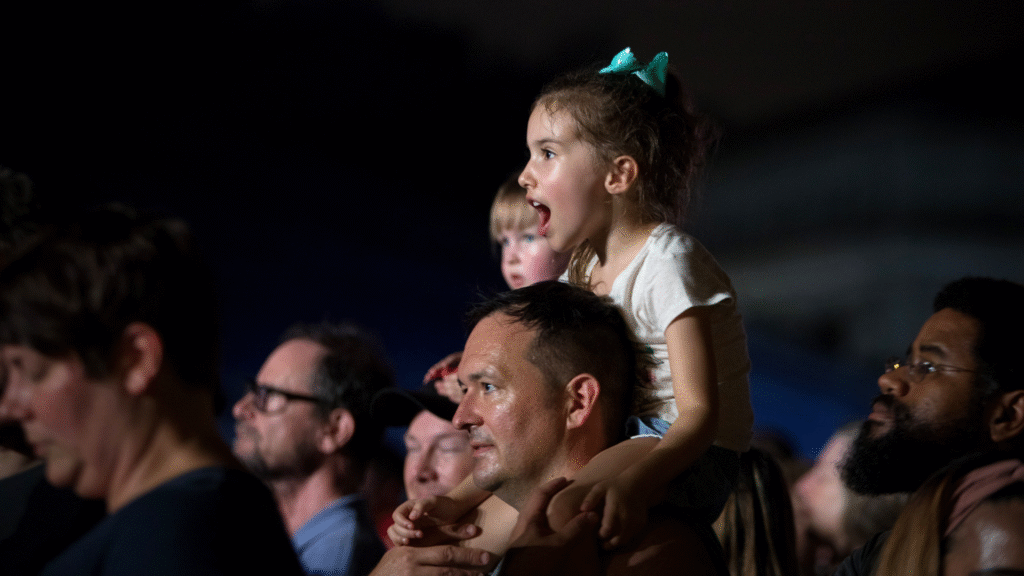
For 17 minutes, half a million people stood on the Mall and looked up together. At the quintessential story of shared human ambition, a reminder of what courage, science and collective effort can achieve.
We all know how Apollo 11 ends. But in that moment, as the rocket rose up the face of the Washington Monument and Kennedy’s words echoed across the crowd, the uncertainty of that era returned – along with the will to explore and wonder at the results which ultimately defined it.
And that, perhaps, was the real achievement: not simply remembering the Moon landing, but, for however briefly, restoring the feeling of reaching for it.
Impact
500,000+
Visitors
Winner
2020 Douglas S. Morrow Public Outreach Award