

In 2024, I played my last gig at Rockwood Music Hall. For years, Rockwood was considered a rite of passage venue — where budding artists could move up the ranks of their four stages and build a New York fan base. When it closed in November 2024, you could feel the grief in the air.
The sad truth is, beloved small venues are disappearing. The rent climbs and the grants dry up, while legacy community spaces pay the price. Yet, fans are craving more — more connection, more experiences, more variety. At the same time, businesses everywhere are trying to create and sell “experiences.” Maybe these forces aren’t at odds. Maybe they’re waiting to find each other.
Every Space Has a Stage
The amalgamation of these conditions highlights an opportunity for hotels, restaurants, tourist attractions, museums, cruise ships and other everyday spaces. These businesses have two things artists need most: a physical footprint and an audience. Many of these spaces already dabble in the occasional acoustic performance or DJ night, but what if these spaces were designed from the outset to perform?
Imagine a restaurant that’s built to double as interactive theatre. A retail space that can shift instantaneously into an immersive media room. An observation deck that’s built to become a skyline stage. Or a museum that regularly comes alive as a multi-stage, with different musicians in every hall. Designing for a “live mode” could unlock an entirely new class of small venues — where artists thrive, guests linger and businesses tap into a new revenue stream.
Proof by Pop-Up, Ready to Scale-Up
We already know it works.
Music event company Sofar Sounds has hosted nearly 10,000 shows per year across 400 cities, transforming living rooms, lobbies and storefronts into ticketed, intimate concerts. Ski resorts from Colorado to Scandinavia have turned their après-ski moments into mountaintop DJ sets. Even New York’s Edge Observation Deck, a Journey partner, has redefined its skyline view as a live venue partnering with Tao Group for its Marquee Skydeck that turned the city’s highest terrace into a stage in the sky throughout the summer of 2025.
This summer, that idea played out on a global scale. Across the 16 World Cup host cities, landmarks, attractions and public spaces transformed to offer fans unique, yet interconnected watch parties and celebrations. Rockefeller Center turned its ice rink into a “pitch” where fans watched and celebrated, and filled its Channel Gardens with a floral tribute to every World Cup winner. Edge NYC turned its observation deck into a watch party, 1,100 feet above Manhattan. In Vegas, Sphere turned its Exosphere into a wall of fan stories and kept score for the strip. Spaces that were once backdrops to global events like the World Cup became embodiments of them, bringing the excitement of the stadium to the streets.
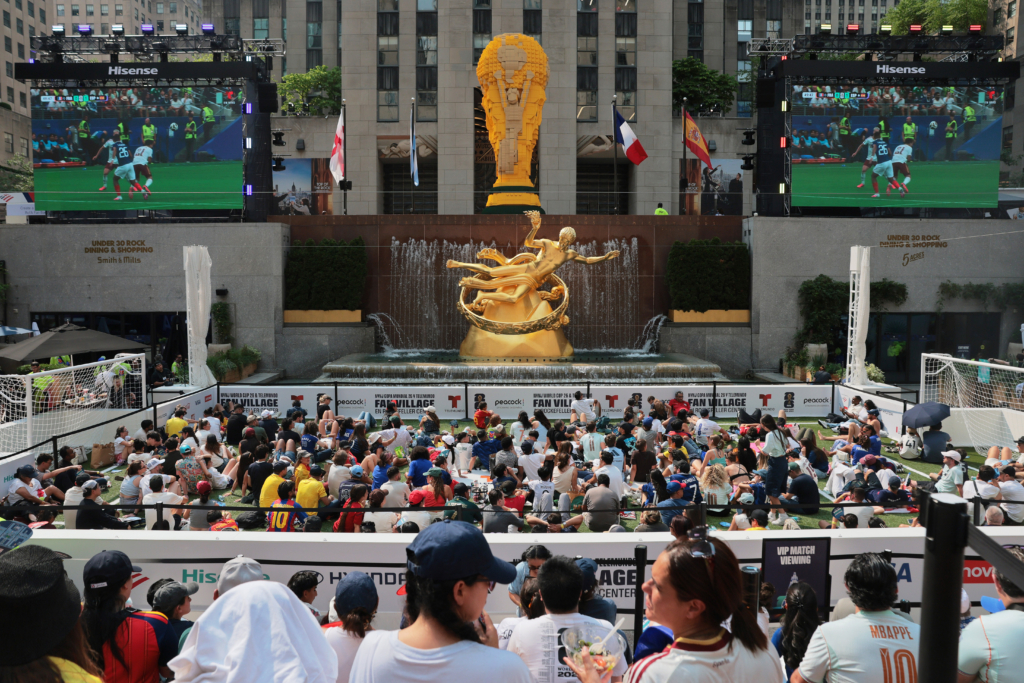
These are proof points for the value of the “pop-up” venue: interesting spaces create a unique and memorable experience. But when even pop-ups carry today’s high ticket prices, the resulting experience will often fall short of the expectations of audiences and artists alike. Short-term seating, rented PA systems and lack of audio-visual content create an overarching sense that the experience is a “temporary” environment.
The popularity of the pop-up leaves something to be desired, but serves as a prequel to the future of venues. As this desire for new live experiences in unique destinations grows, spaces that are built from the outset to succeed in venue mode will thrive. The evolution offers new revenue potential for businesses thoughtfully designed to support a live mode, while providing more places for artists to build a live community.
How You Too Can Venue
There are key checkpoints to design a space that can also be a venue.
1. Build to support hospitality and high-quality live experiences from the start.
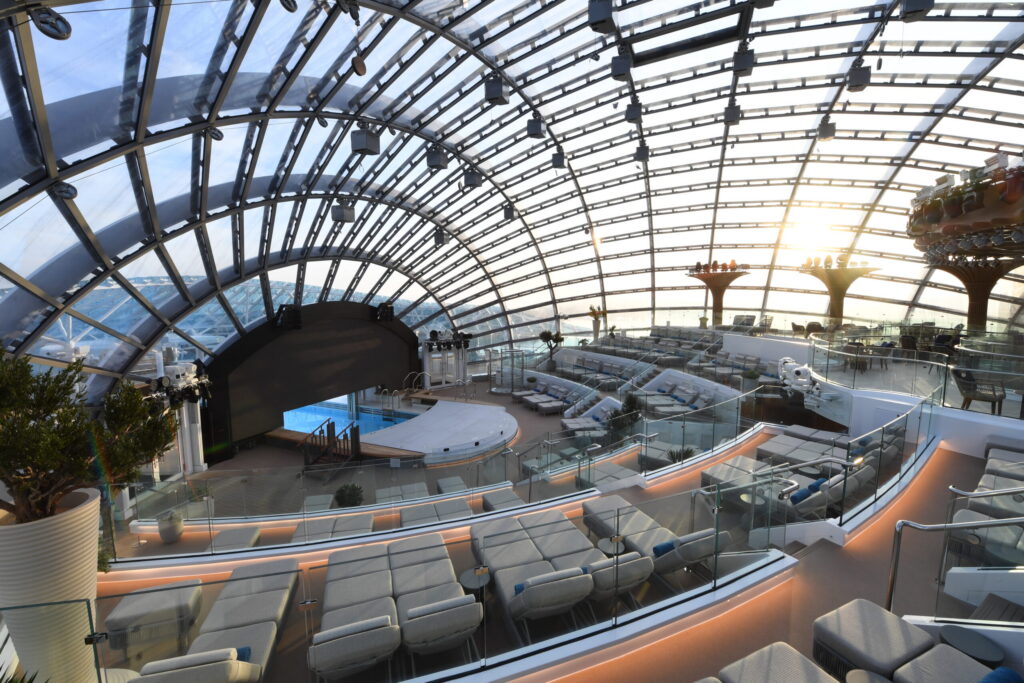
Seating, sightlines, acoustics, lighting and service infrastructure should be initially designed to always be able to support live events, even if not always active. Your primary use case (whether F&B, retail, hospitality, etc.) should thrive independently, then uniquely amplify when live mode is active. The Dome by Princess Cruises — designed by Journey company ICRAVE — uses this exact mentality to offer daytime drinks and daybeds by sunlight, and then reveal a hidden stage and stadium seating by night, with design fit for a Cirque Éloize acrobatics show.
2. Layer immersion as a live attractor.
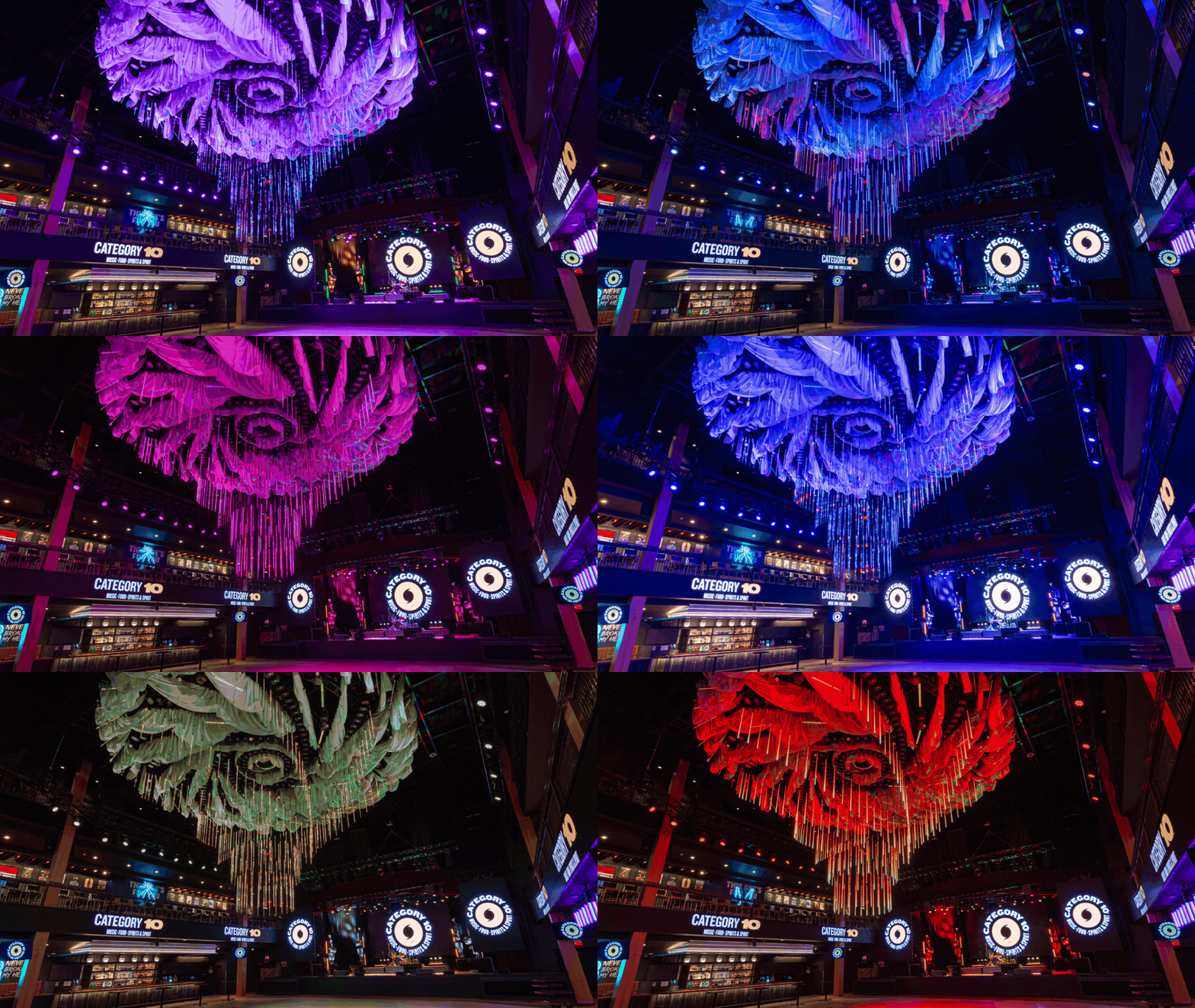
Interactive tech and AI-enabled data reactivity deepen engagement, especially if programmed on a live cadence. Category 10 in Nashville — another one of our Journey projects — embodies this. On top of its transformation from country restaurant and retail shop, visitors turn their eyes upward to see the eye-catching, moving ceiling: an immersive installation light show of the “Hurricane” Hall. En route to open a second location in Vegas, the Nashville spot has proven that if one physical footprint is designed properly with technology integrated, it can attract audiences as a light show, a line dance hub, a concert venue and nightclub.
3. Prioritize building authentic communities as extensions of your brand.
Businesses can evolve upon what they’re famous for with careful design of their venue alter-ego. Are you a museum that’s focused on modern art? Maybe your venue only books acts that utilize modern art visuals. Are you a gym with a rooftop? Maybe your venue is a sunrise dance party intended to inspire movement. Are you a restaurant serving fusion cuisine? Maybe you specialize in programming musical acts that blend genres from two or more cultures.
Designing your business to act as a venue shouldn’t be an afterthought nor does it need to be inauthentic. This is a way to tap into different sides of your same audience, shifting the view of your target customers to more holistic, multidimensional personas (MDPs). Curating a venue destination gives artists and fans a place to gather, and a programming schedule to talk about, both of which inject new cultural depth into your business.
The Payoff: Culture Meets Commerce
The most successful next-generation businesses aren’t chasing gimmicks or rapidly producing pop-ups; they’re activating their footprint as a multi-use experience destination, each with a unique POV and a system for igniting live content. Venues as afterthoughts don’t last; venues built for longevity in a live mode thrive.
The approach creates a symbiotic solution amongst the small venue crisis, designing from the outset to support programmed live experiences to ignite flat physical spaces. Prioritizing venue design recognizes the power of music, entertainment, immersive media and live connection as both cultural lifeblood and business advantage. The reward? More art, more experiences, more engagement, and more revenue.
Fans already see the world as a venue. It’s time for businesses to design like it.
Olivia Reid is Lead Strategist of Journey.
This article was originally published via Rolling Stone Culture Council.
Related Insights



Olivia Reid is a Lead Strategist at Journey, working at the intersection of generative AI, brand strategy and immersive experience.