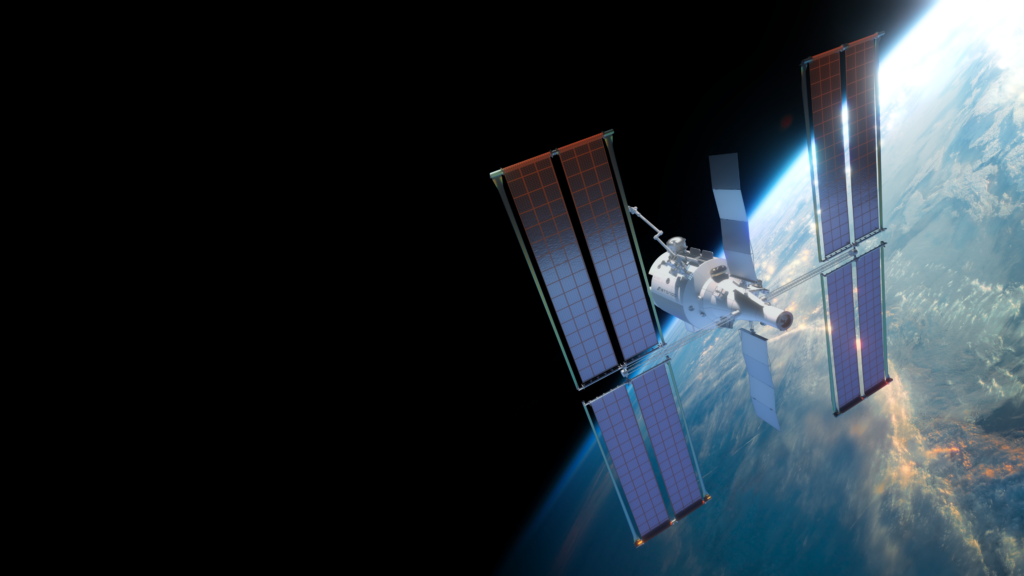
Twenty-five years of continuous human habitation on the ISS proves that we can live outside the environment we evolved for. Yet, even after decades of manned space exploration, there has been little concern about the comfort of the people involved.
Early spacecraft were barely large enough for their pilots, engineered to keep one person alive in a hostile environment. The brilliant minds behind these crafts have, understandably, prioritized surviving over thriving. Until recently, the idea that people might do more than simply endure the inhospitable environment of outer space hasn’t been part of the conversation.
That’s all understandable for government-funded organizations running R&D and innovating endless “firsts.” But we’re past the pioneering phase now. As we enter a new age of longer commercial space missions, we can draw on hard-won experience both in orbit and on the ground to bring a more nuanced, informed perspective to life in Low Earth Orbit. Here’s how.
The Architecture of Agency
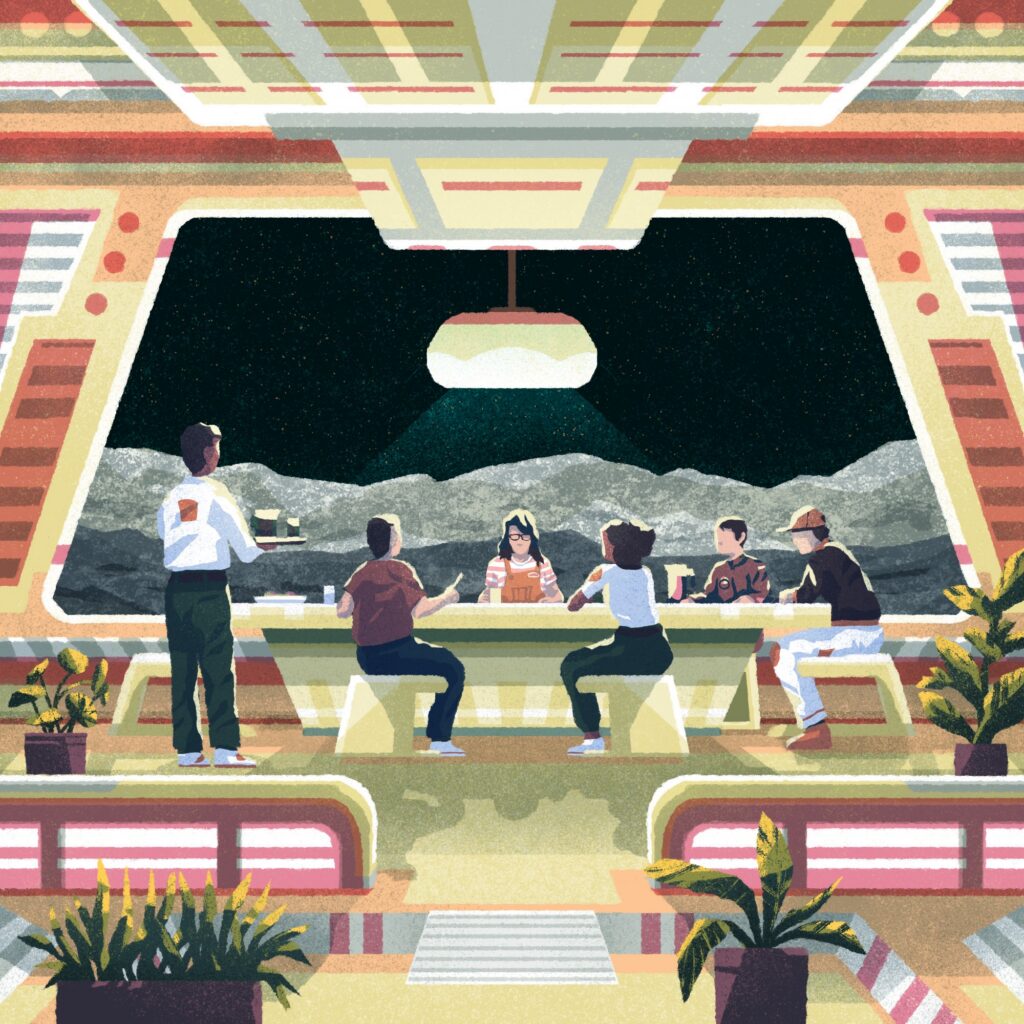
Among the many challenges of living in microgravity, one rises quickly to the top: control. Astronauts operate on an almost minute-by-minute itinerary, juggling experiments, maintenance, exercise, and constant coordination. That level of structure is essential, but it also leaves very little room for personal autonomy, a key ingredient in long-term happiness and psychological stability.
Cruise ships offer an unlikely but helpful comparison. They may be isolated worlds surrounded by endless water, but people are generally happy aboard them. What keeps morale high is the abundance of choice: what to watch, what to eat, which activity to try next. The freedom to shape your own experience is crucial for such a confined space.
The same principle applies at the bottom of the ocean. In nuclear submarines, where every square inch of space is spoken for, personalization is key for keeping navy personnel grounded on long journeys. Staff customize the privacy curtains on their bunks, bringing their own patterned cloth or motivational velcroed patches to tie them back to their normal lives on land. Photos of family, friends, and pets taped to their ceilings are another way to bring in bits of personalization and private moments of connection.
In another extreme environment, Antarctic research bases reveal the same lessons. Overwinter crews can spend up to nine months in the same tight quarters, and they use personal touches like string lights, photos, posters, and small stuffed animals to customize their tiny cabins. With a little inventiveness, the same opportunities for personalization can be designed into the architecture of spacecrafts, giving crews a way to feel grounded in a place with no ground.
One Room, Many Rooms: The Art of the Multi-Use Space
Whether you’re aboard a cruise ship or a space station, even the smallest sense of control is helpful. One of the most effective ways to support that autonomy is through multi-functional spaces: places that shift moods, activities, and social energy on demand.
Take the Dome on the enormous Sun Princess cruise ship. By day it’s a bright, communal space for swimming and sunbathing; by night it transforms into a full theater with entirely different performances, lighting, and atmosphere. Through its dynamic “choose-your-own-adventure” environment, the Dome lets guests change the tone of their day without ever leaving the space.
Antarctic living reinforces the lesson from a different angle. Bases like the Halley VI Research Station are zoned as dining areas, sleeping quarters, and workspaces, but multiple zones are used for socializing. Game nights, dinners, and informal gatherings can happen in different settings, giving crews a genuine sense of variety in a place where the sun doesn’t rise for weeks at a time.
The same principles can apply to spacecraft design. The goal is to create common areas that can have many uses, like a galley that can support a morning debrief, afternoon coffee, evening press event, and late-night movie. The crew determines how the space is used, giving them a sense of agency that matters enormously for morale and focus. In a habitat the size of a three-bedroom apartment, any multi-use space will earn its square footage a dozen times over.
Lighting the Way… Literally
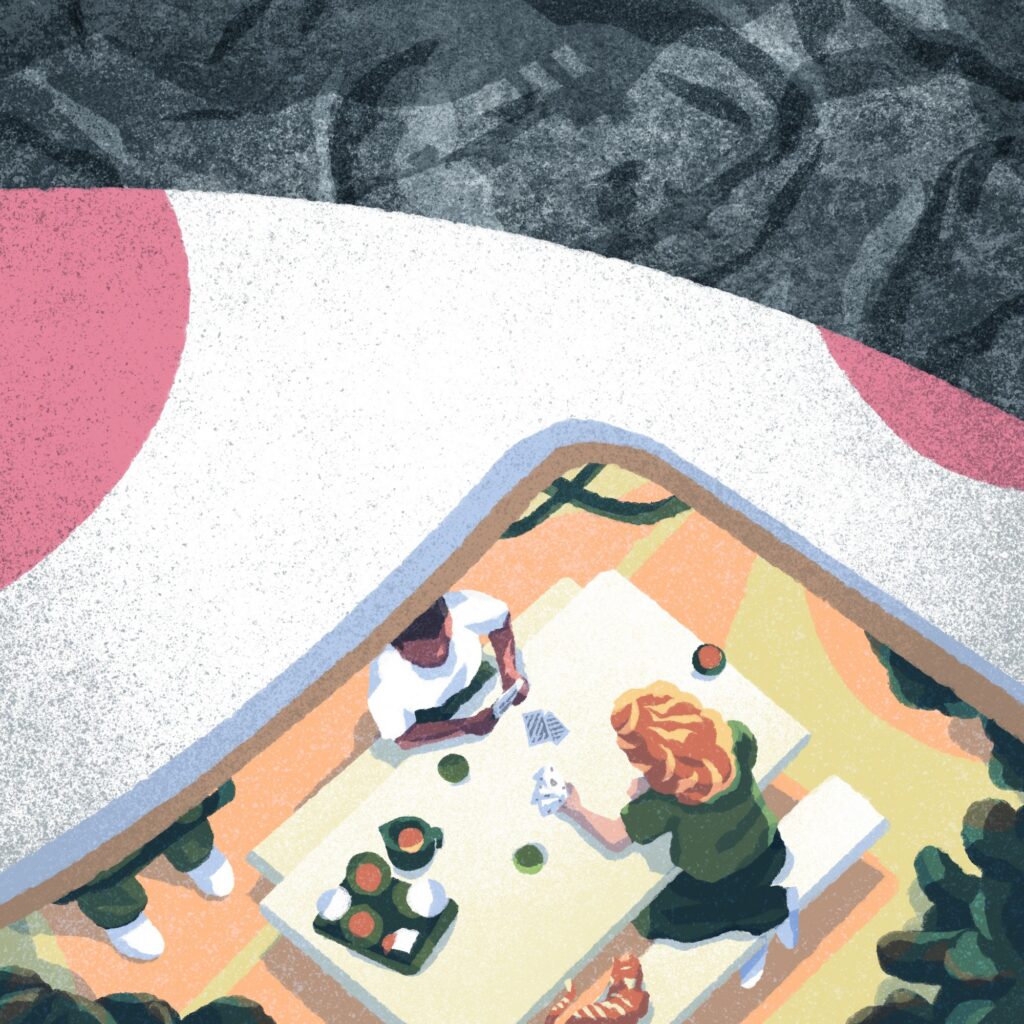
Lighting does more work than almost any other design element, and it’s one of the most effective ways to support multi-functionality in cramped quarters. The ability to dim, brighten, cool, or warm lighting can completely shift the mood of a shared space. With a few smart bulbs, occupants can distinguish a galley from a gathering place, or a work session from a team bonding experience.
But vibes are only half the story. Light is also one of our most powerful biological regulators, particularly in Antarctic bases like Halley VI where crews swing between total darkness and endless daylight. UV fixtures, warm task lamps, and dedicated light therapy spaces work together to protect circadian rhythms and keep crews psychologically stable. Color plays a supporting role, with bold color-blocked modules (red, yellow, blue, green) signalling functional mood zones throughout the base.
The same is true aboard submarines, where red or soft LEDs clipped to a bunk wall can offer sensory softening for recovery and rest. And in space, where astronauts experience sixteen sunrises every twenty-four hours, color and intentional light design is much more than an aesthetic choice; it’s practically a medical intervention.
Light also anchors wayfinding, whether you’re finding your favorite stage show on time or finding your way back to safety during a deadly blizzard. On a cruise ship, color and lighting cues help guests navigate intuitively across hundreds of rooms and dozens of decks. In a spacecraft or a snowswept research station, effective emergency lighting systems can be the difference between life and death.
As space habitats grow more complex and missions grow longer, using light design to comfort, regulate, and orient will be one of the smartest investments we can make.
Designing Beyond Survival
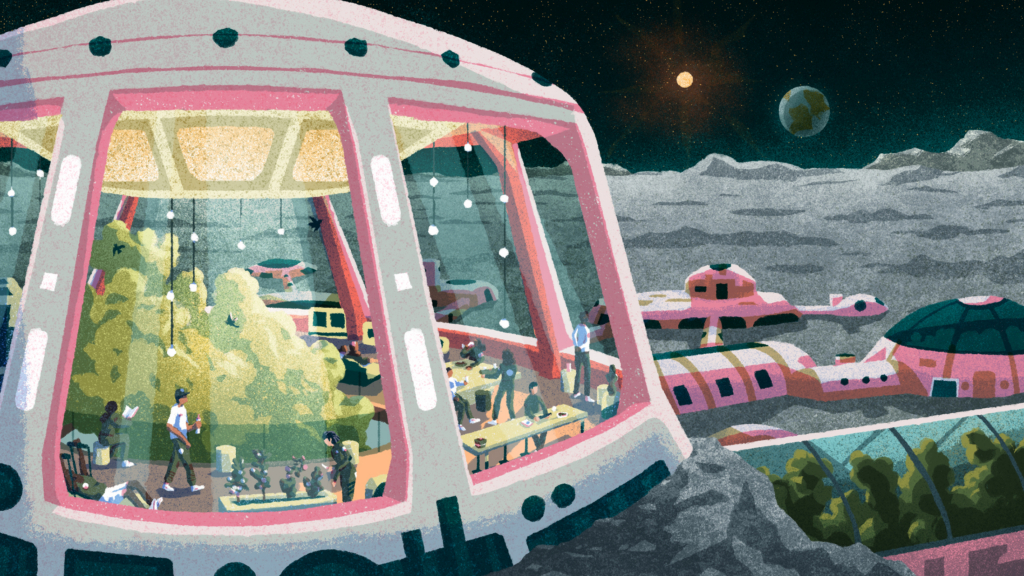
Whether you find yourself 600 feet underwater, 900 miles from the nearest city, or 250 miles above Earth, the lesson remains the same. Wherever humans are pushed to the edge of habitable life, they will prioritize personalization, choice, and comfort.
We can use these instincts to transform the next generation of orbital habitats and shape how future generations thrive beyond Earth. Keeping our explorers feeling fulfilled and connected to home may even be the difference between remaining earthbound and expanding into a multi-planet species. But to achieve this, we have to stop relying on improvisation and start building habitats that support humanity from day one.
The reason hospitality design works, even in the most inhospitable and confined environments, is that it acknowledges the importance of comfort. When we create spaces that support people’s sense of comfort and connection, not just survival, we can bring out the best in them. And in this new era of human spaceflight, it may be the most important design decision we make.