

Client
Foreign Ministry of Oman
Location
United Nations, New York City, USA
Collaborators
Fraser Randall
Proasur
Sector
Government, Civic & Mega-Events
Cultural Institutions & Museums
Services Provided:
Strategy
Experience Masterplanning & Placemaking
Story
Narrative Development
Scripting & Messaging
Voice, Tone, Accessibility & Localization
Filmmaking & Animation
Design
Experience Design
Exhibition Design
Environment Build
Architectural
Lighting Design
Immersive Media Design
Interaction & UX Design
Services Provided:
Technology
AR/VR/XR & Interactive Software
Immersive Media & Projection Mapping
Delivery
Program & Project Management
Technical Direction & Production Management
Vendor/Fabrication Procurement & Oversight
QA/QC, Documentation, Training & Handover
Installation, Integration & Commissioning
Specialist Fabrication
The Challange
The United Nations headquarters houses one of the world’s most significant collections of diplomatic gifts, presented by member states as expressions of their culture and shared values.
In 1986, Oman donated the “Traditional Furniture and Artifacts Exhibit” to mark the UN’s 40th anniversary. Installed in the Secretariat Building in New York, the gift comprised six display cases, four decorative chests, four chairs and a frankincense burner, celebrating Omani craftsmanship in woodcarving, weaving, silver and goldsmithing, and traditional sword and dagger making.
The exhibit sits outside the President of the General Assembly’s office, between the United Nations Economic and Social Council and Trusteeship Council Chambers, along a major route near the Security Council Chamber.
This is a space where delegates from across the world convene to address matters of global significance – a stage with the entire world as its audience, it would need a new set to match its illustrious position.
Our Solution
Journey was invited to reimagine the display from concept through design, fabrication oversight and delivery, creating a contemporary representation of Oman in the 21st century as a “friend to all”, while preserving the original artefacts and respecting the gift’s established footprint within the UN.
Our strategic framework for the new experience is centred on the principles the Oman Foreign Ministry seeks to convey: aesthetic harmony, sustainability, longevity, and adaptability.
This ambition was balanced against the technical and security requirements of this highly controlled setting, requiring close coordination with UN security, facilities management, planning, design and construction teams, and curatorial stakeholders.
A portal into Oman
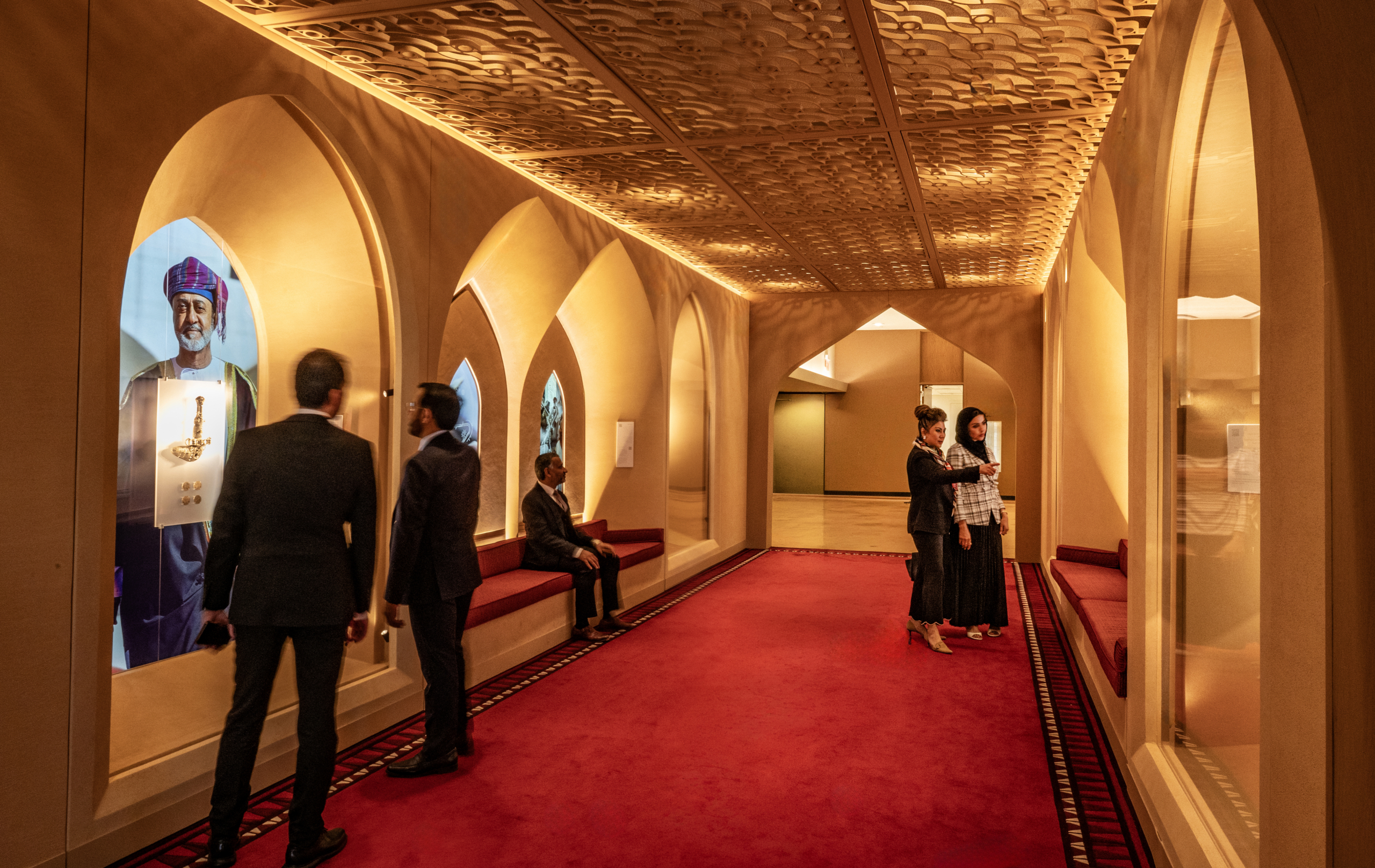
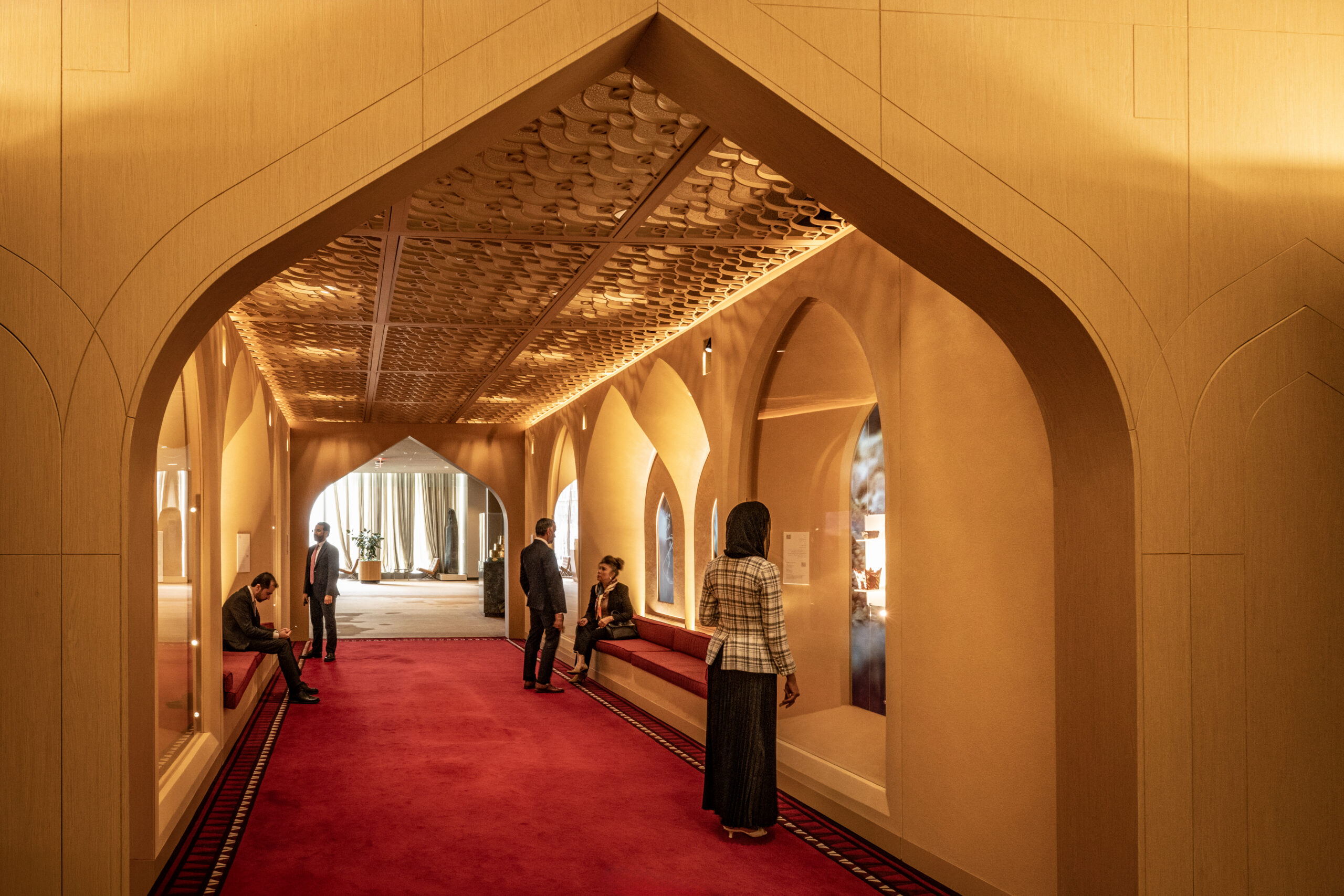
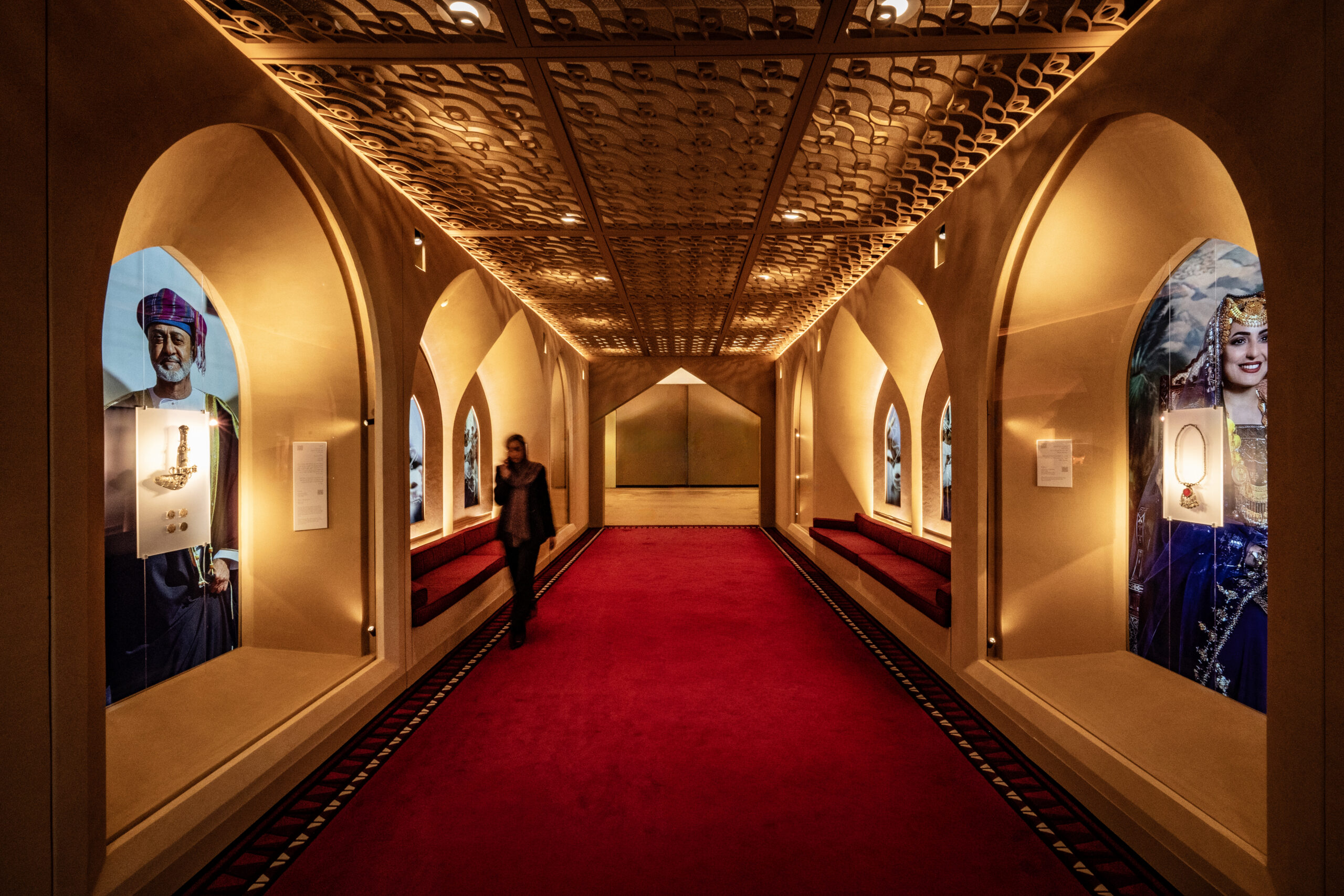
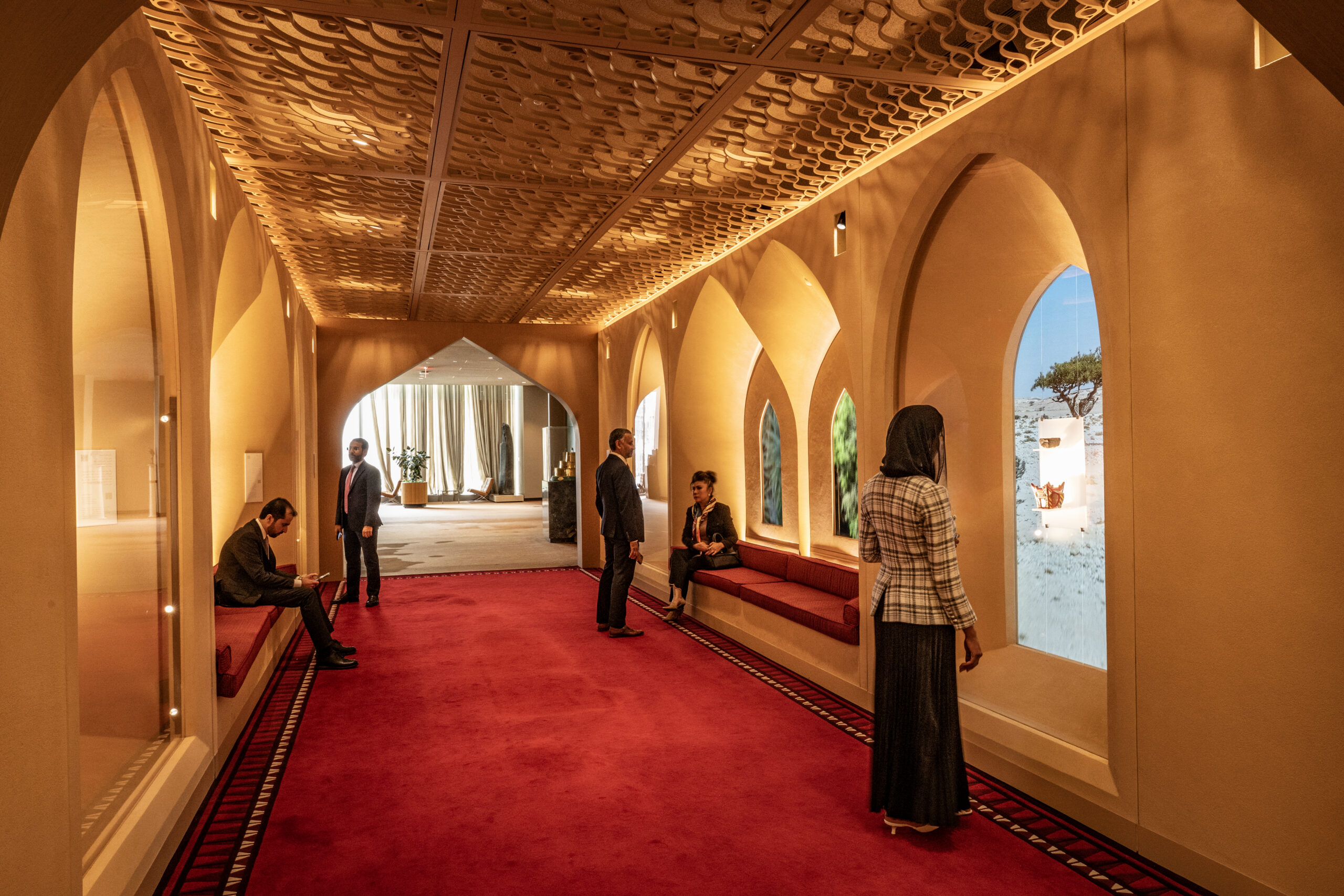
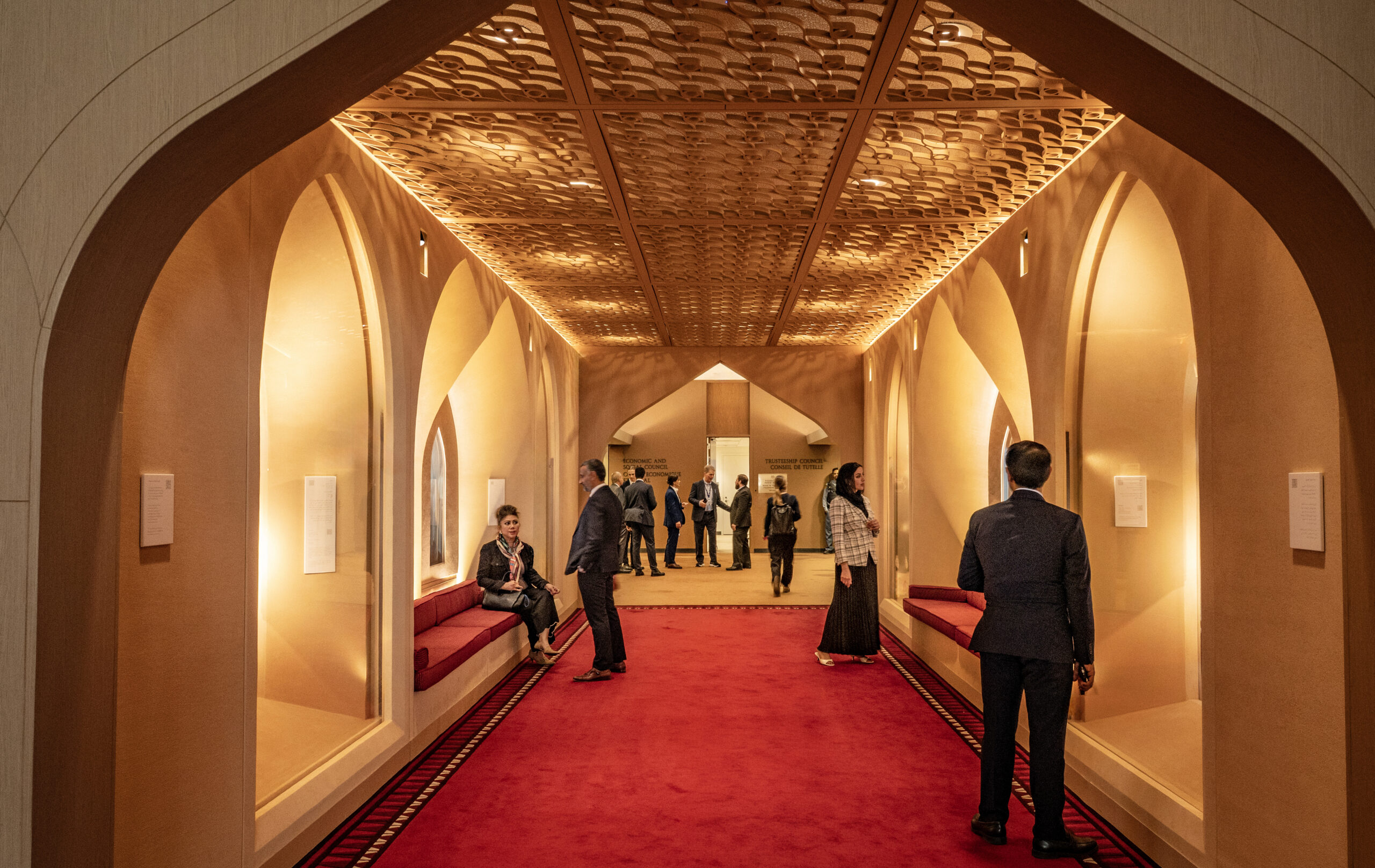
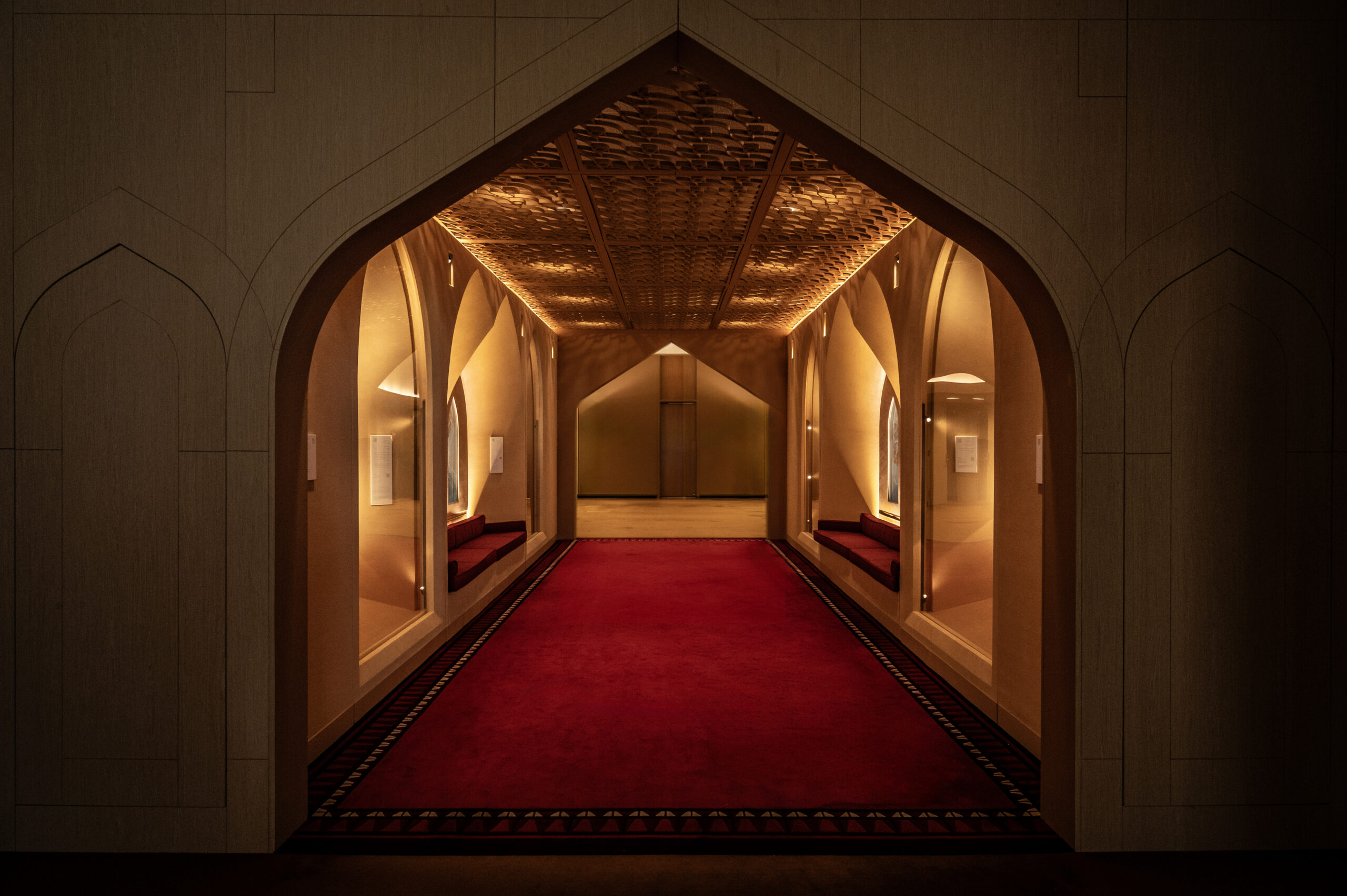
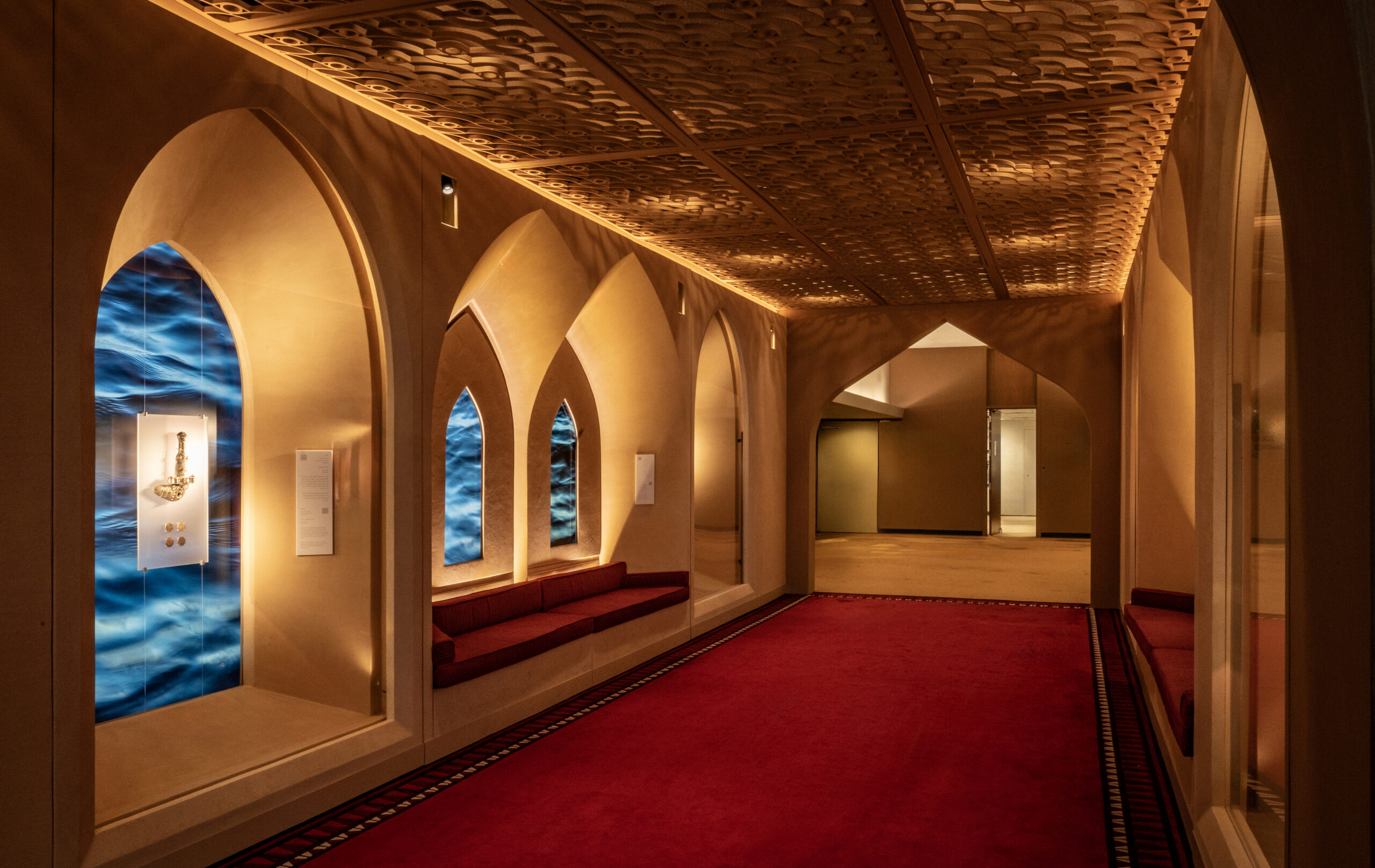
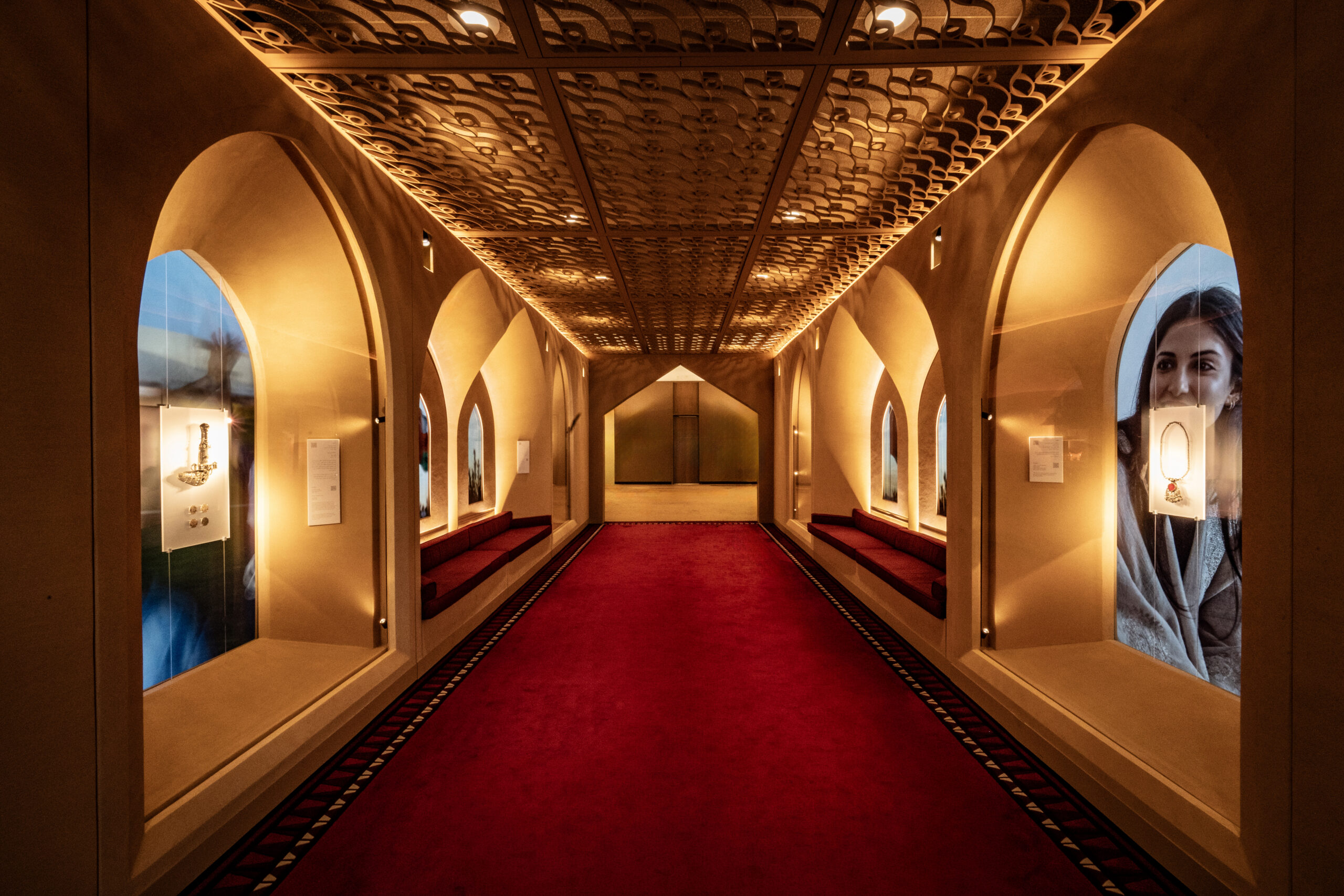
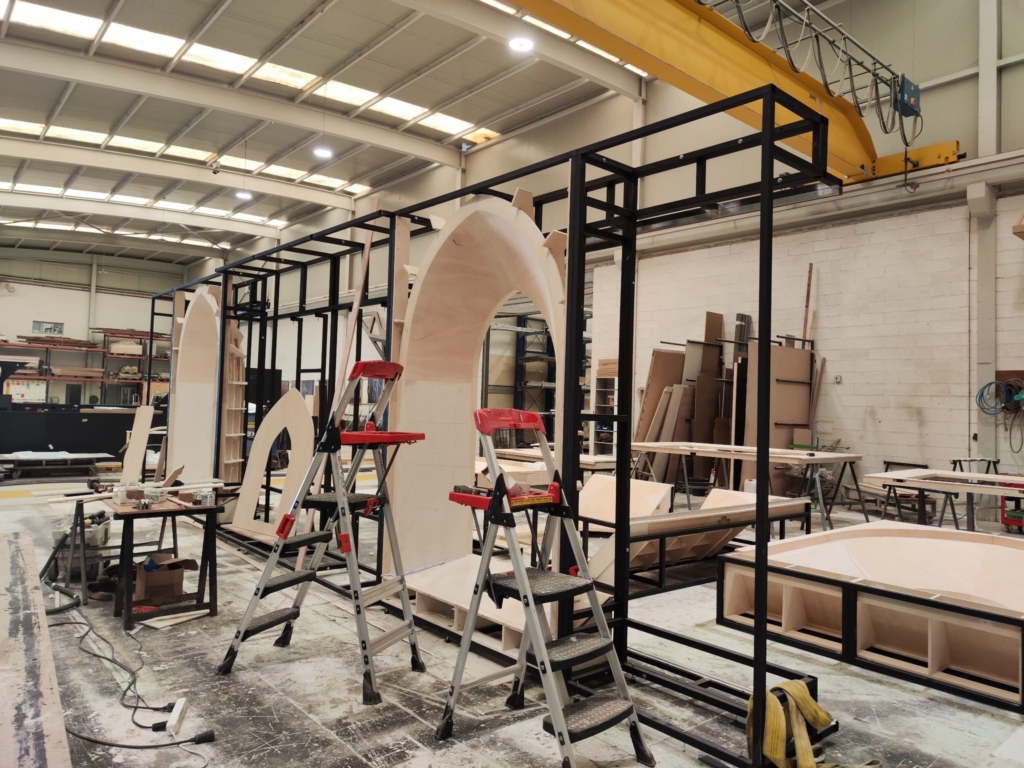
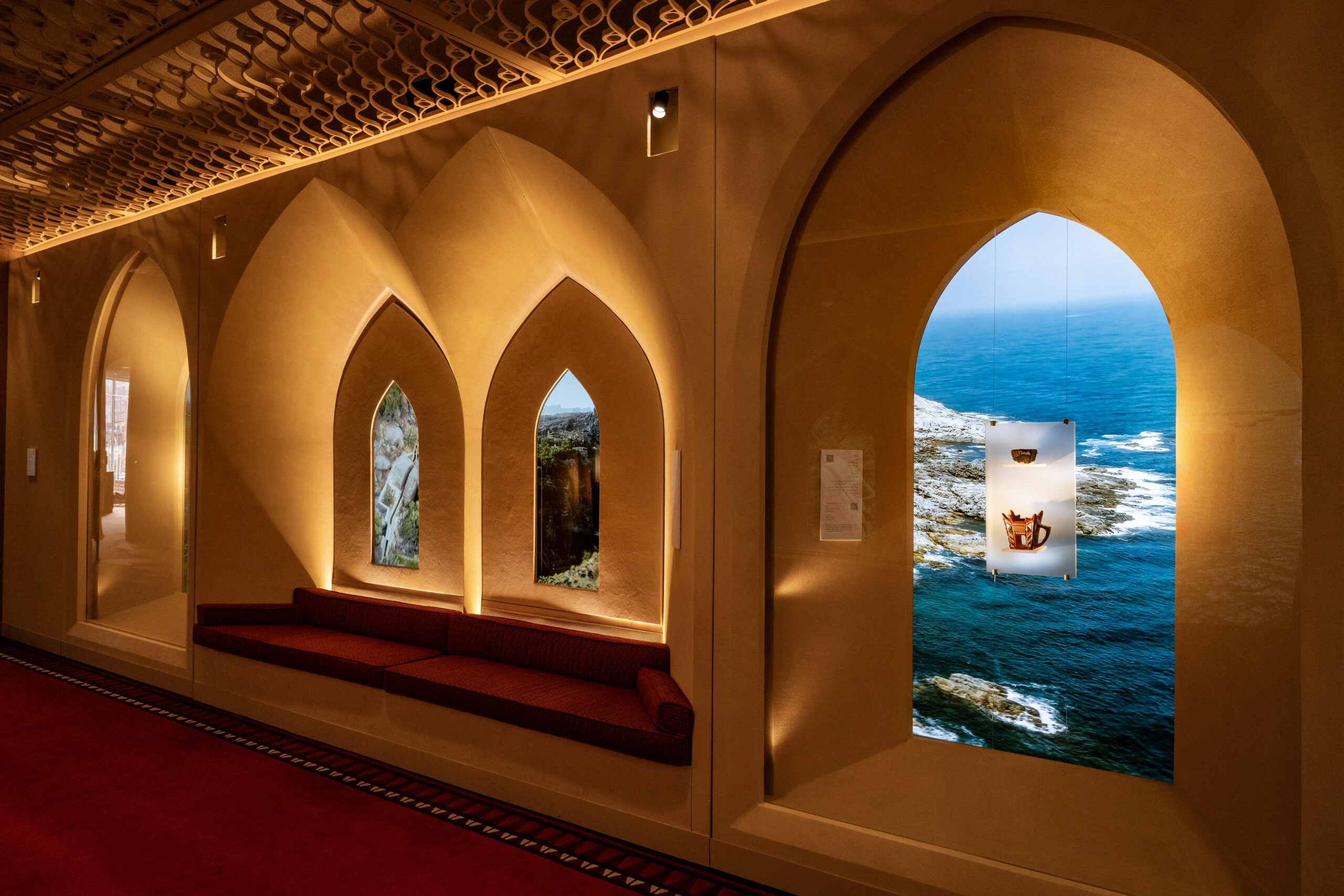
We conceived the installation as a freestanding arched colonnade, inspired by Omani forts, homes and mosques. Passing through its thresholds feels like stepping into another world: a momentary departure from the UN’s institutional setting into Oman’s communities, craft workshops, and landscapes.
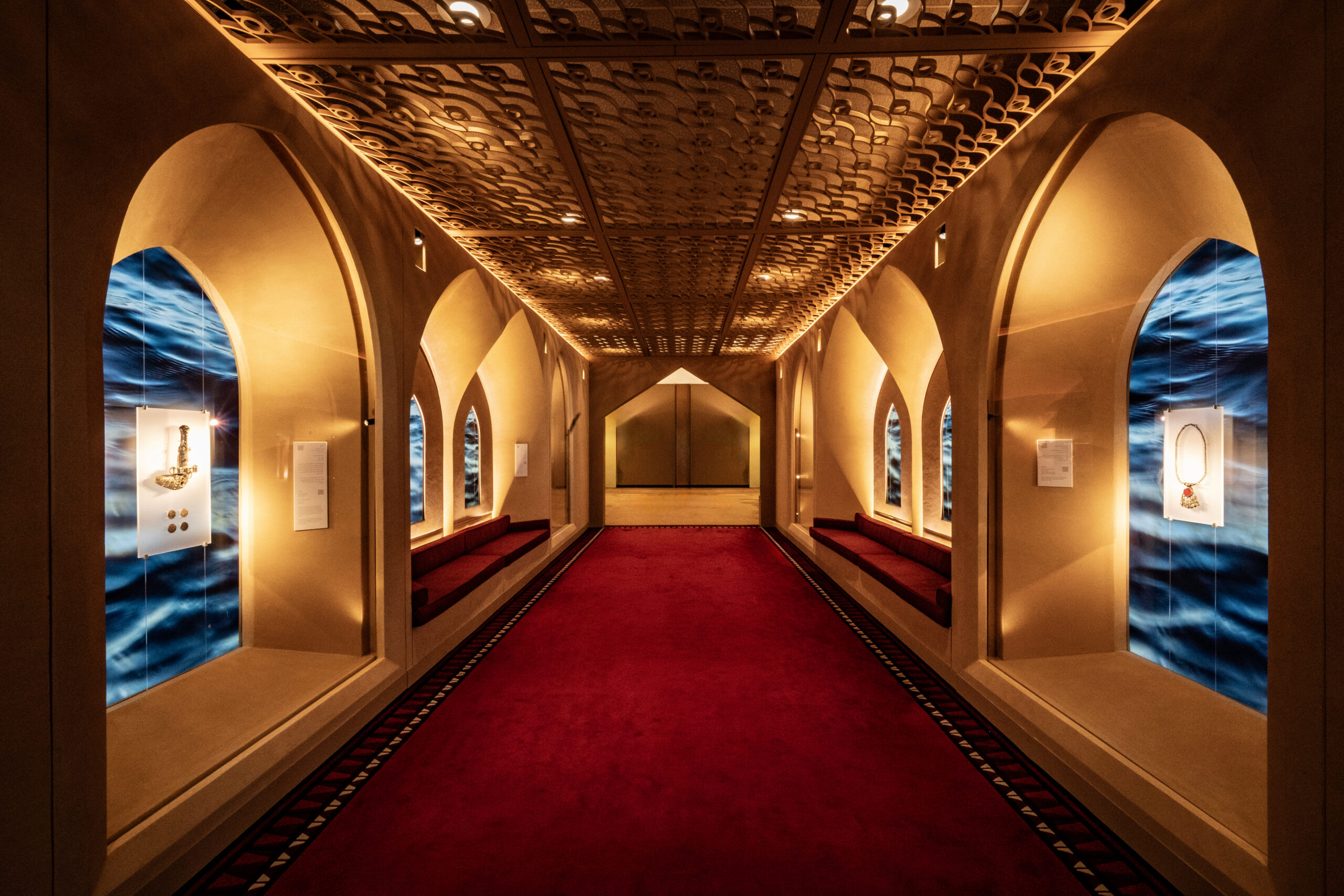
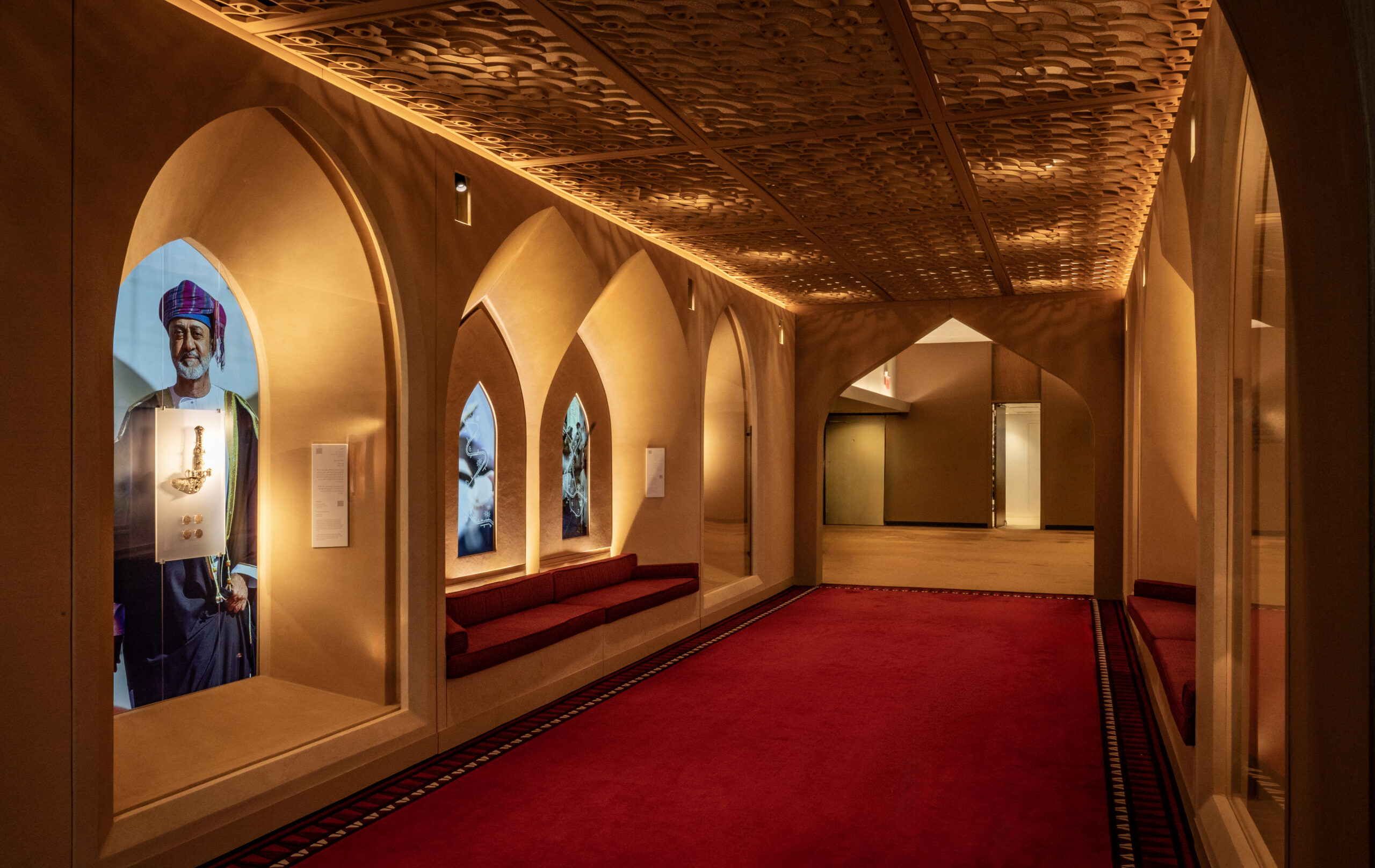
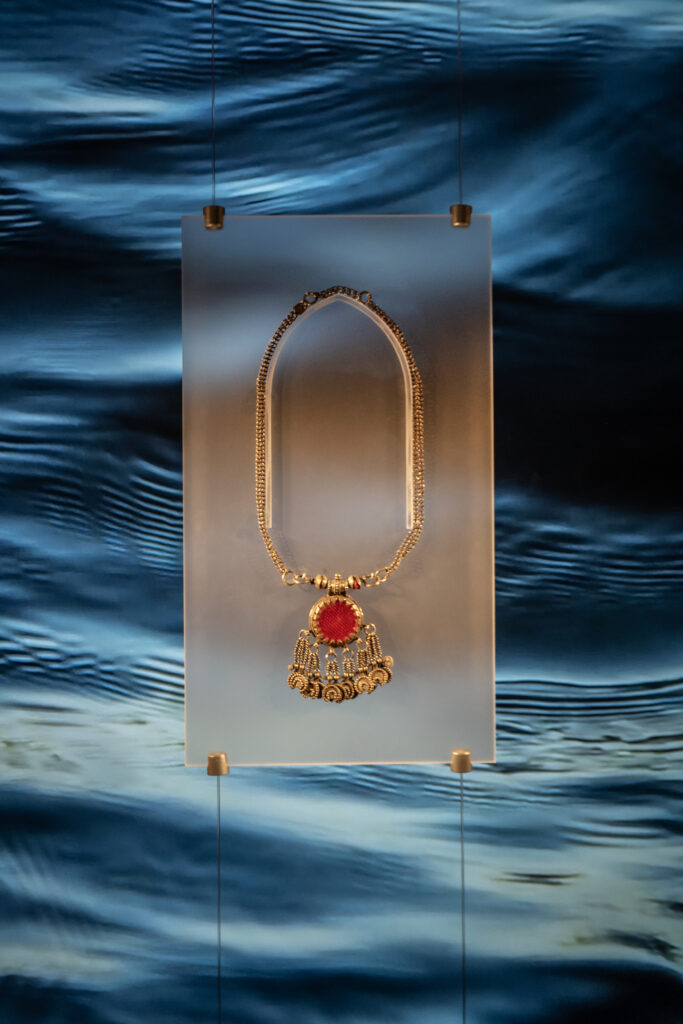
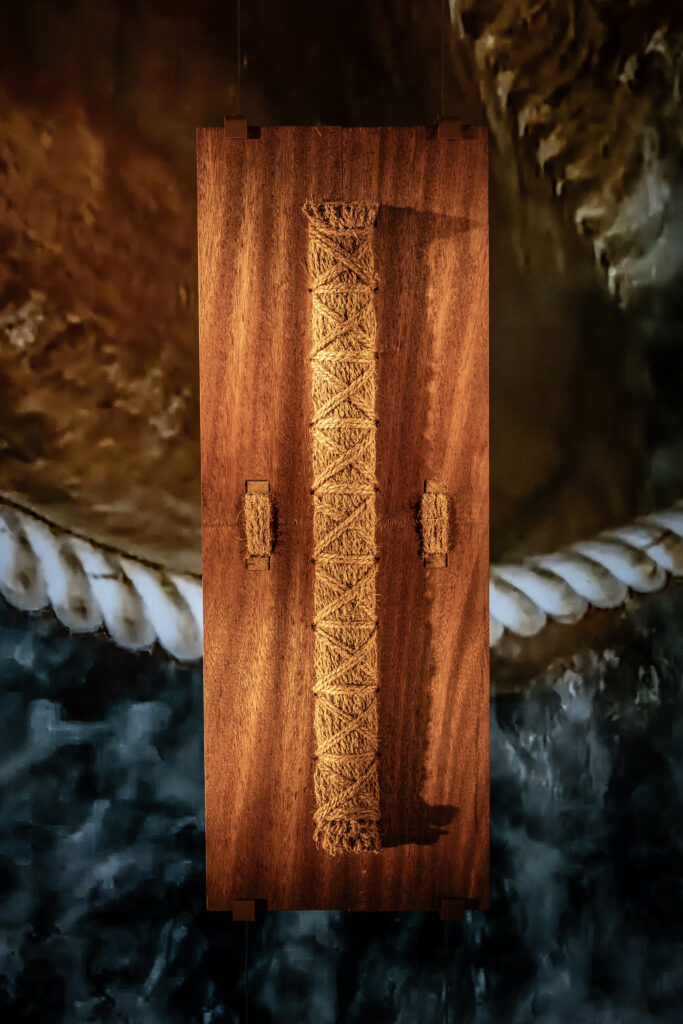
Within, a corridor is lined with AV display walls and recessed museum-grade cases that present the original artefacts alongside immersive content exploring their making and meaning. At its centre, a majlis-style seating area in deep-red woven upholstery provides a moment for pause within an otherwise transitional space
This is the only gift in the UN which incorporates immersive media and soundscapes.
Harnessing the raw materials of culture
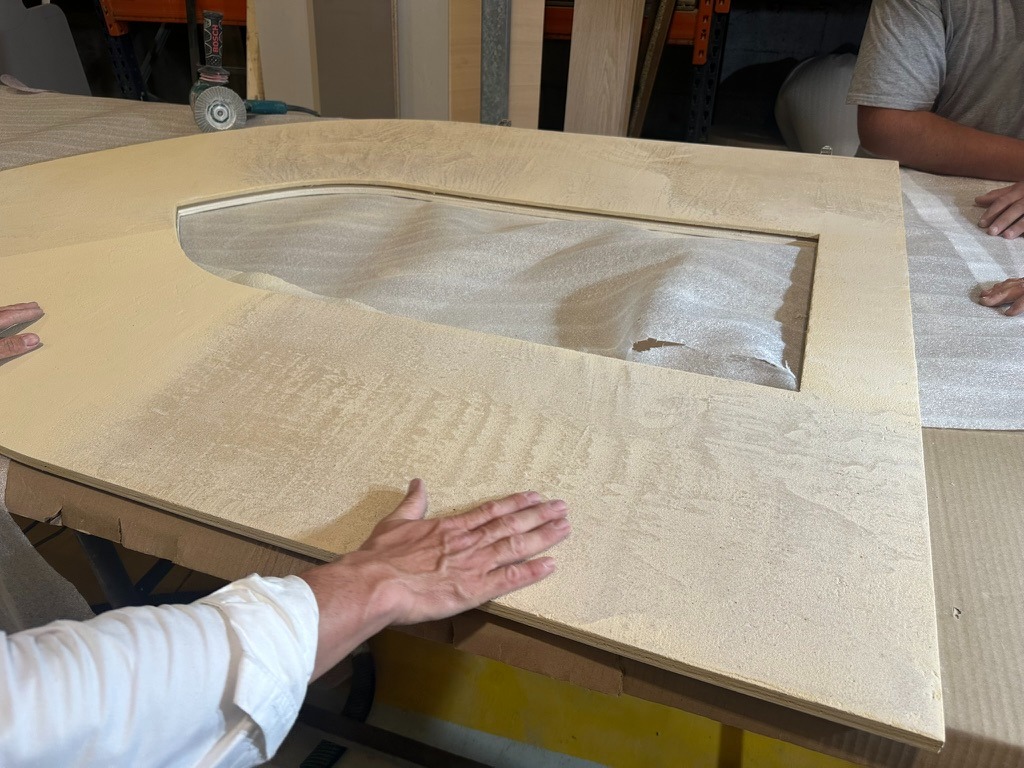
Materiality played a key role in shaping the colonnade’s character, with the build carefully delivered to balance durability, craftsmanship, and atmosphere. Light beige Shinnoki wood and stone tones were paired with warmer reds, drawing from Omani craft traditions and regional palettes.
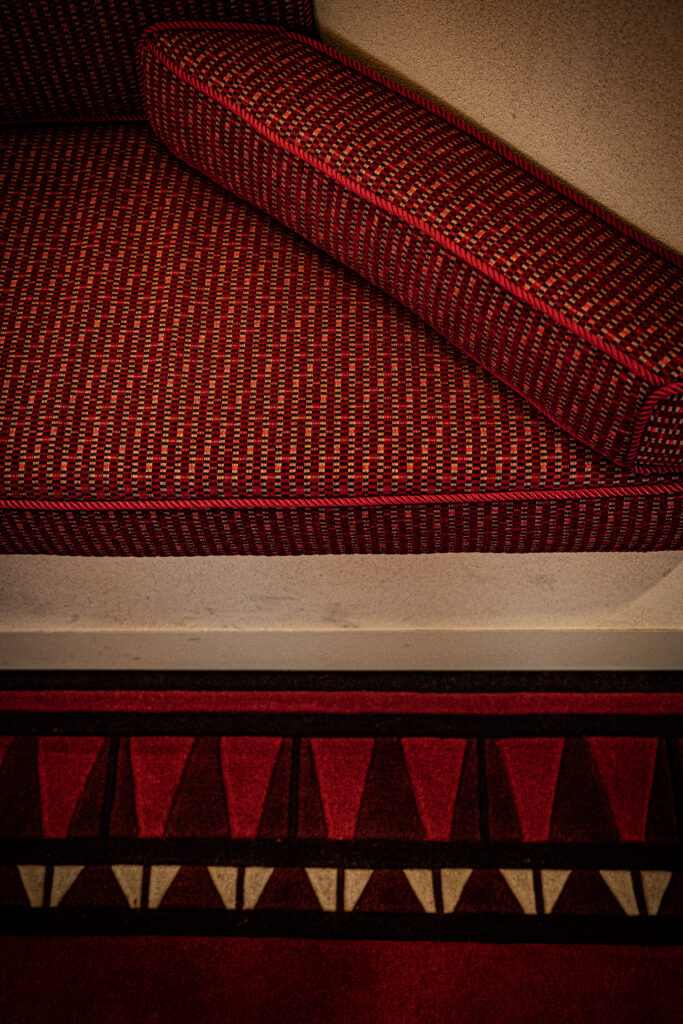
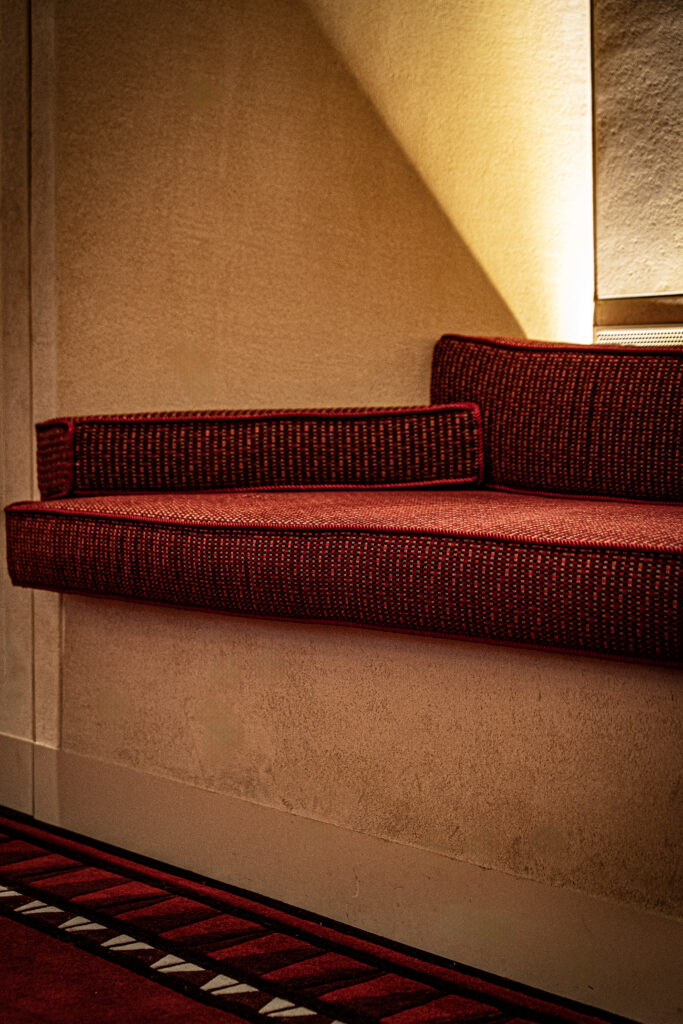
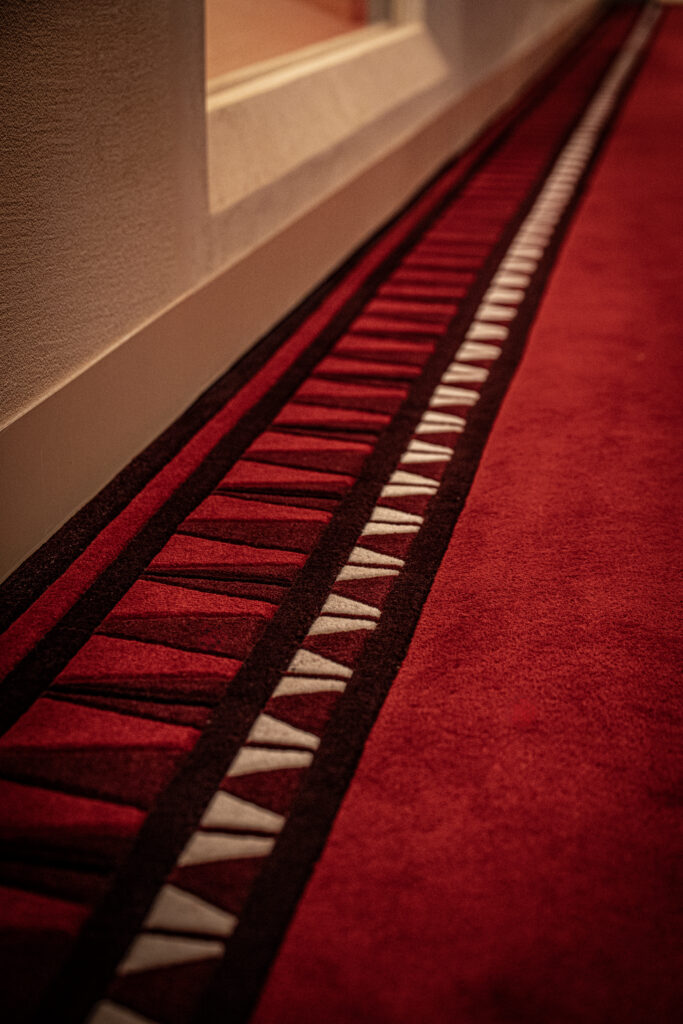
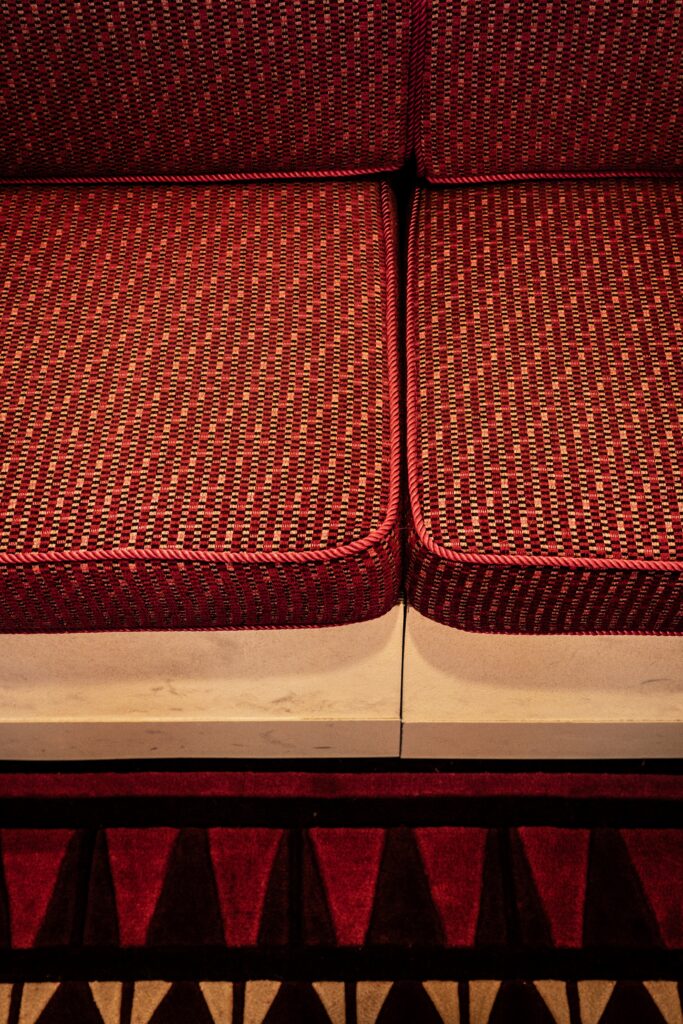
Across the space, moulded arches, silver-toned metalwork, and robust textured finishes created a strong architectural rhythm while ensuring the installation could withstand heavy public use. Upholstery detailing and woven fabrics introduced a softer tactile layer, echoing regional motifs and reinforcing the project’s sense of place. Every material and finish was considered not only for its visual quality, but for how it contributed to a cohesive and immersive physical environment.
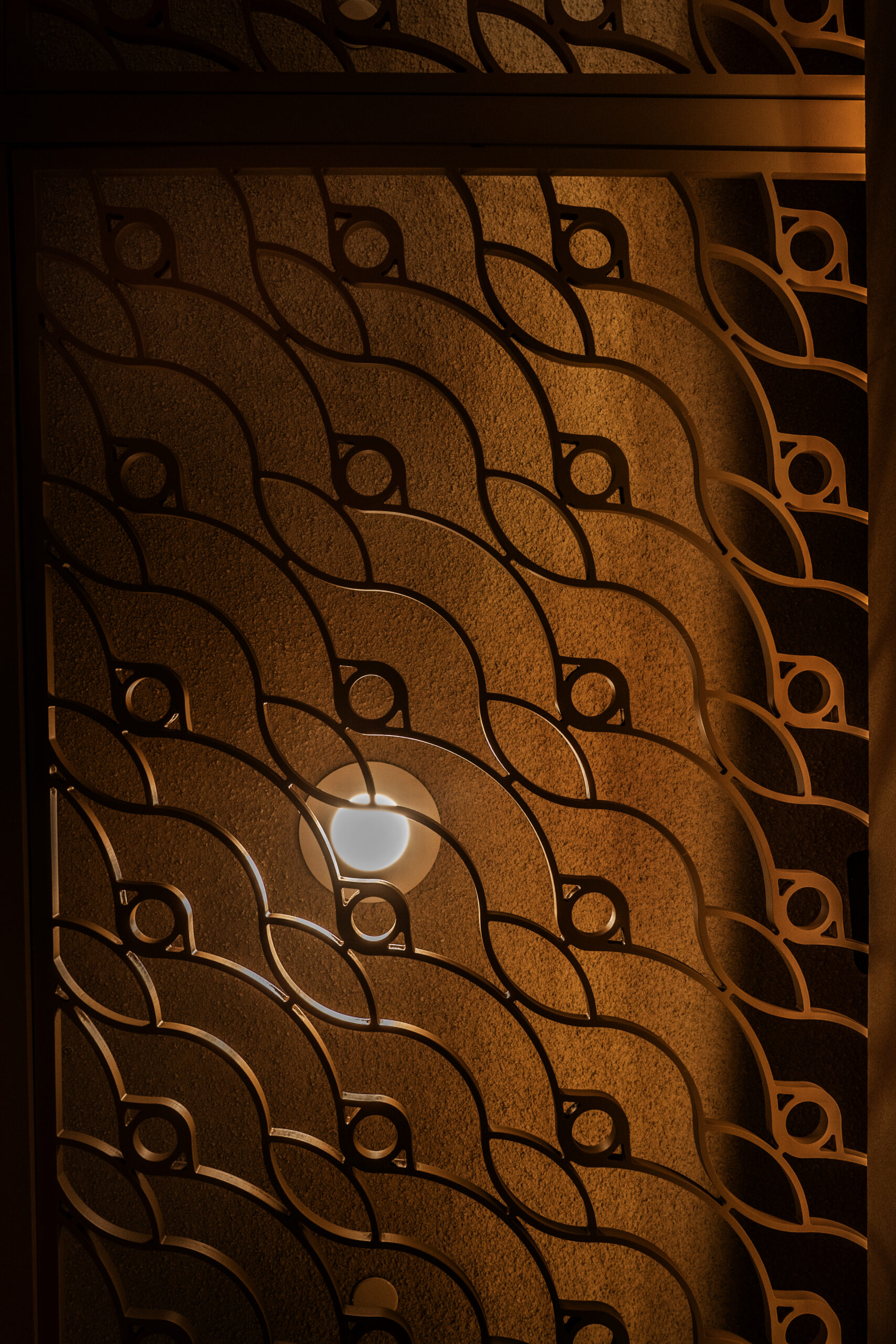
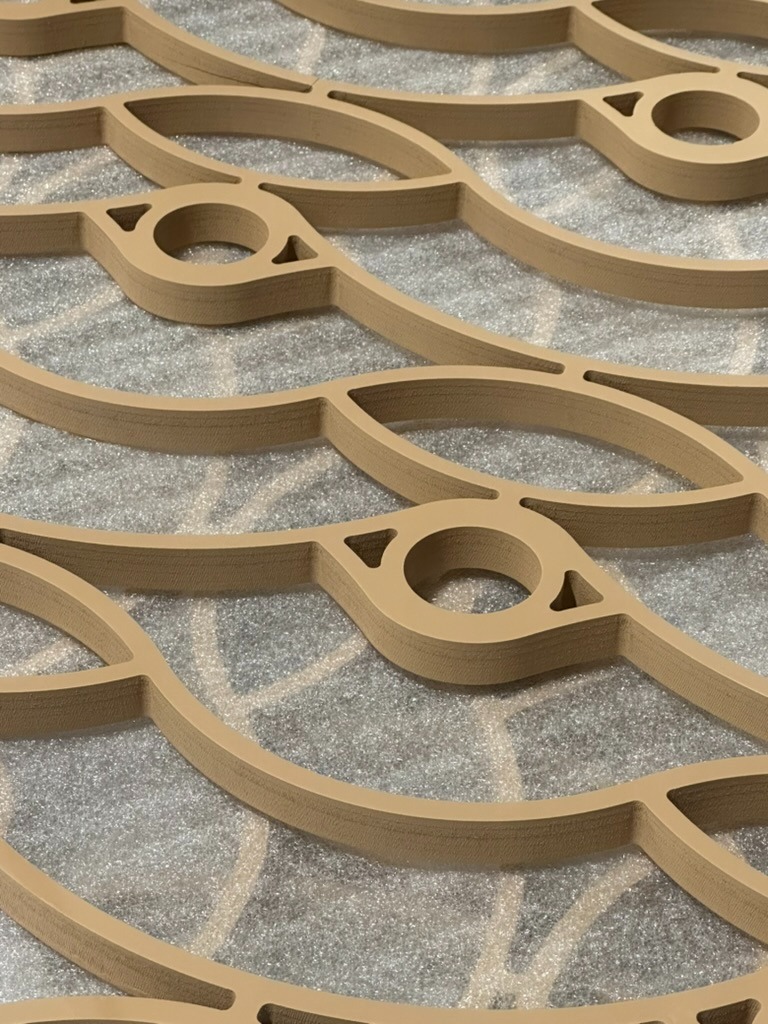
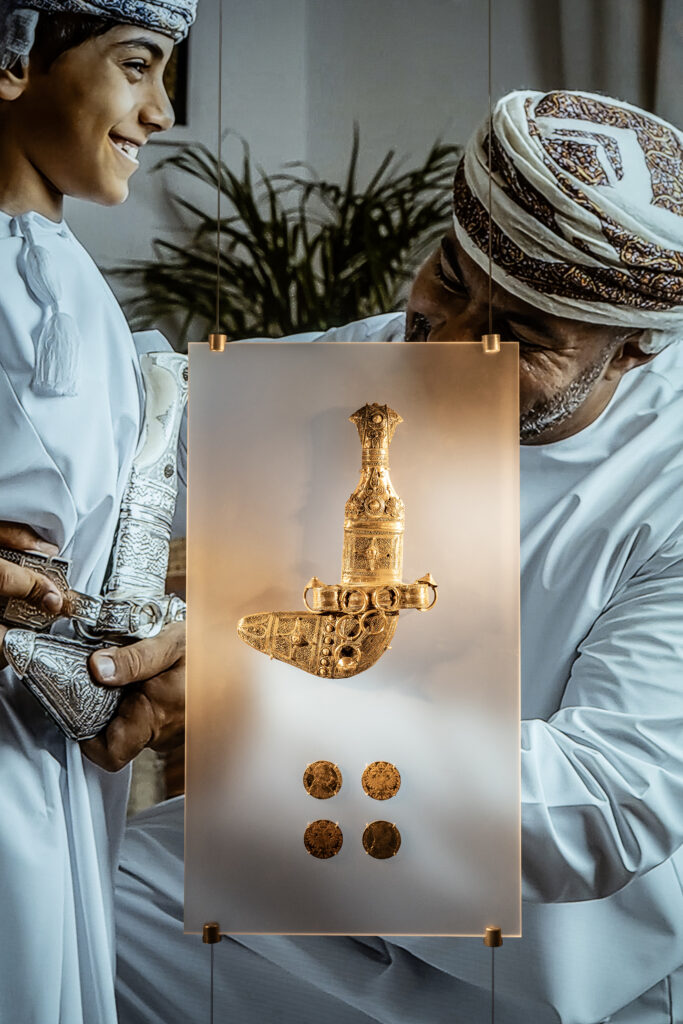
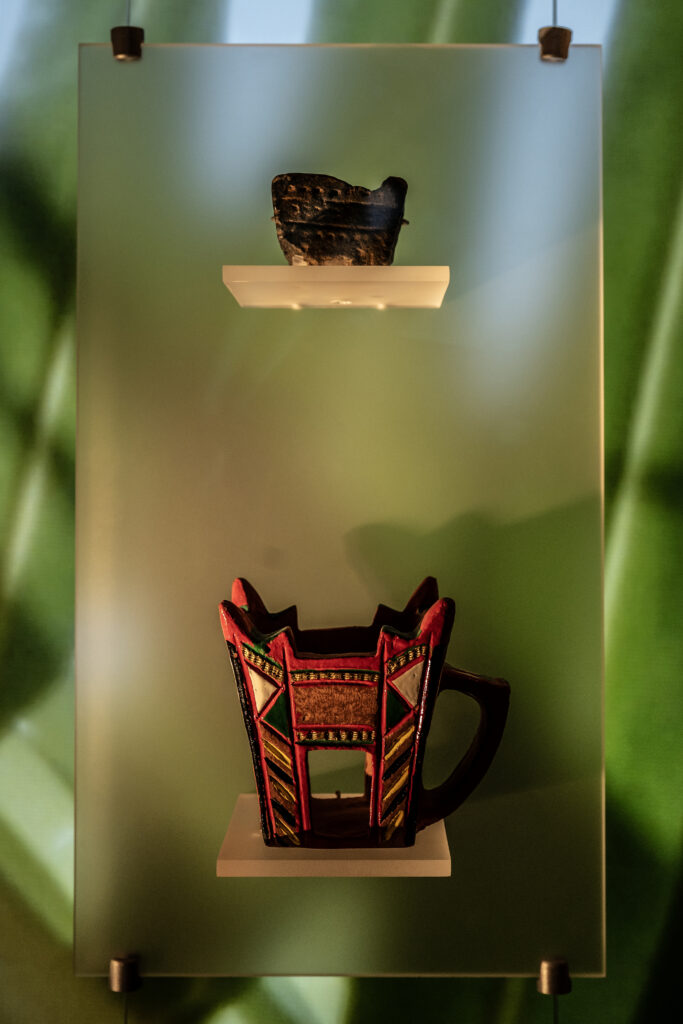
All this design language draws on Omani and regional artistic traditions, informed in part by our research at the Oxford Centre for Islamic Studies. The original collection of objects, such as the Khanjar and the Kahwah coffee pot, are equally important, serving as a conduit of wider understanding for visitors.
Transporting visitors beyond the colonnade
The immersive content extends this cultural interpretation and architectural language into a digestible narrative; one that charts the craft of objects in the collection, such as the Khanjar, through to their uses in community and ceremony, then ultimately their diplomatic presence at organizations such as the UN.
QR codes on text slates invite visitors to learn more on the Oman Foreign Ministry website, where they can find in-depth information about the objects.
Separately, a central immersive sequence traces Oman’s Aflaj waterways, following water from the foothills of the mountains into agricultural villages and towns. When seated before this installation, the combination of spatial audio and enveloping screens creates a powerful sense of presence, as if you’re momentarily transported into the landscape itself.
Across the experience, physical artefacts and digital storytelling operate as one. The architecture frames the narrative, the media articulates it, and a restrained soundscape binds the space together without intruding beyond the colonnade.
Impact
The overall effect of this experience is to shift visitors from passive observers to active participants in Oman’s ongoing cultural story. It’s an experience in which material craft becomes the lens through which Oman’s diplomatic and cultural presence is understood.
The Oman UN Display now operates as a cultural anchor within the United Nations headquarters. It offers moments of calm within a space defined by urgency. Designed for durability, accessibility and long-term relevance, the installation reflects the values of both Oman and the institution it inhabits.