
You know the routine: step up to the glass case, peer at the exhibit, skim the label, move on. It’s a ritual that has served museums well for generations. But audience expectations are changing, and so are the economics of running a museum. In the US, nearly a third of museums reported falling attendance in 2025, and a third lost government grants or contracts.
Meanwhile, creative digital technologies like projection mapping, spatial audio, and interactive media are drawing huge crowds at venues like Lightroom, which has surpassed 2.5 million visitors across 13 cities.
That opens a real opportunity for museums: combining these new storytelling tools with their rich collections to create spaces that turn visitors, across all ages and backgrounds, from observers into participants in history.
Let’s explore how multidimensional design is making that happen, across three Journey collaborations:
- Londinium at London Museum
- Zayed National Museum in Abu Dhabi
- Bayeux Around Britain
Bringing the Past to Life
Museums and immersive experiences used to be different worlds: one rooted in scholarship, the other in spectacle. But that divide is closing as more cultural institutions blend the two to tell richer stories.
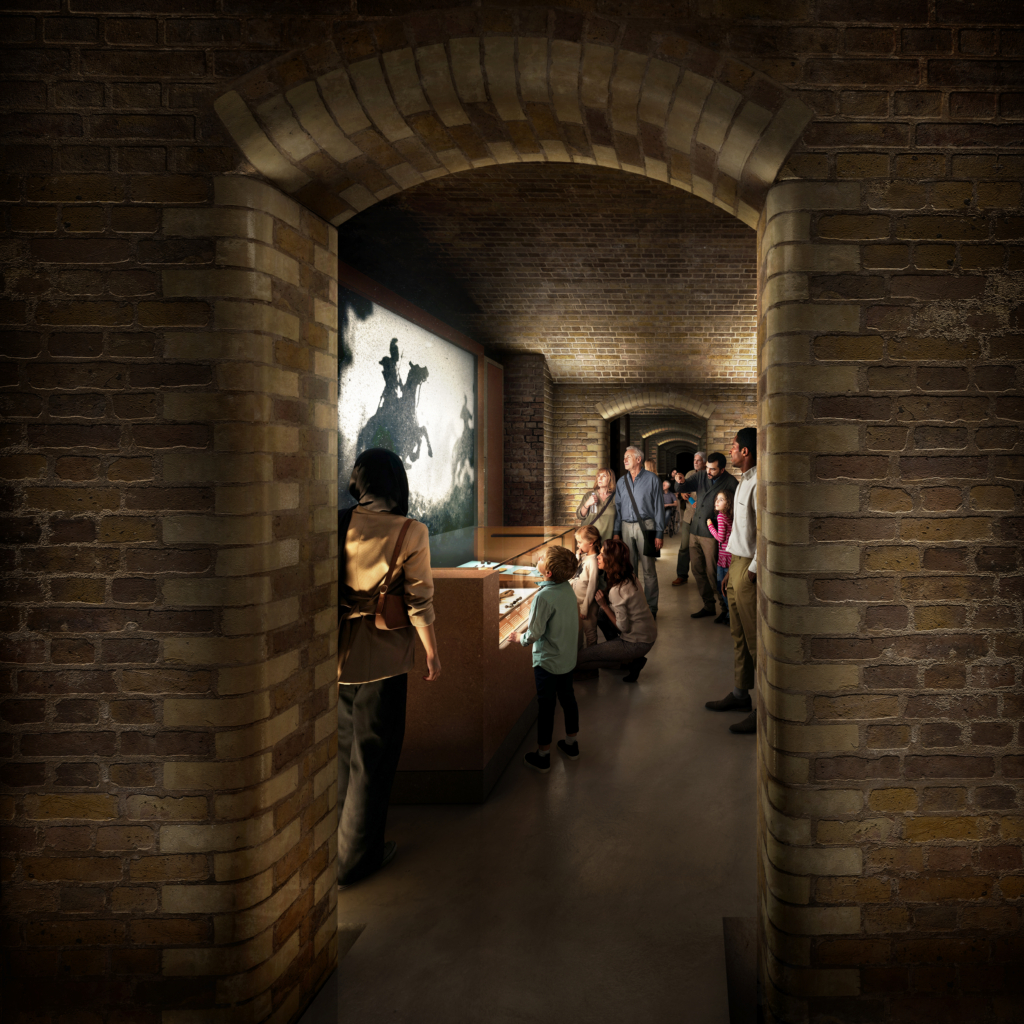
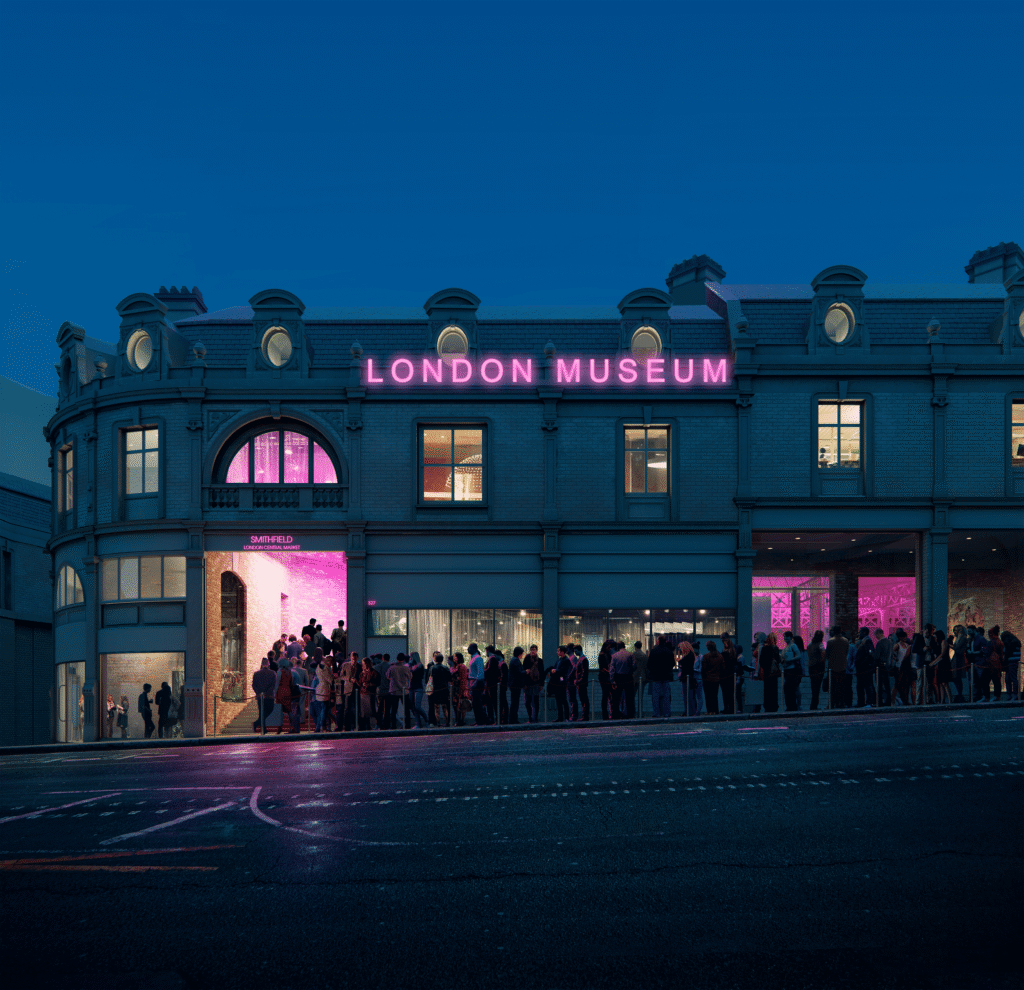
A prime example is Londinium: the Making of a Roman City, opening in Spring 2027 at London Museum. Created by Journey, the Londinium experience is designed to bring the stories of early Roman London to life with sensory storytelling, cutting-edge projections, and spatial audio effects. It’s set within London Museum’s network of underground vaults, which were rediscovered during renovations in 2019 and give viewers the impression of walking into a time capsule.
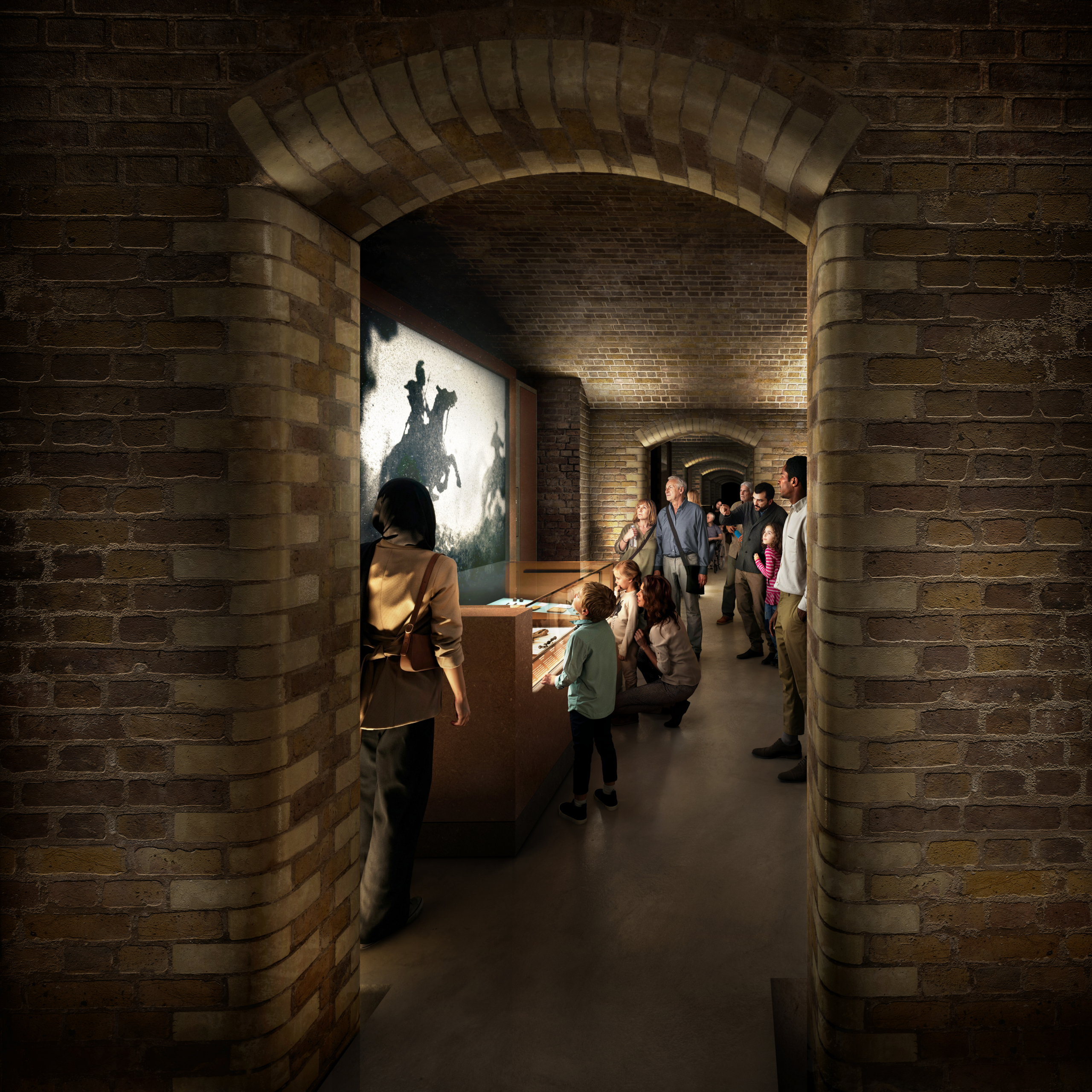
What makes Londinium compelling is that visitors don’t just learn about Roman Londoners; they step into their world. Drawing on more than a decade of archaeological research, the experience imagines the petty arguments, whispered gossip, and business dealings of ordinary people as the settlement grew from its founding around 50 AD into a thriving urban center. Dynamic projections and spatial soundscapes surround visitors with those everyday moments as they move through the vaults, while previously unseen Bloomberg Collection artifacts like wax tablets, coins, an infant’s bottle, and even cockroach eggs help illuminate moments from real lives.
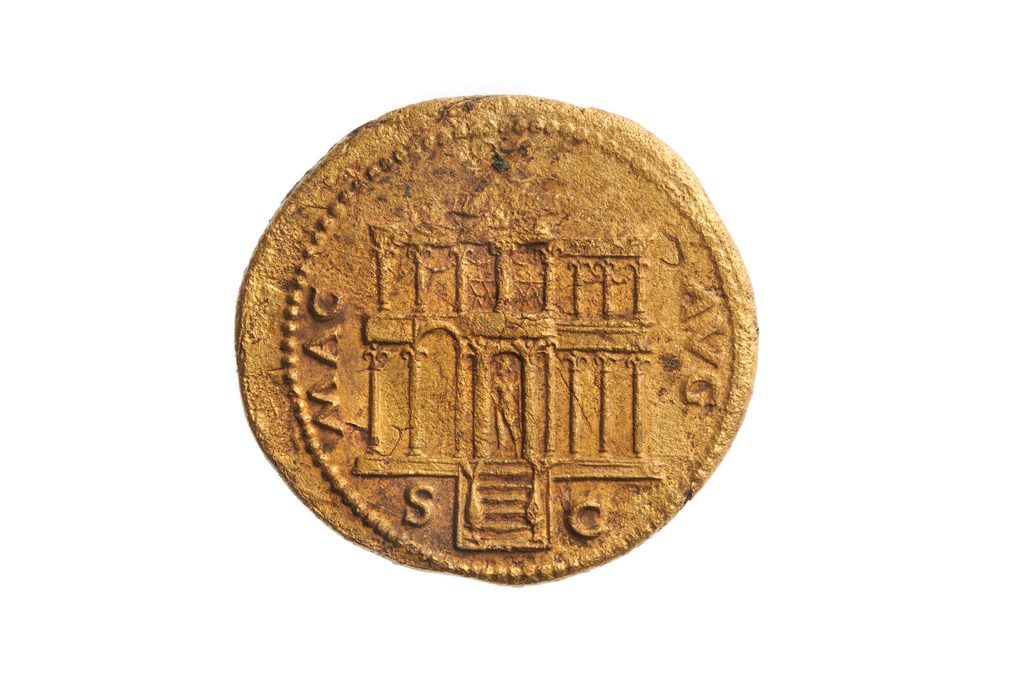
These effects help the museum turn distant history into something personal and felt. Rather than reading a label beside a case, visitors are dropped right into the sights, sounds, and physical objects of Roman London with all its sense of turbulence and opportunity.
Beyond Londinium, Journey has used multidimensional design to help the London Museum draw viewers into other parts of the city’s past. We’re responsible for digital content curation for the museum’s Past Time Galleries, which use films, illustrations, and interactive exhibits to share London’s history from prehistoric times through major events like the Great Fire, the Blitz, and even the 2012 Olympics. The result is a set of galleries where visitors can choose their own path through London’s history, moving between eras and formats to build an experience that suits their interests.
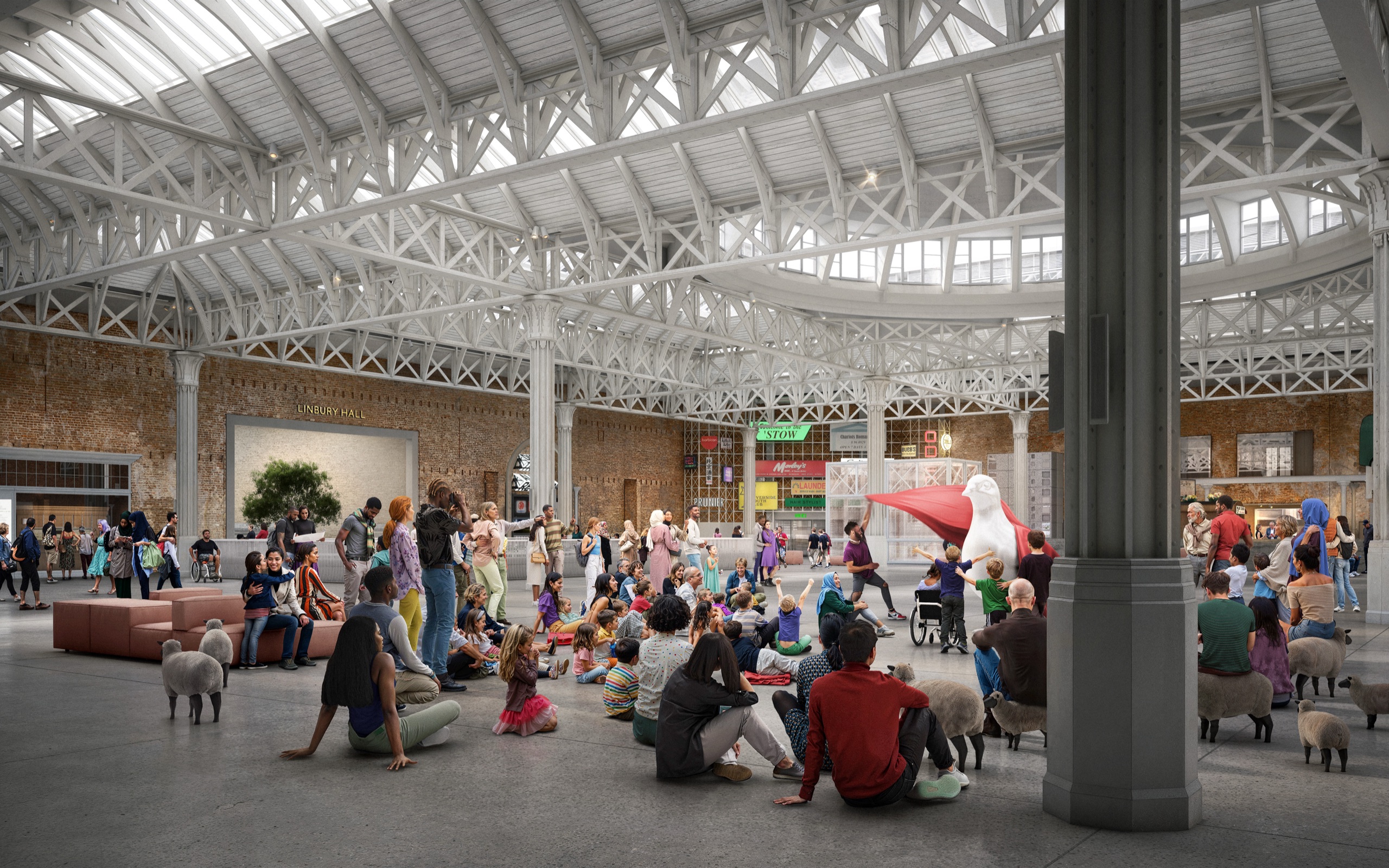
This approach also helps level the playing field between smaller and larger institutions. A museum without tens of thousands of artifacts or a headline-grabbing centerpiece can still draw audiences by building a compelling experience around what it does have. When the storytelling is rich enough, the draw isn’t the size of the collection but the chance to step inside its stories.
Sensory Storytelling on a Monumental Scale
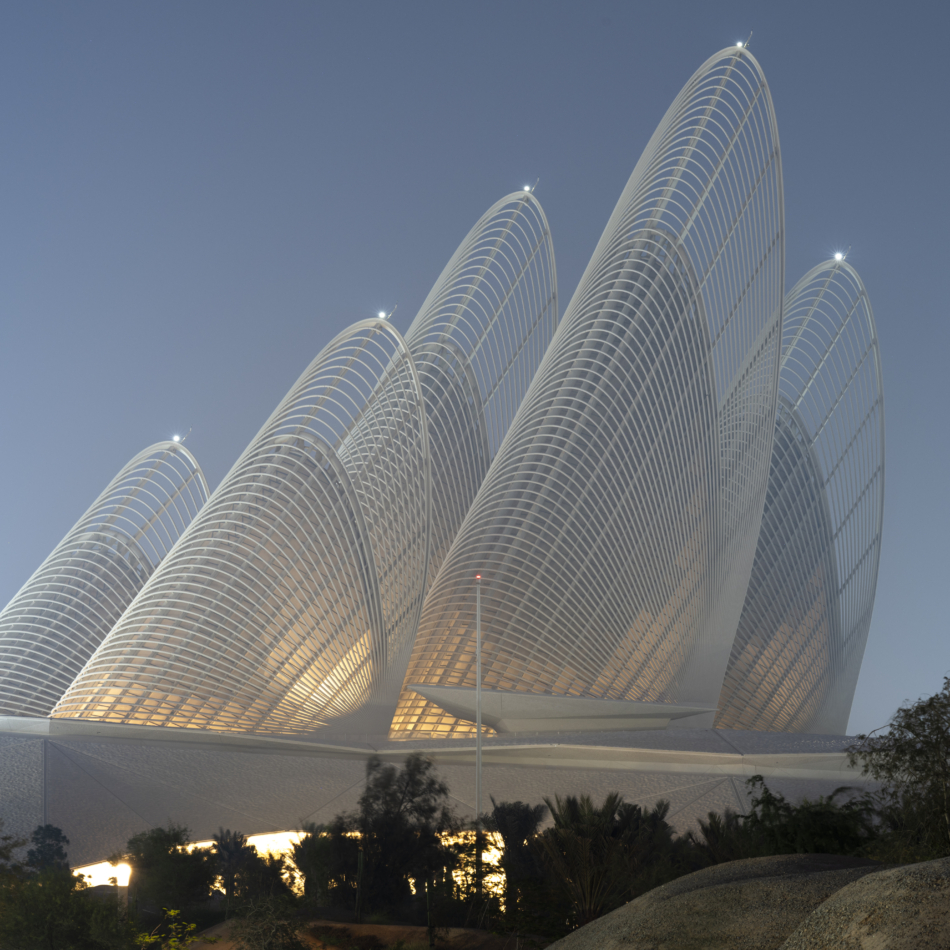
The same approach works not just for historical exhibits but also broader museum endeavors, including the massively ambitious Zayed National Museum in Abu Dhabi. Using innovative storytelling and immersive technology, we brought the United Arab Emirates’s culture and heritage to life with over 200 exhibits that portray the nation’s history as well as its natural landscapes, current practices, and future plans.
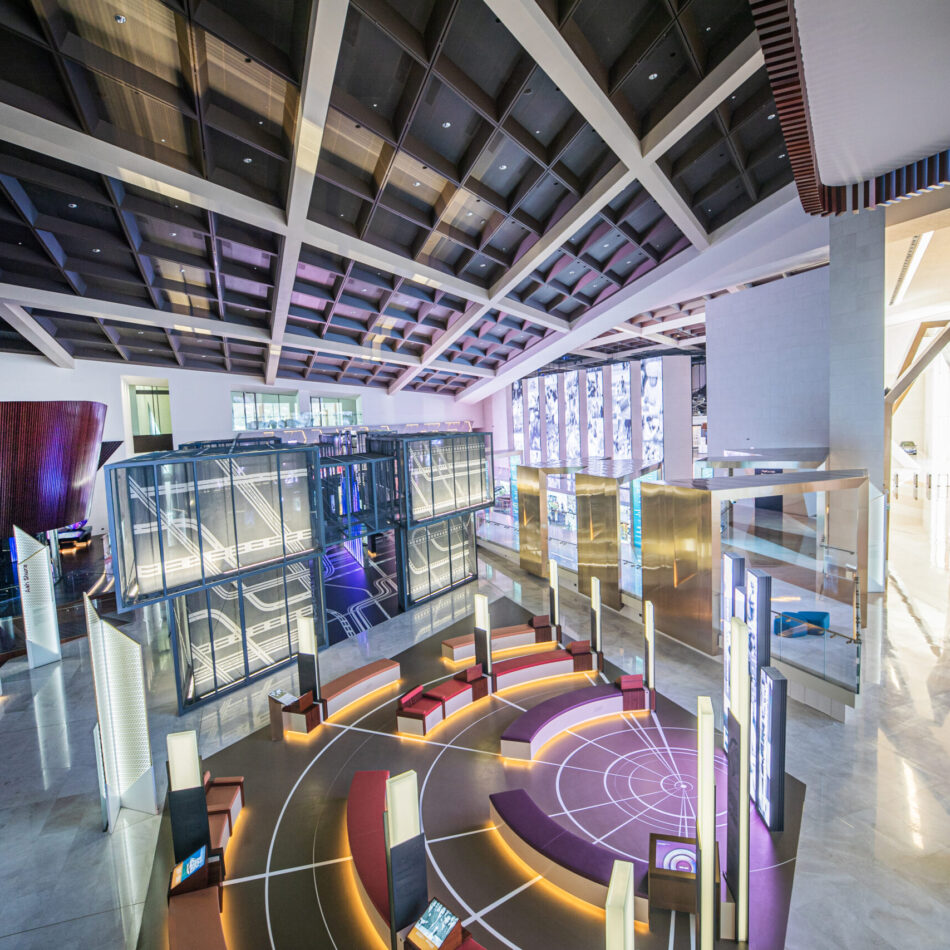
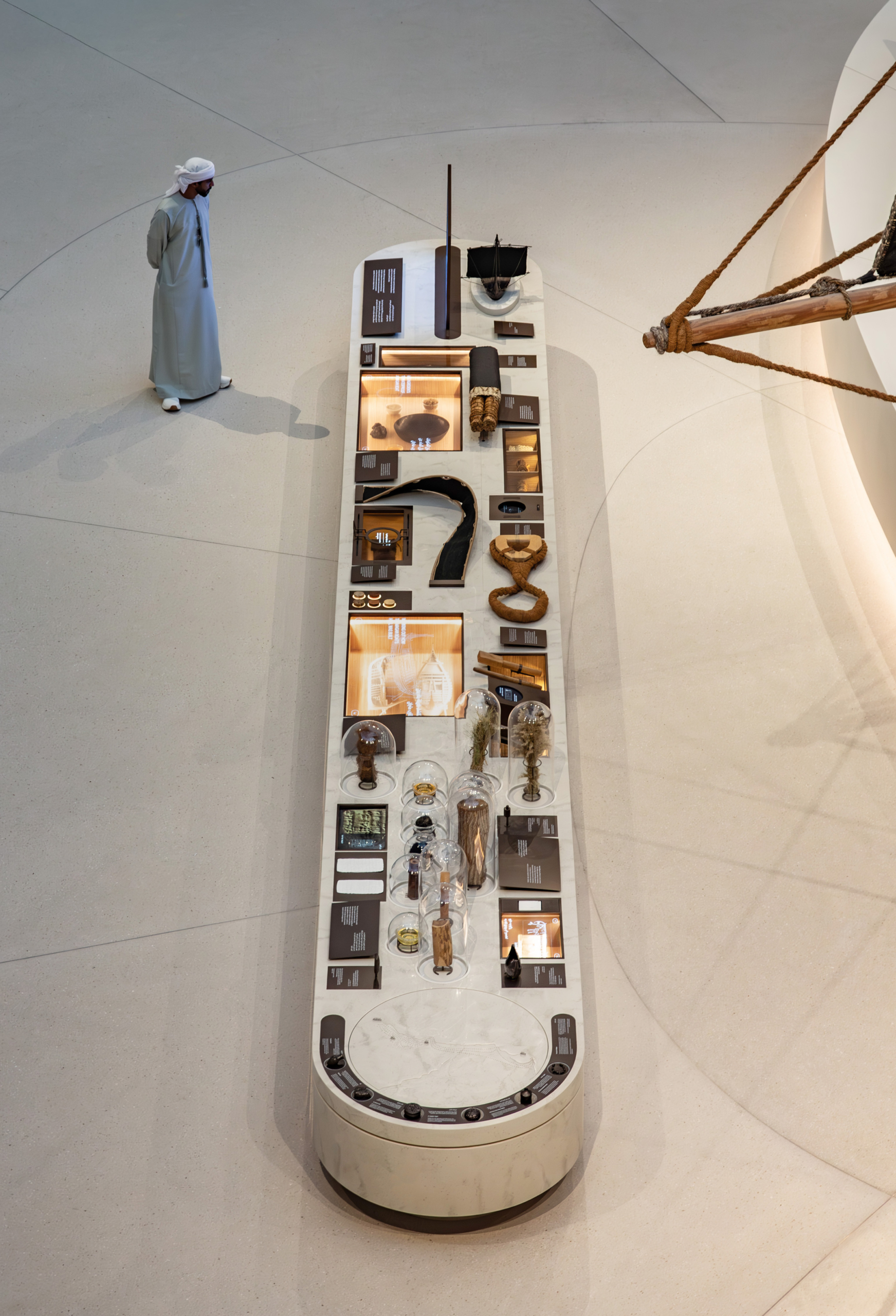
Across its six galleries and 16 interior and exterior spaces, Journey created rich narrative journeys with a combination of film, animation, sound, projections, and interactive experiences. Using smart-glass transparent screens and 3D technology, guests can virtually handle objects from the museum’s collection while watching media about those objects. They can piece together bricks from archaeological ruins in a digital game, cook a meal from the pre-Islamic era to learn what people once ate, or watch a film about traditional animal husbandry and then try their hand at virtually training a falcon. They can even use an interactive table blending 2D, 3D, and media content to peel back the layers of research and experimentation behind the effort to rebuild the Bronze Age Magan Boat from archaeological fragments.
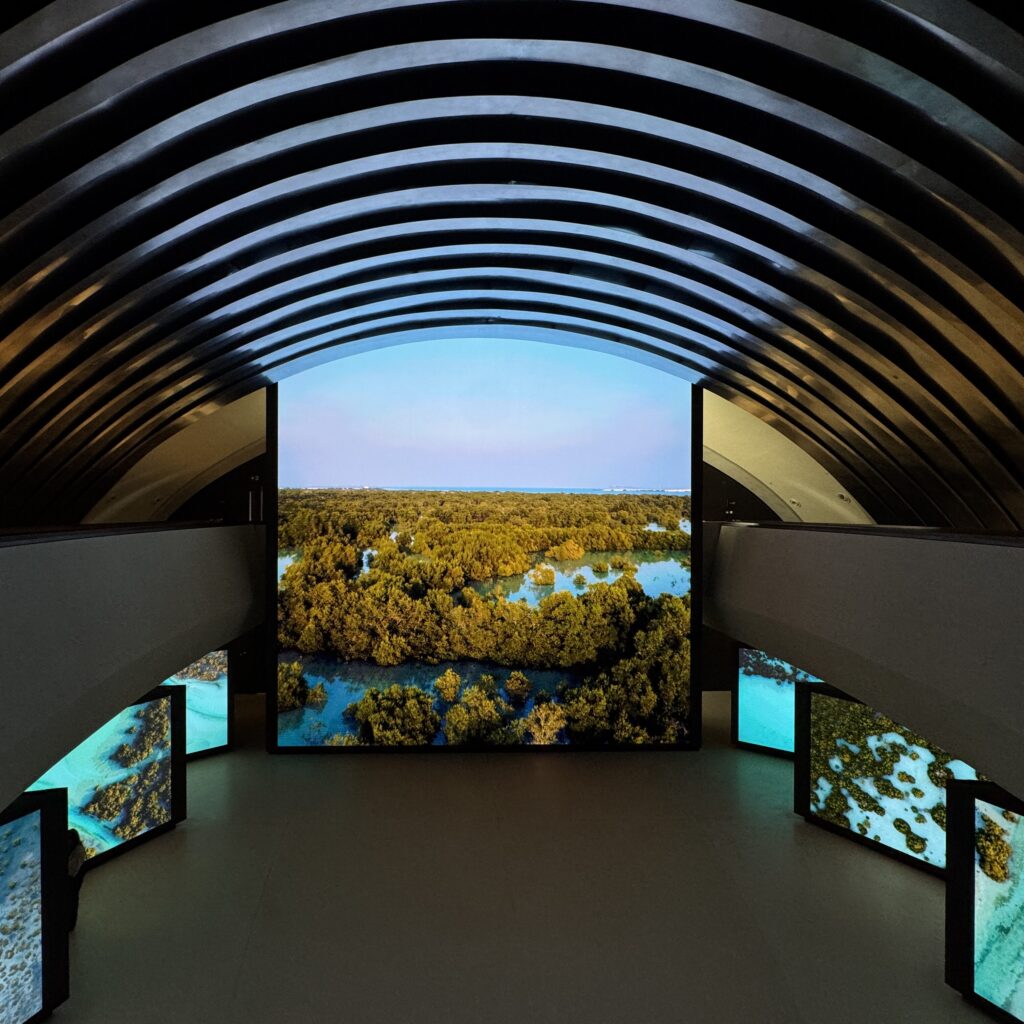
Even the film experiences break from the usual gallery formula of a single screen in a darkened room. “Through Our Nature,” a film showcasing the country’s natural landscapes, stretches across an enormous LED wall and six surrounding displays. “Our Beginning” uses a 2.5D approach to reinterpret and upscale imagery of museum namesake Sheikh Zayed’s life and legacy for large-scale screens. Desert landscapes play within sinuous walls carved to resemble sand dunes, and animations and illustrations complement the cinematography throughout.
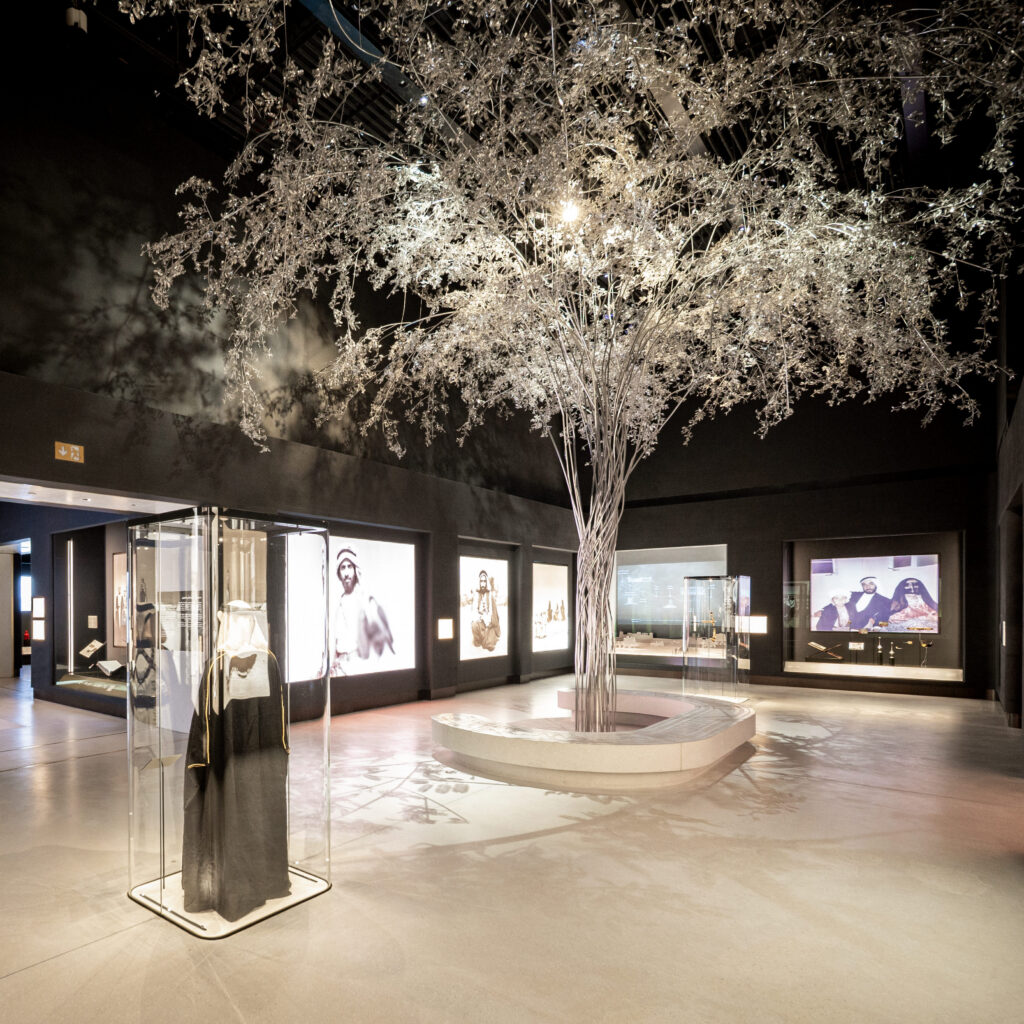
Tying it all together is a unified visual language. Throughout the museum, projections of bespoke illustrations, maps, and animations fill the walls with dappled light and delicate line drawings, so each space feels connected to the next. This consistency was crucial in a space spanning so many stories, eras, and spaces, allowing visitors to move from one gallery to the next without losing the thread.
The initial response to Zayed National Museum has been remarkable. Time magazine named it to the World’s Greatest Places of 2026 list, and the Prix Versailles chose it as one of seven winners of the World’s Most Beautiful Museums of 2026 award. Just as meaningful is what visitors take from the experience: a sense that they didn’t just view a nation’s story but moved through it, touched it, and played a part in it.
A Once-in-a-Millennium Exhibit, Across the Country at Once
Immersive storytelling usually shines within the walls of a single museum. But in a wide-reaching new project, we’re bringing a millennium-old treasure to dozens of museums, galleries, libraries, and other UK cultural venues at the same time.
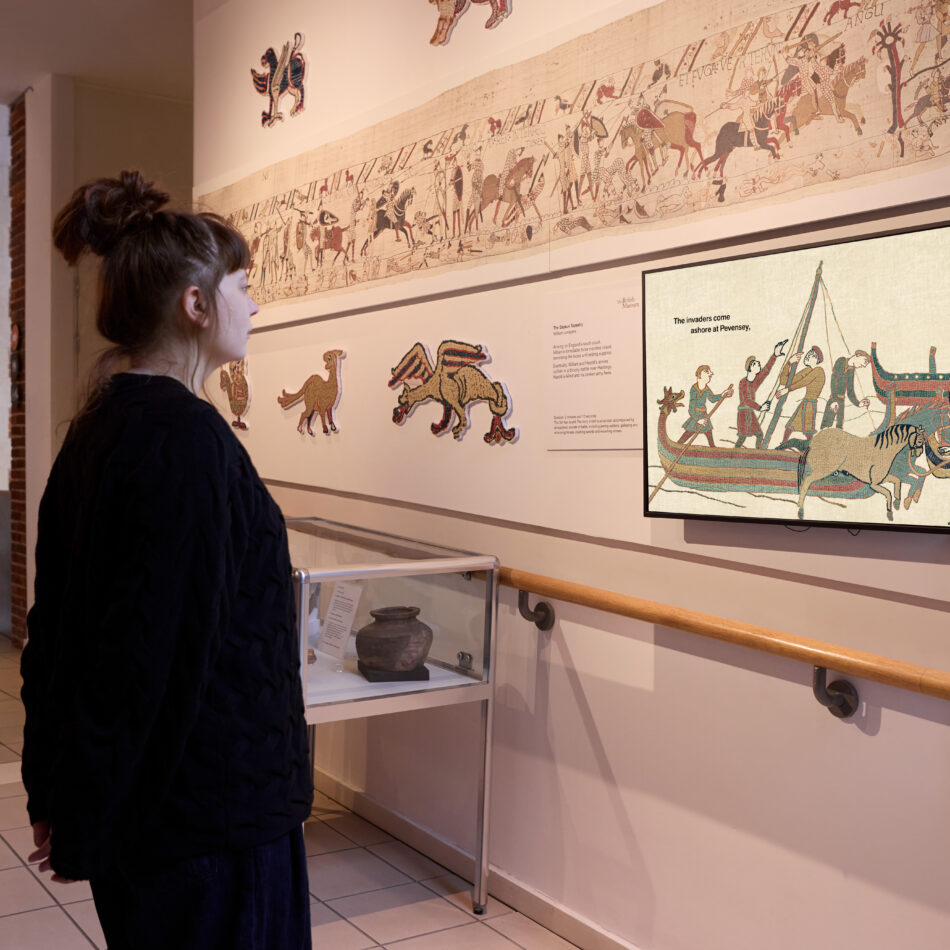
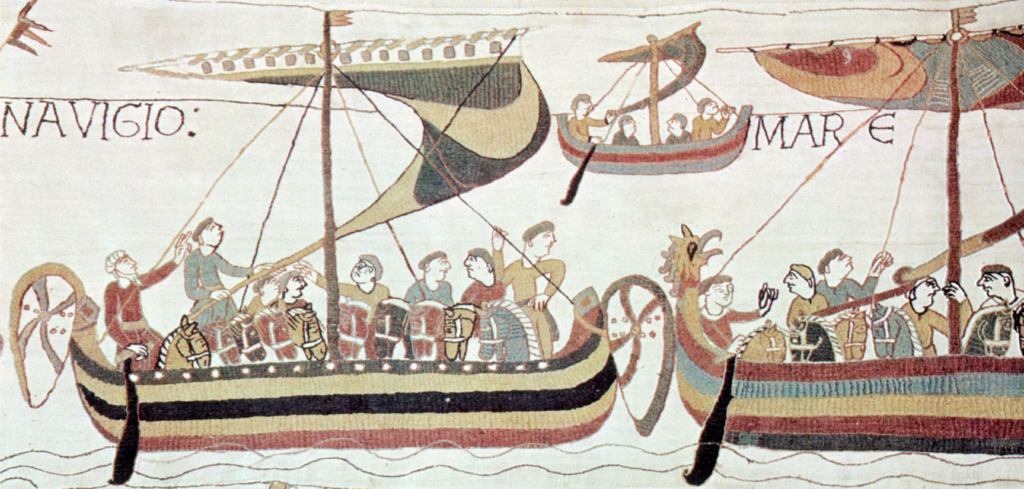
Bayeux Around Britain is a national program celebrating the return of the Bayeux Tapestry to England for the first time since it was woven nearly 1,000 years ago. Working with the museum, we handled the narrative strategy and creative direction for the public experiences around the historic loan of the 230-foot-long tapestry to the British Museum. While the tapestry itself will stay in London, the program carries its story to venues across the country.
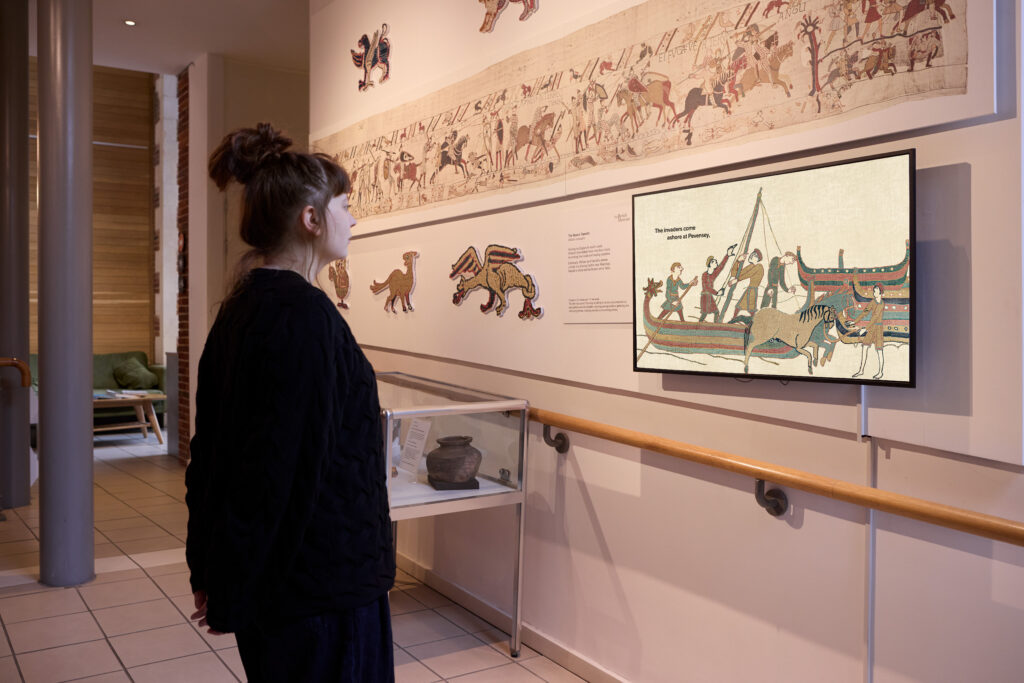
This raised some unusual design challenges. How do you tell the story of one of the world’s most important historical objects when the object itself is hundreds of miles away? How do you bring the tapestry to life without trying to recreate it on a literal level? And how do you build something that works equally well in museums, libraries, cathedrals, and classrooms, each with different audiences, technical capabilities, and physical spaces?
Our answer was a set of films built on a flexible storytelling framework and an interactive touchscreen representation of the tapestry. Directed by Journey and produced by Myth Studio, with sound by Coda to Coda, the films are structured in chapters so venues can highlight different pieces.
The result is both deeper connection and broader access. By bringing the story of the Bayeux Tapestry within an hour’s drive of two-thirds of England’s population, the program can reach tens of thousands of people who can’t easily travel to London for the exhibition, including those in small or remote towns.
Because each venue offers its own version of the experience, audiences can also engage with the tapestry in a way that fits their setting, from a touchscreen tapestry and ten-minute film in Norwich Castle to large-scale projections in North Lincolnshire and a full-scale facsimile at Tewkesbury Abbey.
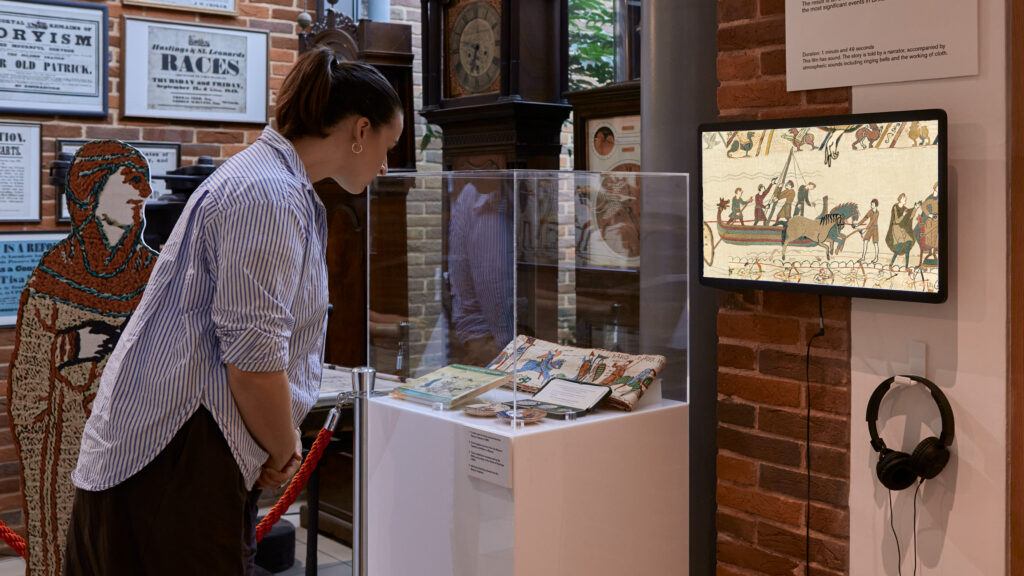
Ultimately, the design choices reflect our understanding that, while important artifacts can only physically exist in one place at a time, their stories and connections don’t have to be confined to a single physical location.
New Tools, Old Stories
New storytelling technologies have always reshaped what gets told and who gets to hear it, and immersive design is doing the same for museums; crucially, it is democratizing understanding and access in ways never previously possible, giving a much broader audience a stake in these institutions.
The Bayeux Tapestry exhibition gave the British Museum its biggest single day of exhibition ticket sales. Bayeux Around Britain takes that same story to more than 90 venues, putting it within an hour’s drive of two-thirds of England’s population.
The Bayeux Tapestry was itself a new form of storytelling in its day, and it’s still drawing in audiences nearly 1,000 years later. Our aim is to give today’s stories the same staying power. The tools have changed, but the challenge and the opportunity is the same. Find the right medium for the story, and give people a reason to keep listening to it.